31 January 2006

Oh, the Coming-of-Age Subgenre

Thumbsucker - dir. Mike Mills - 2005 - USA

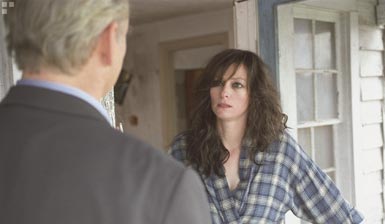
Big surprise, I watched Thumbsucker. Bigger surprise, I included a photo of Tilda Swinton in this review (pictured above with director Mills and costar Pucci... I chose not to include a photo of the director with Miranda July for obvious reasons). But probably the biggest surprise comes from the fact that the film really isn't nearly as bad as it might have been. Now, I haven't read the book, nor do I really plan to. As I told a friend of mine the other day, the book belongs in a sort of subgenre of books, which include Prozac Nation and The Perks of Being a Wallflower, all of which appeal to a certain just-into-college mentality that I do not hold. Not that either of the books listed above are bad per se; they work for what they mean to work for, and there's something to be said for that. Thumbsucker, as a film, works differently though. It's a part of the American independent film onslaught that we get, ripped from Sundance every year. I guess it's a good thing the whole Tarantino phenomenon has blown over, but, never fail, the world of young, hip American filmmakers has chosen another god in Wes Anderson.

My feelings on Wes Anderson are not simple. I think Rushmore is rather brilliant, though it appears as if Anderson, only on his fourth film, has already started making parodies of his own work. Thumbsucker interrupts the narrative flow with pastel pink backgrounds of its hero Justin (Lou Taylor Pucci, the cut up hitchhiker in the Fairuza Balk segment of Personal Velocity) sucking his thumb and opening magical boxes. The soundtrack is shamelessly hip, featuring The Polyphonic Spree and Elliott Smith covering Cat Stevens. Smith crooning to Stevens' "Trouble" may call to mind Harold & Maude and our lead character may remind us a bit of Bud Cort, but really the similarities go no further. (Probably because Tilda's the only one in the cast who can command the screen as well as Ruth Gordon did.) All the uber-hipness aside, Thumbsucker actually succeeds for several other, important reasons.

Let's just get my Tilda drooling over with first. Though she emerges as the best thing in a number of the films she's in (Young Adam, Constantine), she happens to be oddly complacent in this film to its fullest effect. It's as if she spotted something in Thumbsucker that she didn't in the other films, and decided to let the film go as it pleases, instead of taking control of the ship. And she does subtlty well! Her Audrey actually feels of this earth, grounded and (believe it or not) boring. All of this may sound like criticisms, but as you know, I hold Tilda in the highest regard... and she does what she's supposed to... well. Vince Vaughn (another shocker) doesn't ham it up as you might expect, and Keanu Reeves' bad acting feels perfectly suited to his ridiculous orthodontist, the only character in the film that feels farcical. And while Tilda is enough for me to like a film, Thumbsucker works because, despite its elements of unabashed hipness, of its earnestness. Usually this is poison in my book, but when you're used to filmmakers who've turned irony some sort of sub-art form, sincerity can emerge as a breath of fresh air. It should be said as well that the film wouldn't have worked without Lou Taylor Pucci's central performance. He works within the spectrum of this film as well as Jason Schwartzman does in the irony and sadness of Rushmore. Without his sincerity, Thumbsucker would have gotten sucked into the "indie flick" abyss... and though it probably won't be remembered in a few years, Thumbsucker shows us (or maybe just me) that earnestness doesn't have to be the arsenic your wife slips in your coffee.



Oh, HELL NO. The Oscar nominations came out this morning, and guess what, fucking Crash was nominated not only for Best Original Screenplay, but best-fucking-picture. Best-fucking-picture!!! I wish the Razzies weren't so painfully obvious, or they might have done the honors of having Crash as the first film to be nominated for both best and worst film in the same year. Paul Haggis must have paid off or fucked the right people in Hollywood, because this is just ludicrous (no fucking pun intended). Ludicrous isn't even the right word for it -- there isn't one. And who chose William Hurt to get the supporting actor nomination instead of Ed Harris in A History of Violence? And while Crash's nominations may be the biggest sham of the Academy this year, their exclusion of Grizzly Man in this year's best documentary category is unforgivable. Read this. Hey, maybe if Crash wins some shit, I can actually do something other than roll my eyes at Nicole Kidman this year.

In Your Stores 31 jan 06

I got some positive feedback on my list of DVDs coming to your stores this week when I did it last time, so here it is again.

Amos Gitai: Territories - dir. Amos Gitai - 1980-2001 - Israel - Facets

Though more famous in France than in the States, Israeli director Gitai has had his share of admirers. Here we have a box-set that includes six documentaries on a variety of subjects. The set includes: Field Diary (Yoman Sadeh) and Arena of Murder (Zirat Ha'Rezach), House (Bayit) and A House in Jersusalem, Wadi 1981-1991 and Wadi Grand Canyon 2001.

For more information click the links.


La bataille du rail (The Battle of the Rails) - dir. René Clément - 1946 - France - Facets

WWII, French neo-realism, railroads. If you're a fan of such, you might want to check this out. NOTE: Facets is releasing a number of other boring foreign films (and Philip Kaufman's first film Goldstein, apparently a student film pre-film school era) that no one asked for, this and Gitai are the only ones I'm including.


Bubble - dir. Steven Soderbergh - 2006 - USA - Magnolia Pictures

Man, Bubble's been all the rage, what with Soderbergh releasing the film and DVD (almost) simultaneously. This might have made for an interesting experiment if it were for a film someone actually wanted to see. Not that I detest Soderbergh -- after all, this is supposed to be a lot better than Full Frontal, not that it was a difficult feat.


Corpse Bride - dir. Tim Burton, Mike Johnson - 2005 - USA - Warner

I've had enough of everyone's fascination with Burton and Johnny Depp. And here they are again. Though I haven't (and won't) see this sort-of followup to A Nightmare Before Christmas, I hear it's better than Sleepy Hollow, Planet of the Apes, Charlie and the Chocolate Factory, AND Big Fish combined. That adds up to about a good Vivica A. Fox movie in my book, but whatever.


Dune (Extended Edition) - dir. David Lynch - 1984 - USA - Universal Studios

I think the two-disc release of Dune is the official signal that this week's releases suck. After Alejandro Jodorowsky was fired from the project (though his cast did sound interesting: Gloria Swanson, Orson Welles, David Carradine, Salvador Dalí), Lynch became attatched and has publicly denounced this notorious flop. This version runs forty-minutes longer and is probably still despised by Lynch. At least you got Max von Sydow accepting his paycheck along with a score by Brian Eno.


The Early Works of Atom Egoyan Boxset - dir. Atom Egoyan - 1984-1993 - Canada - Zeitgeist

One source says it's the "Essential Atom Egoyan" box-set while another says it's just the "Early Works of..." The latter is probably more fitting, as the set doesn't include two of the Canadian director's finest achievements, Exotica, The Adjuster and The Sweet Hereafter. It does, however, contain some of his fascinating, lesser-known gems such as Family Viewing and Speaking Parts. Both films deal with with the technological intrusion of the self, and both are quite wonderful. The set also includes some lesser works of his, Calendar and Next of Kin, both not without their merits, and three lame short films.

Let Me Die a Woman - dir. Doris Wishman - 1978 - USA - Synapse

As the trash pick of the week, Let Me Die a Woman, a fusion of mockumentary and exploitation, sounds decidedly wicked and filthy. Since I haven't seen it, I'll just link a review from TLAVideo.com that gives it four stars (!), in which they compare it to the disgusting, vile, wonderful Cannibal Holocaust! On the IMDb, someone claims it to make La Bête look upstanding! Starring Harry Reems of Deep Throat.


Live Freaky! Die Freaky! - dir. John Roecker - 2003 - USA - Wellspring

Whoa! A punk rock musical about a puppet in the year 3029 who discovers Helter Skelter and believes it to be the book of the Messiah. With this and Team America, puppet animation appears to only exist in the form of political musical satires. Asia Argento, Billie Joe Armstrong of Green Day, and Jane Wiedlin of The Go-Gos provide voices, but the real downfall of this project is that any wicked or pertinent stabs the film makes at the right wing will all be brought down by the fact that members of Good Charlotte and Blink 182 are also featured within.


Virgins from Hell - 1987 - Indonesia - Mondo Macabro

I couldn't find a lot of technical information about this one, except that it's about a trio of biker chicks in this Indonesian women-in-prison exploitation flick. Check out the website for Mondo Macabro for even more sleaze.


The War Within - dir. Joseph Castelo - 2005 - USA - Magnolia Pictures

For such a "hot" topic as suicide bombing and racism post-9/11, I didn't hear much about this one, about a man torn between the American dream and religious extremism.


NOTE: There are a number of other "notable" DVD releases that I didn't feel like putting on the list this week... like a Pink Panther Box-Set and a bunch of boring Hollywood "classics" from Warner. I figured this list was already populated by enough yawns that it wasn't necessary.

30 January 2006

Grrrls on Film

Rant of the Day: Foxfire - dir. Annette Haywood-Carter - 1996 - USA

A friend of mine told me that posting nudity would probably get more people to read my blog. So I seeked out a nice topless photo of Angelina Jolie for my rant of the day, Foxfire. While you may roll your eyes at her now, there was a point where Angelina held a captivating ferocity onscreen, a sexuality uncommon for your average leading-lady (though Foxfire was her first starring role). And while all of that appeal may be gone now, you can't ignore that her early persona was the only thing worth watching in this, Hackers, or Gia. Since you know what has become of Ms Jolie, now you can look at Foxfire for the burning bag of shit it truly is. Based on a novel by Joyce Carol Oates (I can't get a visual of her sitting down and actually watching this), a gang of high school girls gather together to form some sort of sect after fucking with their perv science teacher. The group's lead by Legs (Jolie), a mysterious drifter who's ludicrously mistaken for a boy (no one would mistake Angelina Jolie for a boy). Her role is rather similar to Terence Stamp's in Pasolini's Teorema; her mysterious facade serves as the catalyst for the actions of the girls around her. When we find out her true origins, not only does the film lose any intellectual curiosity about her character but also allows for her to prove that her strong feminism is just that of a sociopath. I guess we were always right: girls can only stand up for themselves if they're crazy.

If you really care, the cast also includes Rilo Kiley's Jenny Lewis, Jolie's ex-girlfriend Jenny Shimzu, Twin Peaks' Richard Beymer, and Kathleen Turner's doppelganger, Cathy Moriarity.

27 January 2006

Filmmakers Are Your Friends

The Virgin Spring [ Jungfrukällan ] - dir. Ingmar Bergman - 1960 - Sweden

With the amount of time I dedicate to locking myself in my room drowned in cinema, it’s only natural that I have found personal bonds with filmmakers, none of which I’ve ever met in the flesh. These bonds I form with filmmakers I can simply equate with the relationships normal people develop with each other. I know Wong Kar-wai like you know a close friend. We’ve been friends for a while… probably six or seven years, and I’ve gotten to know him quite well. We’ve shared some wonderful, beautiful time together (Days of Being Wild), and I’ve been there for the not-so-good times too (Fallen Angels). I think we get along so well because we understand one another. Wong never insults me, and even when I may have gotten a little to used to his antics, I’ve stuck it out with him. That’s what friends are for, no? He’s not my only friend, of course. What? Do you think I’m a loser or something? I’ve got some other really close friends too. They go by the names of Federico, Catherine, Akira, Woody, Michelangelo, David, Ken, Werner, Pedro, Roman, Alfred, and, yes, I even have a friend named Ingmar.

As strange as it may sound, there’s a certain warmth about Ingmar Bergman’s icy worldview. Maybe it’s that delusion of heat that comes from the extreme cold. But maybe it’s just that I know my Swedish friend so well that being around him gets me all cozy inside. The Virgin Spring is by no means a warm and cuddly little film, unless rape, murder and questioning the existence of God sounds like a lazy Sunday afternoon for you. And if it does, you too might understand my sentiments toward the film. Though relatively early in his career, The Virgin Spring is probably the last of Bergman’s “greats” for me to see. I’m too technologically advanced to even conceive of owning a VCR, so I had to wait for Criterion’s release of the disc to give it a look. It was not only worth the wait, but thanks to my long acquaintanceship with Bergman, I got to enjoy it as a person might enjoy hearing a familiar tale from a close friend. Since, you know, I’m not a loser, I’ve had parallel experiences recently with other friends. While watching Michelangelo Antonioni’s The Passenger a few months ago for the first time, I erupted in vicious laughter as the quintessential Antonioni “leave ‘em hangin’”/"ohhhhh, existentialism!" conclusion unfolded. Though just as striking an ending as anything he’s done, it’s as if I were hearing Antonioni tell the same joke again, just with a new exposition. I also rolled my eyes lovingly while watching Last Days when Gus Van Sant insisted on including a completely unnecessary gay sex scene in the middle of the film. “Go right ahead, Gus, and get that little boy from Witness to make out with another guy.” Gus, Michelangelo, Ingmar, and I are good friends, so we can joke with one another like that.

The Virgin Spring opens beautifully. As it’s one of the early Bergman’s, his theatre background presents itself immediately. He brings us to a shadowy barn, where Ingeri (Gunnel Lindblom), a woman equally as sexy as she is frightening, stars a fire and opens the roof, quite literally lighting the scene. She calls upon her god Odin, begging for “today to be the day.” We don’t really know what she’s praying for -- but by the looks of things, it’s not something good. If you believe the Internet Movie Database, Wes Craven’s dismal exploitation flick Last House on the Left is apparently a remake of this film. Now, you know it’s not something good. Yet, as grim as The Virgin Spring may be, it’s rather thoughtful and aesthetically gorgeous (something Last House on the Left is not). Not that you or I would expect any less from Ingmar.

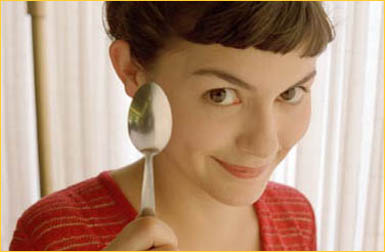
My kinship with cinema and its masters does not always prove as serene as it does with Ingmar and me. Maybe someday, I’ll tell the story of how that wretched cunt Amélie clouded my nihilism and filled me with a destructive sense of idealism and romance. But, that’s for another day.

26 January 2006

The Heart Isn't the Only Thing Deceitful

Since I've gotten some messages about The Heart Is Deceitful Above All Things from my list of DVDs of the week, I thought I might post some more information about the whole hoax.

Check this article

I can't figure out if Palm was waiting for all the shit to hit the fan to release Asia Argento's adaptation, or whether this just happens to be oddly-timed. Will it help the film? Perhaps it might draw people to see it. But perhaps it also might make a mockery of the subject-matter itself. While I was never particularly fond of the book, the subject of child molestation never makes for a good time. Though maybe a film about the hoax itself is on its way. After all, "JT" did fool a lot of people -- including Dennis Cooper -- but the article never mentions Ms. Argento, whom I have a shameless obsession with, so maybe she's in on the whole sham.

25 January 2006

Black Me Out

Rant of the Day: The Blackout - dir. Abel Ferrara - 1997 - USA/France

Yuck. I really hate it when I find myself liking a film as shamelessly awful as The Blackout. Yeah, it's true, I am a sucker for eccentricities of Dennis Hopper and Béatrice Dalle. And I do think Ferrara's The Addiction is kind of wonderful. But, The Blackout sucks. And... I like it. Matthew Modine plays a cod actor, purposefully unlikable -- and he's got a secret; he just doesn't know what it is. We, the audience, figure it out long before he does. There's a real seediness about the whole production: Dalle was arrested for cocaine charges while filming, which later resulted in the French government denying her a visa for a role in The Sixth Sense; Hopper looks just as fucked up as he did in Apocalypse Now. It leads you to wonder if there might be some authenticity to the characters' obsession with coke. All of this translates well on the screen; after all, this is an Abel Ferrara movie. I really wish I could properly defend my liking of this trash, and since I can't (and since just about everyone I know who's seen it, hates it), I can't really suggest this outside the Dalle, Hopper, or Ferrara fanatics (of which, I'm sure, there are few).

24 January 2006

Breakfast

Rant of the Day: Son de mar [ Sound of the Sea ] - dir. J.J. Bigas Luna - 2001 - Spain

I've retitled "pick of the day" to "rant of the day," because I think by the end of the summer I'll probably have run out of good films to talk about. Plus, isn't it more fun to talk about bad ones? With lovely, loning cinematography and a fancy soundtrack by Piano Magic, Son de mar nicely disguises the fact that it blows. Bigas Luna likes sex (Las Edades de Lulú [ The Ages of Lulu ], Jamón, jamón, La Teta y la luna [ The Tit and the Moon ]), and he films it well -- but no one's ever really mistaken him for a good director. Though stars Leonor Watling and Jordi Mollà compliment the images, Son de mar is better suited as dressing for your morning pancakes. Skip the melodrama, listen to the soundtrack.

In Your Stores 24 januray 2006

In case you're wondering... here's the notables of what'll be in your video store (or, more likely, on Netflix or Amazon) this Tuesday the 24th of January.


Address Unknown - dir. Kim Ki-duk - 2001 - South Korea - Tartan Video

Tartan's releasing one of the last of Ki-duk's films stateside. I haven't seen this one yet, but hopefully it falls along the lines of some of his better work -- The Isle, Spring Summer Fall Winter... and Spring, and 3-Iron.


The Aristocrats - dir. Paul Provenza, Penn Jillette - 2005 - USA - ThinkFilm

100 or so comics (only a few of them worth seeing) tell the same joke about a family of performers in their own filthy way. Some of the renditions are inspired: Sarah Silverman, Carrie Fisher, Andy Dick, the crowd from theonion.com. Others are not: Whoopi Goldberg, Richard Lewis, Carrot Top, Robin Williams. Hearing Bob Saget talk about people eating cum and shitting on one another proves to be not nearly as funny or as ironic as you may have hoped.


Can DVD - segments by Brian Eno, Hildegard Schmidt - 2003 - Germany/USA - Mute Corporation

Fans of the Krautrock pioneers can rejoice -- now they can buy the 2-disc DVD set, filled with live performances and a short film dedicated to the band by Brian Eno, for an affordable price. This re-release doesn't include the bonus CD, but runs a reasonable $23 instead of $45.


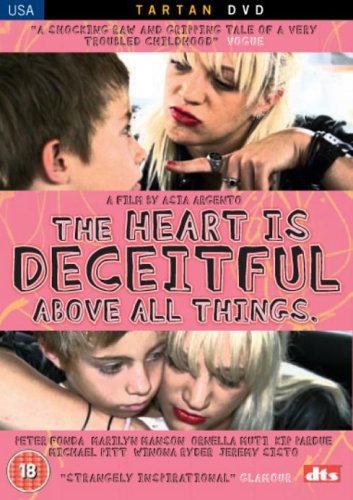
The Heart Is Deceitful Above All Things - dir. Asia Argento - 2004 - USA/UK/France/Japan - Tartan Video

For those with the all region players, Tartan UK has released Asia Argento's adaptation of the JT LeRoy memoirs on DVD this week. With a strange cast that includes Argento herself, Peter Fonda, Winona Ryder, Marilyn Manson, Lydia Lunch, Ornella Muti, and Michael Pitt, those without a region-free player can wait until Palm releases it stateside in March.


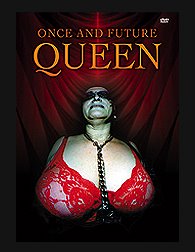
Once and Future Queen - dir. Todd Verow - 2000 - USA - Vanguard Cinema

You may like Todd Verow's second part of his Trilogy of Addiction, which began with Little Shots of Happiness and ended with A Sudden Loss of Gravity. Or you may have remembered how awful his adaptation of Dennis Cooper's Frisk was and choose to avoid this altogether.


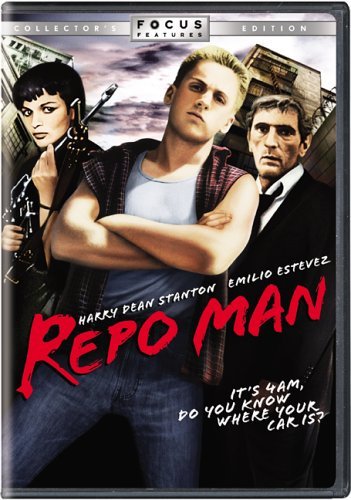
Repo Man (Collector's Edition) - dir. Alex Cox - 1984 - USA - Focus Features

Yeah, Emilio Estevez used to be cool. A friend of mine believes that any movie with Harry Dean Stanton can't be bad... and, for the most part, that's true, especially the case in Alex Cox's uber-punk rock sci-fi comedy.


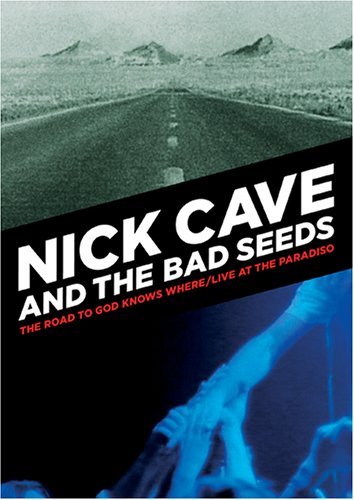
Nick Cave and the Bad Seeds: The Road to God Knows Where / Live at the Paradiso - dir. Uli M. Schüppel - Germany/UK - 1990/92 - Mute Corporation

For the Lydia Lunch fans, here's her second showing this week on DVD. For everyone else, this DVD contains a documentary about Nicky and the Bad Seeds' US tour in 1989 and a separate concert flick filmed in Amsterdam. Also features Anita Lane and Jim Thirwell.


Sin destino - dir. Leopoldo Laborde - 2002 - Mexico - TLA Releasing

TLA brings us an homage to Buñuel's Los Olvidados about a street hustler in contemporary Mexico.


Thumbsucker - dir. Mike Mills - 2005 - USA - Sony Pictures

Based on the novel by Walter Kirn, a teenage boy can't rid himself of his filthy thumbsuckin' habit. Keanu Reeves and Vince Vaughn sound like a turn-off, but, as you may already know, I'll watch anything with Tilda Swinton.


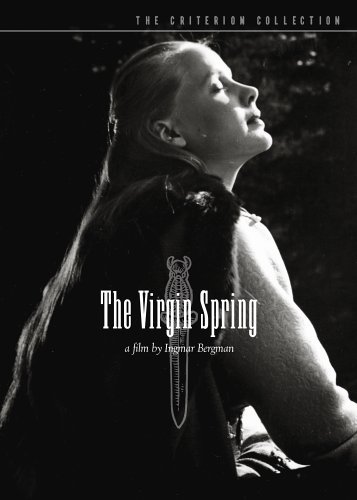
The Virgin Spring [ Jungfrukällan ] - dir. Ingmar Bergman - 1960 - Sweden - Criterion

And... the DVD pick of the week: Ingmar Bergman's The Virgin Spring. Finally out on DVD via Criterion, Bergman's first Oscar winner deals with a provincial Swedish family whose virgin daughter has just been raped. Totally grim and unmistakedly Bergman.

23 January 2006

Un cheval andalou

J'irai comme un cheval fou [ I Will Walk Like a Crazy Horse ] - dir. Fernando Arrabal - 1973 - France

Feature-length avant-garde cinema can be problematic. I’ve always held to the notion that the nature of cinema can be best expressed either in a short period of time (Buñuel’s Un chien andalou) or with epic proportions (Warhol/Morrissey’s Chelsea Girls, Brakhage’s Dogstar Man). Though a lot of films that fall under the umbrella may prove my next statement false, something of an avant-garde nature really shouldn’t fall under anyone’s pre-conceived notions of what something should or should not be. This applies to a film’s running time as well. At 100 minutes, Fernando Arrabal’s J’irai comme un cheval fou feels like too much, and yet not enough, all at the same time.

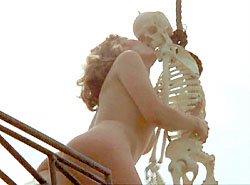
Arrabal comes from the Buñuel school of surrealism. His film is rich with sexual and religious imagery. Both directors often thwart gender roles, notably the Annie Lennox-looking girl in Un chien andalou or the main character Aden Ray’s (George Shannon) liking toward women’s clothing. You will notice other similarities in Alejandro Jodorowsky’s first film, Fando & Lis (pictured below), as it is based on one of Arrabal’s plays. As Buñuel progressed in his career, the surrealism became more fluid into his feature films. None of them (that I’ve seen, at least) ever felt like a stretched out version of Un chien andalou or L’Age d’or; rather, he applied his fascination with the surreal smoothly into more narrative films like La Charme discret de la bourgeoisie or Belle de jour. J’irai comme un cheval fou is novelist and playwright Arrabal’s second outing as a filmmaker; his first Viva la muerte is somewhat of a cult classic.


It appears Jodorowsky had a better handle on Arrabal’s material than even the writer himself. Whereas Fando & Lis is rather fascinatingly bizarre and consistently watchable, J’irai comme un cheval fou doesn’t work. Aden Ray is a snotty, bourgeois Frenchman who’s on the run after his mother (Emmanuelle Riva) is found dead. He retreats to the desert where he befriends Marvel (Hachemi Marzouk), an uncivilized man who doesn’t appear to have ever met anyone else, but remarkably speaks fluent French. Go with it, the film isn’t based anywhere near the real world. Aden becomes fascinated by his relationship with nature; animals obey Marvel, and he can make things fall from the sky. In fact, he’s rather Jesus-like, and from the onslaught of Christ imagery, it’s not an unlikely assessment. After spending time exploring his more primal nature, Aden invited Marvel back to the big city and offers him all the money he wants. What follows is something along the lines of a clumsy surrealist Encino Man. Naturally, Marvel doesn’t fit in… and Aden can’t seem to figure out why.

Unfortunately, the images here don’t compel as they should. We see people in gas-masks and white robes doing tribal dances and having sex, naked children being executed, sexual encounters with a woman who turns out to have a penis, women getting ejaculated on as they look ready to receive holy communion, among other things. Some of these images have appeared in other films. The gas-masked sex scene calls to mind a similar one in Derek Jarman’s The Last of England; the woman with the penis plays out like a more comedic Crying Game. And while Jarman and Neil Jordan may or may not have seen this film, the elements work better in their films than they do here. J’irai comme un cheval fou rings painfully obvious. Had the images been less obvious or more striking maybe the film would have worked. But maybe boring, easily-dissected surrealism fits for what’s essentially an uninteresting, simple fish-out-of-water comedy.

Grizzly Woman


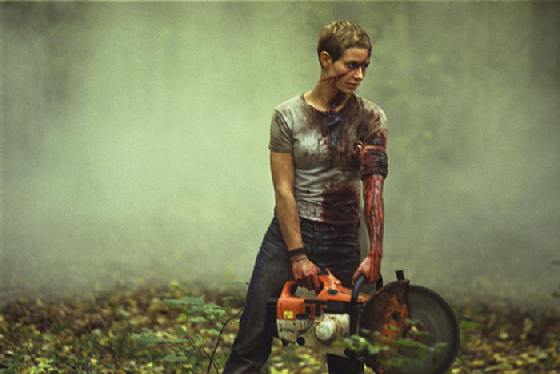
Pick of the Day: Haute tension [High Tension] - dir. Alexandre Aja - 2003 - France

A prime example of how popular American cinema (particularly those within the limitations of genre) has plagued the international circuit. High Tension owes a lot to the grizzly American horror-slasher films of the 1970s. For its first two-thirds, it's one of the most suspensful, grueling horror flicks in years. Aja composes each scene with the maximum amount of suspense and (fitting) tension. Unfortunately, High Tension also owes its demise to Hollywood's current horror mold. While it seems at first that High Tension is deservant a place with some of the great slasher flicks, Aja promtly kills it with a twist so painfully awful you almost don't want to say you liked the rest of it. Despite its fierce marketing campaign stateside, High Tension bombed at the box office -- though I might blame some of its failure on the poor word-of-mouth the Internet splatterpunk geeks gave it after Lions Gate chose to cut some of the gorier shots and dub half (!) of it into English. Aja's currently working on a Hollywood remake (surprise) of The Hills Have Eyes... and though his directing talent within the genre shows more than a little promise, he's also cowriting the screenplay with his collaborator from High Tension. Scary.

20 January 2006

Do It for Van Gogh


Pick of the Day: Blue Velvet - dir. David Lynch - 1986 - USA

I think everyone has one. Everyone has that one film (or maybe its multiple ones) that make you laugh maniacally before the jokes even happen, force you to shout out the memorable lines, and allow you to forget there was ever a time when you hadn't seen that film. Blue Velvet is mine. I can throw out some of the worst Isabella Rossellini impersonations you've ever heard... I can retell Laura Dern's dream about the robins verbatim... and I usually end up yelling out Dennis Hopper's lines before he says 'em. This proved rather irritating to the other attendees of a Blue Velvet midnight screening in Chicago one summer. Whatever, fuck 'em! I'm sure they could annoy me just as much during Steal Magnolias. Today is David Lynch's birthday, and I wanted to write about my personal favorite of his work (Twin Peaks: Fire Walk With Me)... Somehow, summarizing my thoughts about that film proved futile. Maybe I'll get to a long essay about Fire Walk With Me another day. C'mon, Roger Ebert -- the receiving end of much of my friend B and my repulsion lately -- hated it... that's gotta say something.

19 January 2006

Gimme That Baby, You Warthog from Hell!


Pick of the Day: Raising Arizona - dir. Joel Coen - 1987 - USA

I wanted to be the first to quote Raising Arizona after hearing of Holly Hunter's birth to twins this morning. I usually don't bother myself with the personal lives of celebrities, but since I'm rather fond of the Oscar winner, I thought I'd pass the news along. Along with her husband H.I. (Nicolas Cage), Ed (Hunter) steals one of a set of quintuplets in probably the funniest of the Coen brothers' straight comedies.

2005 Forgotten

When making my Best of 2005 list, I meant to post a list of films that I hadn't seen (whether due to my laziness or that they hadn't come to Saint Louis yet) that would have a likely shot of making the cut. They are as follows:

L'Intrus [ The Intruder ] - dir. Claire Denis
Caché - dir. Michael Haneke
Breakfast on Pluto - dir. Neil Jordan
The World - dir. Jia Zhang-ke
Paradise Now - dir. Hany Abu-Assad
Nobody Knows - dir. Hirokazu Koreeda
Transamerica - dir. Duncan Tucker (the chances of me liking this seem slim after my friend B wrote a scathing review of it here)
Café Lumière - dir. Hou Hsiao-hsien
The New World - dir. Terrence Malick
Where the Truth Lies- dir. Atom Egoyan
Buongiorno, notte [ Good Morning, Night ] - dir. Marco Bellocchio
Saraband - dir. Ingmar Bergman
La Meglio gioventù [ The Best of Youth ] - dir. Marco Tullio Giordana
Rois et reine [ Kings and Queen ] - dir. Arnaud Desplechin
The Constant Gardener - dir. Fernando Meirelles
The Three Burials of Melquiades Estrada - dir. Tommy Lee Jones
Comme une image [ Look at Me ] - dir. Agnès Jaoui
The Squid and the Whale - dir. Noah Baumbach
Junebug - dir. Phil Morrison
Keane - dir. Lodge H. Kerrigan
King Kong - dir. Peter Jackson
Eros - dir. Michelangelo Antonioni, Wong Kar-wai, Steven Soderbergh
Wallace & Grommit: The Curse of the Wererabbit - dir. Steve Box, Nick Park
The Aristocrats - dir. Paul Provenza
Yes - dir. Sally Potter
The Devil's Rejects - dir. Rob Zombie
The White Diamond - dir. Werner Herzog

These all seem as though they might have some shot at being on the list, though admittedly some more than others, and all seem more likely than a few others (Match Point, Capote, Munich, Good Night and Good Luck, Walk the Line, Cinderella Man) that I haven't seen. Check out this hilarious article from indieWIRE about the 11 Annoyances of 2005 and their rather sophisticated best of 2005, with Rois et reine at the top of the list.

I also forgot to mention some of the runners-up:


Walk on Water - dir. Eytan Fox - Israel/Sweden
A fascinating look into the still raging hatred between Jews and Germans, from the viewpoint of an Israeli hitman (the amazing Lior Ashkenazi, of the wonderful Late Marriage). While thematically intriguing, director Fox nearly kills his tale with leftist propaganda of homosexual tolerance.


Broken Flowers - dir. Jim Jarmusch - USA
As a long time fan of Jarmusch (and a strong hater of Coffee and Cigarettes), I had my excitements and worries about his latest offering. How could Jarmusch really make a film distinctly his with Bill Murray as his lead? Every post-Rushmore flick starring Bill Murray Redux has turned strangely into a Murray film, even under the direction of mini-auteurs Wes Anderson and Sofia Coppola. And while Broken Flowers doesn't suffer the same fate, I can't help but wonder what Jarmusch was trying to do. Maybe that's one of its strengths, but I found myself scratching my head.


A History of Violence - dir. David Cronenberg - USA
Unmistakedly Cronenberg, this cold dissection of our society's obsession with violence thrilled me at points, but ultimately never haunted me the way so many of his films have done in the past.


Tony Takitani - dir. Jun Ichikawa - Japan
Really, Ishikawa should get points for making the bold attempt at adapting a Murakami story to the big-screen. And while it works on many levels, the points he gets only add up to applause for the effort.


Land of the Dead - dir. George A. Romero - USA
I wanted this to be my "trashy" top 10 pick, but as it came out in the middle of the year, I've had time for it to escape my memory. A helluva lot better than Day of the Dead, Romero successfully advances his zombies and pulls the best performance out of Dennis Hopper in a long time.


Jesus is Magic - dir. Liam Lynch - USA
We all know Sarah Silverman's funny... and Jesus is Magic is a worthy display of her comic talents and quirks. In the world of comediennes, Silverman stands tallest over the ones who are either too irritating (Kathy Griffin, Sandra Bernhard) or too heart-on-their-sleeve (Margaret Cho).


9 Songs - dir. Michael Winterbottom - UK
Known as the chameleon of British cinema with his strange ouevre of lesbian road flicks (Butterfly Kiss), neo-westerns (The Claim), rock n roll biopics (24 Hour Party People) and documentary-narratives (In This World), Winterbottom garnered his most attention here, where he attempted to fuse unsimulated sex into a nostalgic romance between a glaciologist (Kieran O'Brien) and an American student (Margo Stilley). His attempt is admirable, and there are moments where the 9 Songs is vividly alive. Yet he never gets past the gimmick: the promise of real sex set against nine musical live performances.


The Baxter - dir. Michael Showalter - USA
Perhaps it had something to do with the fact that I followed this up with The 40-Year-Old Virgin, which I hated, that I found this to be a breath of fresh air. Coming from one-third of the Stella guys (though starring all three), The Baxter is probably a lot more subtle than you'd expect and surprisingly sweet. Michelle Williams displays a nice comic talent (and singing voice) and is far more impressive here than in Brokeback Mountain; Justin Theroux is hilarious.


The Ballad of Jack & Rose - dir. Rebecca Miller - USA
Like Walk on Water, director Miller (Personal Velocity) kills The Ballad of Jack & Rose with her leftist propaganda (oh, really, urban sprall is bad?), ruining what could have been a clever, off-the-map depiction of a motherless young girl's coming-of-age on a nearly empty island with her father (Daniel Day-Lewis) who she's sexually attracted to and her new "step mother" (Catherine Keener).


March of the Penguins [ La Marche de l'empereur ] - dir. Luc Jacquet - France
Mad Hot Ballroom - dir. Marilyn Agrelo - USA
Documentaries need be extra special for me to go wild over. I appreciate them on their own level, but I'm all about the magic and illusion of cinema. And while March of the Penguins is richy cinematic, both this and Mad Hot Ballroom recall too soon Winged Migration and Spellbound.

And the rest of the films lie somewhere in a limbo of disinterest and quiet dislike.

Izo - dir. Takashi Miike - Japan
5x2 [ Cinq fois deux ] - François Ozon - France
Lila dit ça [ Lila Says ] - dir. Ziad Doueiri - France/UK
Palindromes - dir. Todd Solondz - USA
Heights - dir. Chris Terrio - USA
Samaritan Girl [ Samaria ] - dir. Kim Ki-duk - South Korea
Primo amore - dir. Matteo Garrone - Italy
Head-On [ Gegen die Wand ] - dir. Fatih Akin - Germany/Turkey
It's All Gone Pete Tong - dir. Michael Dowse - UK/Canada
Hardcore - dir. Dennis Iliadis - Greece
Liberated Zone [ Befreite Zone ] - dir. Norbert Baumgarten - Germany
America Brown - dir. Paul Black - USA
Sin City - dir. Frank Miller, Robert Rodriguez, Quentin Tarantino - USA
Four Brothers - dir. John Singleton - USA
Ils se marièrent et eurent beaucoup d'enfants [ Happily Ever After ] - dir. Yvan Attal - France
The Edukators [ Die Fetten Jahre sind vorbei ] - dir. Hans Weingartner - Germany


And.... best of all, I may have found my film of 2005: Grizzly Man.

As I'm taking a class now on Herzog, expect a detailed review of Grizzly Man as well as rants on some of his other works. Oh, and some day I'll remember to include Oldboy in my 2005 rants.

18 January 2006

The Elephant in the Room

Pick of the Day: Heavy - dir. James Mangold - 1995 - USA

There hit a point somewhere in the 90s where American independent films stopped being.. well, independent. Flashy hipness stomped out quiet stillness. Heavy's cast might have suggested the former. You've got Debbie Harry (long after her only memorable film crossover, putting out cigarettes on her breasts, in Videodrome) as a diner waitress, The Lemonheads' Evan Dando as a jerk boyfriend, and Liv Tyler as yet another tortured "beauties." Thankfully Heavy was probably one of the less indulgent of her star vehicle transitions from music videos to film (for a more masturbatory counter-example, see Bertolucci's Stealing Beauty), though she's still the object of non-threatening lust here. And while Heavy hasn't stood the test of time, it's still always nice to see a film that doesn't rely on dialogue to tell its tale. And, of course, Shelley Winters plays the mother of Pruitt Taylor Vince and the owner of the diner.

17 January 2006

Salvation is Last Minute Business

Pick of the Day: Night of the Hunter - dir. Charles Laughton - 1955 - USA

Like a fable from Hell, the incomparable Robert Mitchum, as a twisted preacher with the words "love" and "hate" tattooed on his fingers (pre-Do the Right Thing), leaves prison to con his way into the family of his cellmate, who has confessed to stashing a large sum of cash without revealing the location. Looking for companionship and help with her two children, Shelley Winters reluctantly allows Mitchum into the family, only to have her sexual advances rejected by the preacher ("a woman's body is for begettin' children, not for the lust of men!"). Winters meets her demise, and her two children run off into the woods. What follows is a sort of perverse Hansel and Gretel until the children find themselves into the arms of Lillian Gish, as the religious positive of Mitchum's negative. With expressionistic cinematography that almost makes The Cabinet of Dr. Caligari look subtle (I may be exaggerating a bit), famed British actor Laughton (Night of the Hunter marks his only directing credit) created a film so uniquely bizarre and horrifying that no genre nor description can do the film the justice that it so deserves.

16 January 2006

City Life

Pick of the Day: The Tenant - dir. Roman Polanski - 1976 - France/USA

In my first of a handful of films dedicated to Shelley Winters, Shelley plays the creepy concierge of an even creepier French apartment building in the third installment of Polanski's loose trilogy of the horrors of apartment-dwelling (see also Repulsion and Rosemary's Baby). Truly one of Polanski's stranger endeavors, he casts himself as a man renting an apartment whose former tenant killed themselves and can't figure out what's going on with his bizarre neighbors. The wretched Joe Eszterhas borrowed a lot from The Tenant with little success for Sliver, but instead of dealing with any of the fascinating gender issues, replaced the Polanski role with Sharon Stone. If seeing Winters in one of her creepiest roles doesn't thrill you, maybe seeing Roman in drag or the lovely Isabelle Adjani giving HJs in movie theatres might suit your fancy.

15 January 2006

Fauxtograph

Weekend - dir. Jean-Luc Godard - 1967 - France/Italy

Approaching Weekend can be rather difficult, as it is like no other film I’ve ever seen. Rather… approaching Godard is rather strenuous. As the most notorious of the Nouvelle Vague gents, his films all seem remarkably different, even if you can spot his directorial stamp on each of them. What’s most striking about Godard is that his films, ranging from crime flicks (Le Petit soldat) to bizarre sci-fi noirs (Alphaville), none of his films appear to exist within the same cinematic world. One can notice the similarities between his first big success, À bout de souffle [ Breathless ], and one of his finer films, Pierrot le fou, as they both follow Bonnie & Clyde types in France (even the character of Pierrot is mentioned in Breathless), but it isn’t likely our pairs of lovers would run into one another onscreen (even if the iconic Jean-Paul Belmondo didn’t play both male leads). His style exists throughout his canon -- mostly through a series of interruptions in plot, whether it be text or characters addressing the camera. Breathless came before this. Weekend did not.


All this said, I don’t consider myself any sort of authority on Godard’s work. So much is missing in his DVD catalogue that I can only observe and comment from what I’ve already seen. And from what I’ve seen, Weekend stands as his most impressive feat (though I do hold Pierrot and Le Mépris highly). It’s a film about politics, about race, about class, about cannibalism, about Hell, but make no mistake: this is no Crash (I’ve decided to use every opportunity I can to trash that film so you will never be mistaken of my stance there). Corinne (Mireille Darc) and Roland (Jean Yanne) are married and enjoy tossing death threats at one another. They’re on their way to visit Corinne’s parents, to poison her father and steal his money. Though both are highly materialistic, they don’t appear to need the money for any particular reason, other than to just have it. They’re terribly bourgeois and thoroughly loathsome.

The film’s most famous scene, a nearly ten-minute-long single-camera shot of Corinne and Roland’s exit of the city through a massive traffic jam, occurs early in the film and would suggest their entrance into Hell had we not already felt like we were there. So what is Hell to Godard? In Weekend at least, Hell is a world destined to destroy itself in traffic, a world where poetry is dead, where materialism and misanthropy flourish. Basically, Hell is an exaggeration of Earth, sans conscience. Our antiheroes encounter a series of strange people episodically, including a snotty rich bitch (think Paris Hilton) whose gorgeous and rich boyfriend was just slain by a farmer in a tractor and even Emily Brontë whose fascination with the poetic world (and lack of assistance in the couple’s quest) leads Corinne and Roland to set her on fire.

Though at the height of his career, Godard began to slip shortly after Weekend, somewhere around the time of Tout va bien. Despite his contiuing fascination in the realm of politcs and cinema, is films became less important politically and cinematically as his message got lost in his own style. Seeing Tout va bien beforehand, I found myself bored near the midway point of Weekend. Godard loads Tout va bien with spoken political essays and theories directed at the camera; so much so that the viewer gets lost in the words. Near the end of Corinne and Roland’s journey, they hook up with a pair of garbage men who jump into similar speeches, about the state of imperialism and Africa. This scene is matched at the beginning with a sexual confession by Corrine. Telling who we presume to be her extramarital lover about a Bataille-esque sexual escapade (or is it a dream? Corinne can’t remember) between herself and another married couple. What’s lost in translation is the contrast between music and dialogue. For an English speaker, the scene is completely subtitled, and we receive every, naughty word that comes from her mouth. For a French viewer, this would be difficult, as the score often overpowers her confession. This is the beginning of Godard’s attack on his audience. Without the subtitles, the suppressing score infuriates the viewer, covering up key bits of salacious testimony. The dialogue is not similarly obstructed in the garbage men’s speeches; we can hear every word they say. Sure, you want to hear all about Corinne going down on another woman, but when it comes to the smothering effects of the United States and capitalism, you doze off. And I did. Godard shoves the knife in deepest when he cuts to Corrine and Roland on the garbage truck. The speech continues, but they sit motionless, staring into space, smoking cigarettes, simply as uninterested as you are. Godard does a more than worthy job of making you despise these two heathens, and now he’s comparing you to them! What an asshole. What a brilliant asshole move. Never before have I felt so wonderful being attacked.

Godard’s ambush on the class system and bourgeois assails violently. His attack on you, the passive audience member, arrives quietly and subtly. But it’s that's always blow that hurts the most.

Baby's On Fire

Pick of the Day: Citizen Ruth - dir. Alexander Payne - 1996 - USA

The only thing that irritates me more than parking spaces dedicated to "expectant mothers" at grocery stores is hearing about celebrities having babies. And, to honor all those media-whores and those who actually care about them, my pick of the day is Alexander Payne's Citizen Ruth, a dark comedy about abortion. I thought about using Rosemary's Baby, but I'll save that for a later date. Ruth (Laura Dern, in one of her best roles) likes to huff paint and, after finding out she's pregnant (for the fifth time), a court orders her to abort or go to prison. A bunch of crazy pro-lifers (headed by Swoosie Kurtz) take it upon themselves to make Ruth the poster-child for their cause in an leftist, godless America. While Sideways was, in my opinion, the most overrated film of last year, Citizen Ruth (along with his follow-up, Election) remains a biting and relevant satire.


On a sad note, Shelley Winters died this past weekend. I may hate the "In Memoriam" tribute, which usually just amasses to a popularity contest, at the Oscars, but when one of the screen greats passes, I think it's only best to recognize their contributions. Expect some picks of the day this week dedicated to some of Shelley's best.

13 January 2006

Young Americans

Pick of the Day: Dogville - dir. Lars von Trier - 2003 - Denmark

I've never really been a fan of Von Trier or his faux realism snuff films, Breaking the Waves and Dancer in the Dark. But Dogville really fucked me up. For once, he takes the furthest step from his ridiculous Dogme 95 manifesto, making an atmosphere that welcomes his crassness and cynicism. Speaking from a voice directly opposite The Doom Generation (read below), he approaches Dogville, the film and the town, with an omnipotent voice, removing the spacial boundaries of the town and replacing them with chalk outlines. Experimental theatre doesn't sound like it'd transfer well onscreen, especially one so theoretical, but Von Trier's a bloody asshole and makes Dogville's three-hour running length scathingly entertaining. Nicole Kidman, looking like she has no idea what's going on, plays Grace, our protgaonist who stumbles upon the small American town in question. A ruthless dissection of Americana. Look for the sequel, Manderlay, in theatres next month.

Just for fun, Von Trier had this to say: "Put my American trilogy together and you'll have one hell of a grim evening. And you will not be entertained at all!" All filmmakers are liars, and Von Trier is the king.

In Defense of Gregg Araki

This is to further support my friend B’s defense of the early works of Gregg Araki, best known now for his critics’ darling Mysterious Skin; you can find his post here. Araki’s early works, as B stated, remain some of the most misunderstood films of the past decade. This problem may be due to the fact that, somehow, The Doom Generation reached an audience outside of those who could appreciate his work. Perhaps due to the nudity, box-artwork, tagline ("Sex. Violence. Whatever."), or the range of bizarre cameos, The Doom Generation fell into the wrong hands, and this is from where its notoriety stems. Camp can be a tricky element, and one can assume it won’t be understood by its entire audience. I know plenty of people that take Paul Verhoeven’s Starship Troopers at face value, either finding it incredibly stupid or thinking it works as a big-budget sci-fi/action flick. At heart, Starship Troopers is a criticism of war in the fashion of a Russian propaganda film. At your local Blockbuster, you can probably find The Doom Generation somewhere in the action section, further aiding to its misinterpretation.

While excessive, over-the-top violence with gore effects that rival some of Roger Corman’s early works and dialogue riddled with pop culture references flow throughout the film, these elements aren’t the dividing factors for his audience. Your average Joe might laugh at the silliness of the violence and might not pick up on the Cocteau Twins reference when one character calls another his “pearly dewdrop’s drop.” Instead, Araki’s characterization serves as the main dividing point. At least in The Doom Generation, we’re not meant to see this world through the eyes of any of the three central figures. As B expressed in his post, our world is defined by its opening moments: the hardcore club, the flames behind the “Welcome to Hell” sign, the Nine Inch Nails song. Amy, Jordan, and Xavier are simply the means to get the message across. Araki doesn’t hold contempt for these characters as a director like Todd Solondz might, nor does he throw unjustified adoration onto them. Their concerns are not individualistic but far broader; this film is about a generation, not about three people within it. Casting non-actors like James Duval and Rose McGowan (though both have had work post-Araki, no one would honestly consider them actors), Araki solidifies the purpose of this characterization.

Though The Doom Generation has been called misanthropic and distancing, I find it difficult to not see the combination of empathy and criticism. One could argue that the attention to detail (specifically the soundtrack, production design, and usage of effective cameos) in a film whose intention does not lie within the realms of historical accuracy or realism must suggest an empathy with its subject. I could argue the same case for Bruce LaBruce’s The Raspberry Reich. As anywhere, criticism does not directly equal denouncement. After violently escaping their attackers, Amy shows her first moment of sadness after they hit a dog in the road; we acknowledge her ridiculousness at the death of a helpless animal over the taking of human life. The characters do not meet their final destiny out of any malice on Araki’s part. The outside, “real” world that destroys them. It’s here where Amy’s grief over the dead dog comes back to haunt her. She cries about the dog, but is left speechless after her boyfriend is murdered.

In the end, The Doom Generation emerges as an acute depiction of a subculture of youth, told both admiringly and with a critical eye. If there hadn’t been a balance of the two, The Doom Generation would not have been as successful. Too much admiration would have been masturbatory, and without it, The Doom Generation would have come across as hollow and derogatory. All things considered though, this is not a film for everyone. I hate that statement, because no film is for everyone; yet I feel that statement applied to The Doom Generation means a lot more than saying Guess Who’s Coming to Dinner isn’t for all tastes.

12 January 2006

Boo!

Pick of the Day: Don't Look Now - dir. Nicolas Roeg - 1973 - Italy/UK

Without question (along with Ken Russell's The Devils), one of the horror greats of the 70s, and I suppose it's no surprise Hollywood is planning on redoing (and likely, ruining) this film. Like so many horror films out now (in the post-M. Night Shamalamawhatever world of horror), Don't Look Now relies on its final momenets (which Bravo shamefully gave away in one of their scariest moments on film countdowns) for a better understanding of the film. Unlike any of M. Night's flicks, the surprise is not a moment of cinematic trickery. Knowing how Don't Look Now ends doesn't make us wanna go back and marvel at how well Roeg lead up to our final gasp. Instead, Don't Look Now works in the same way Citizen Kane does. It's final revelation allows us to look at the film intellectually and discover what exactly our filmmaker tries to convey. Since I'm one of those people who perfers to go into a film with no expectations, I won't give away what happens. Instead of remaking Don't Look Now, Hollywood should take note. Instead of altering our perception in some clever, betcha-didn't-see-that-comin' sort of way, why not engage our audience intellectually?

11 January 2006

She Can Hardly Wait

Pick of the Day: Strange Days - dir. Kathryn Bigelow - 1995 - USA

Before she was with the Licks, Juliette Lewis tossed her writhing body onstage in Bigelow's 1995 apocalyptic thriller, starring Ralph Fiennes as a loser who, while lusting over his ex Faith (Lewis), uncovers a police conspiracy at the coming of the end of the world. Really, this film isn't anything special... Ten years later, it's futuristic depiction of 1999 already seems dated (it was written by James Cameron). What's special is Lewis, rolling on stage covering "Rid of Me" with an intensity and sexuality that nearly matches her muse, PJ Harvey. Her lusty presence gives Strange Days' near two-and-half-hour running length a needed jolt. And even if she is a Scientologist and starred in abhorent The Other Sister, Juliette, we still love you.

10 January 2006

Brokeback Mountain is no Chinatown


Brokeback Mountain - dir. Ang Lee - 2005 - USA

What do Chinatown and Brokeback Mountain have in common? Well... honestly, very little, aside from one key detail: their titles. Both Chinatown and Brokeback Mountain signify a physical place, but in the context of the films, they more accurately represent a time and, most accurately, a state of mind associated with the place itself. For Chinatown (duh), the memory is not a happy one. For Brokeback, it's a time where our two leads could disappear from the annoyances of their exterior worlds and live in the harmony of the free air. Jake (Jack Nicholson) spends his time in the film trying to forget Chinatown, though he’s ultimately doomed to repeat that history with Faye Dunaway. Another Jake (this time Gyllenhaal) can’t stop thinking about Brokeback Mountain, yet ends up never truly rekindling the magic.

One might assume that by comparing Brokeback Mountain with Chinatown, easily one of the greatest films of all time, that I hold Ang Lee’s gay cowboy epic in a similar regard. You would be wrong. Where these two films initially separate is in the depiction of the place that they’re each named after. The physical Chinatown, as you should know, doesn’t arrive onscreen to the final moments of the film, and the state of mind associated with the locale is only mentioned cryptically (but enough for us to understand its significance). The physical Brokeback Mountain is introduced within the first ten minutes of the film; its significance unfolds before our eyes. This, in itself, doesn’t seem bad at first, for the film’s time on the mountain is easily the best time spent in the film. The shots unfold with a quiet, calming beauty, a picturesque display of Americana (this Taiwanese director sure has a thing for it, with this and his overrated The Ice Storm). The clouds drape the blue skies, fully wrapping a sanctuary around our two cowboys. What’s best about these scenes is the use of audio. Dialogue is scarce. What we hear most is the whistling of the wind in the trees, always a bit too restless; there seems to be a storm brewing throughout the men’s entire stay on the mountain. Ang Lee used similar tactics in Crouching Tiger, Hidden Dragon, using the setting and movements to reflect the general tension and mood of the film. When our lovers finally elope, they embrace violently, almost beating each other up with passion. A friend of mine argued that this reflected more a woman’s idea of how two “straight” men would react when giving into their carnal sexual desires (the short story the film’s based on was written by a woman). I might argue the men’s physicality works best in the context of Ang Lee’s work (well, really, only Crouching Tiger…). The fighting in Crouching Tiger is the same as the (yes, I’m going to say it) fucking in Brokeback Mountain. Both use outward physicality and choreography to personify the feelings within the character.

So where does the film go wrong? Promptly when we leave the mountain. When we’re brought back to the real world, we see Brokeback Mountain is going to unfold just as we suspected. Ennis (Heath Ledger), a man of few words, marries and begins a life of boring domestication. Jack (Gyllenhaal) marries a wealthy rodeo gal (Anne Hathaway), has a kid, and turns into a salesman for top-of-the-line farm equipment. Jack’s willing to drop everything to be with Ennis; Ennis can’t ditch his responsibilities nor deal with the social ramifications of their relationship. The men see one another monthly, going on “fishin’ trips” and Ennis’ wife (Michelle Williams) finds out. And so on. Brokeback Mountain is simply complacent with being a pretty run-of-the-mill tale of forbidden romance. Just because it’s a Hollywood flick about two dudes in love doesn’t make it any less typical. When we become aware of how things are going to unfold, we’ve lost interest. Lee inserts a few “for your consideration” scenes (notably when Michelle Williams confronts Ledger about his fishing trips), but otherwise, the film simply coasts. I found myself almost grateful when Scary Movie’s Anna Faris showed up onscreen as the chatty, annoying country gal sister to her character in Lost in Translation, simply to loosen the film up.

Perhaps it’s Lee’s point to make the second act of Brokeback Mountain mundane. The only time I truly felt connected with the film was on the mountain, and perhaps the annoyances and boredom of the rest of the film is as it is to show us that the magic on the mountaintop cannot be reclaimed. If this is the case, he does his job well. That doesn’t mean I can’t ask for more.

Pick of the Day: The Opening of Misty Beethoven - dir. Radley Metzger (alias Henry Paris) - USA
A porno Pygmalion! While the crass Deep Throat may have started the trend in the early 70s of mainstream porno chic, The Opening of Misty Beethoven is probably one of the most glorious porn films of all time. Director Metzger was best known for his European-influcned erotica (with such titles as Score, The Lickerish Quartet, and Therese and Isabelle). After Score, Metzger ventured into legitimate porn, and this is his crowning achievement. Sex-positive, sincere, and actually rather funny, Misty reminds us of a time when sexual experimentation and pornography were not smutty, dark, evil things.

09 January 2006

Sleepless Nights are good for Bad Movies

I’ve turned into somewhat of a masochist lately. Since I work at a video store, I have endless access to the countless uninspired duds that the studios throw on your shelves each week. Strangely enough, I have indulged myself in some purely awful cinema for no other reason than I knew how much I’d hate it. So, since I can’t sleep, here’s my list for the pits of 2005. Keep in mind I still haven’t seen The Wedding Crashers, Elizabethtown, Hustle & Flow, North County, or whatever drivel Jennifer Aniston came out with this year. (And, no matter how masochistic I may be, I can’t bring myself for the torture of watching Bewitched). This year also marks the first year the United Statesians have swept the list.
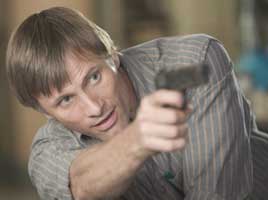
10. Happy Endings – dir. Don Roos – USA
As the first of three “I bet I can really drive my message home by telling it through a series of not-really-unrelated people,” Happy Endings’ mix of nastiness and earnestness is like water and electricity… when you’re in the bathtub. While this probably marks the first time I’ve liked Maggie Gyllenhaal, she cannot overshadow the irritation that is Lisa Kudrow, Steve Coogan, and Jesse Bradford (also loses points for putting Laura Dern in a thankless role). Its dreadful when-the-fuck-is-he-going-to-end-this closing montage with oh-so-clever text is matched in awfulness only by this year’s number one pick.

9. The Hitchhiker’s Guide to the Galaxy – dir. Garth Jennings – USA/UK
So, honestly, I haven’t seen all of this film. But from what I have seen, it’s this year’s biggest waste of decent special effects (except for maybe The Island), and the Alan Rickman-voiced robot is the most witless animated comic relief character since the new Star Wars.


8. The 40-Year-Old Virgin – dir. Judd Apatow – USA
Just because your mom liked a movie with a bunch of cum and masturbation jokes doesn’t mean it’s good. And just because it’s from the guy who created Freaks & Geeks (a decent, if over-loved, one-season-wonder) and stars Catherine Keener doesn’t mean it’s good either. As the perfect example this year (along with The Wedding Crashers) of what my roommate and I consider the new model for Hollywood comedy, The 40-Year-Old Virgin is essentially a bunch of laughless sketch appendages (the worst involving foul-mouthed Eastern Indian coworkers), branching from a thin backbone of a lifeless romance.

7. Me and You and Everyone We Know – dir. Miranda July – USA
Like an “I can do it just as good” younger sister of Wes Anderson, that Miranda July sure is quirky! Weaving a bunch of quirky moments (involving setting hands on fire, a cuuuuuuuute little boy wanting to shit in a woman’s ass, a goldfish in peril, and tag-team fellatio from a duo of sassy teen girls, among other things) into a sloppy motion picture, Ms. July created the “indie” groan of the year (welcoming it from previous years are Garden State, Igby Goes Down, and Secretary).

6. Havoc – dir. Barbara Kopple – USA
In a lesser year, Havoc would have easily taken the coveted spot of worst of the year, featuring the Princess Diaries herself whipping her tits out and responding to her parents’ interrogations with lines like, “to get away from this life!” You can tell Anne Hathaway’s character was bad because even Bijou Phillips’ parents didn’t want her hanging around their daughter. To quote my friend Mike H, Havoc is “about as sharp and edgy as an oval-shaped blanket full of kittens.” Well put.

5. Slutty Summer – dir. Casper Andreas – USA
Really, you can insert whichever crap they call queer cinema these days in this spot, but I chose Slutty Summer, a Sex & the City with fags whose depth (not unlike Le Clan – read my previous post) come from the definition of their abs. Writer-director-star (!) Andreas has crafted a deplorable (and horribly shot in consumer-quality digital) film with five sketches of humans in the gay community, each one more chiseled and disgusting than the other.

4. Pretty Persuasion – dir. Marcos Siega – USA
Presumably made as a response to the edgeless-ness of Mean Girls, director Siega has brought us the Heathers clone of 2005… a vile mess starring teen edge queen Evan Rachel Wood, who embodies a blinding sexuality most young actresses couldn’t dream of matching and who needs to branch away from crap like this (and Thirteen) if she ever wants to get respect. Wood’s character is to be the “devil in a gray skirt;” Siega has accomplished the feat of making his film the only thing more despicable than her.

3. Dirty Love – dir. John Mallory Asher – USA
Yeah, I probably shouldn’t have even seen this one, written and starring (yes, you read that right) the incomparable Jenny McCarthy. That this film presumes we’re going to care about a woman who flops around a supermarket looking for tampons to stop her Shining-size bloodbath of a menstrual flow is not only dead-wrong, but also rather insulting. Guess what, in the end she dumps her jackass, attractive boyfriend and finds love in the sex appeal barren nerd who’s always been by her side. And we’re the ones who have to pay.

2. Monster-in-Law – dir. Robert Luketic – USA
Setting women back nearly fifty years with this one, Jane Fonda returns to the screen, opposite the sweet-as-pie, stripped-of-race Jennifer Lopez. It’d be one thing for this film to just be unfunny… but it’s a two-hour-long cat fight, turning women into caddy, selfish, backstabbing cunts. Fonda’s character, as we learn from her opening scenes, is meant to be a strong-willed, powerful woman – but after being set off, she turns into a howling banshee whose unfounded hatred for her son’s fiancée (J. Lo) can only be interpreted as her being a contemptible shrew. With a strange gay agenda as well, Monster-in-Law should have been the worst of the year. And it tried hard.

1. Crash – dir. Paul Haggis – USA
How did Crash, Roger Ebert’s pick for best film of 2005, beat out both Monster-in-Law and Havoc and a film written by Jenny McCarthy? For precisely the reason that people mistakenly think this is a good film. With its in-your-face aggression, Crash wants to be the important social film you might have heard it is. However, Paul Haggis’ directorial debut is nothing more than another post-Altman piece of garbage, far worse than the others because it thinks it’s so important. In fact, Crash is obvious, overblown, bull-headed, overlong. It addresses the issue of heated race relations in Los Angeles, coming to a painfully simple conclusion… where Sandra Bullock realizes her faceless trophy wife “best friend” isn’t really a good person and finally accepts her Latino maid. What’s essentially one easy thesis, pumped with empty confrontation, dragged out in six or seven or eight (or however many) interlocking stories, Crash bluffed and tricked its way onto several top ten lists of the year, but I was not and shall not be so easily played the fool

Male "Bonding"... West Side Story style

Cool! - 2004 - dir. Theo Van Gogh
+
Le clan [ Three Dancing Slaves ] - 2004 - dir. Gaël Morel

On the surface level, these two films look like tough, gritty motion pictures. Cool!, directed by Theo Van Gogh, a distant relative of Vincent who was murdered shortly after the release of this film, depicts the streets of the Netherlands as a crime-infested wasteland for racially diverse young men. Gaël Morel's Le clan (or Three Dancing Slaves as its known stateside) tells the story of three tough-love brothers in a small French town. While having little in common otherwise (except for the depiction of second-generation North African immigrants in Europe), both films take a decidedly peculiar approach to their tales of male youth.


To any ol' viewer, Cool! might come off noticably less "cooler" (sorry, it was too easy) than its title may suggest. It's not terribly gritty, and the rap interludes look like some local Detroit hip-hoppers making a music video lamer than the song itself (though I did find out the word 'fuck' has made its away into Dutch slang). A group of mixed racial Dutch teenagers get sent to an experimental juvenile detention after a blundered bank robbery. The masterminds behind the robbery remain on the outside, lead by a pure-bred Dutch thug who eats fruits and vegetables like a reformed Ben Horne (Twin Peaks... if you didn't get it) while spatting out masturbatory stories about his accomplishes while watching lesbian porn; the older gang appears victorious, untouched by the cops and holding the prize, a sassy bartender who holds the hearts of both gang-leaders. But another bank robbery is bubbling beneath the surface... and with the young gang's impending time off for good behavior, you can bet some trouble's in store.

With all this, we get the occasional rap music video interruption of plot. What made me ill at first soon took shape in my mind as Van Gogh's reimagining of the musical. Instead of lavish choreography and production design, we get a bunch of Dutch rappers in oversize clothing shrugging their shoulders and shouting into the camera. In the past few years, cinema has brought us a new understanding (or maybe just appreciation) for the once-dead genre of the musical. There's the absurdist, tongue-in-cheek musicals (the South Park movie, 8 Femmes, The Happiness of the Katikuris), our traditional Broadway adaptations (Chicago, Phantom of the Opera, Rent), a rock 'n' roll entry (Hedwig and the Angry Inch), and of course Dancer in the Dark. Cool! is really none of the above, yet all in the same. It uses hip-hop music, which one wouldn't normally associate with the genre, yet it follows a perfect pattern for the genre. The songs don't push the plot forward, instead they offer a look inside the feelings and sentiments of the characters. The film leads us to the inevitable final bank robbery where the winner will be decided... and the girl will be nabbed. It's final sequence is laughably melodramatic, filled with slow-motion facial close-ups, characters jumping in front of bullets, the police arriving seconds to late.... and Van Gogh closes the film as if it were American Graffiti, letting us know (thankfully without awful text) what's become of the characters who never really emerged past their onscreen two-dimensions. Its closure really drives home that Cool! is not the gritty, tough film it disguises itself as.

Le clan has all the makings of a tough-guy film as well (unfortunately not a tough guy musical). Co-written by the loathesome Christophe Honoré (a man partially responsible for three of the worst French films in recent history, Les filles ne savent pas nager [ Girls Can't Swim ], Novo, and Ma mère) and director Morel (star of Les Rouseaux sauvages [ Wild Reeds ]), is--guess what--not so. Instead, we have a shallow tale of ripped, shirtless men bonding. Unlike the similarly homoerotic, female-less world of Claire Denis' Beau travail, Morel is more concerned with the development of our three brothers. He fails miserably, since I can only recall minute details about the three and surely not their names. One's a hothead who fucks trannies and loves his dog; another wants to change his life for the better post-prison; the youngest is shy and has the hots for one of their male friends. Le clan, while trying to show the hardships of small-town life, only amounts to creating a fantasy world where women don't exist (the only woman in the film--even in the background of the film--appears within the last ten minutes) and male depth can be determined by the definition of their abs. The three brothers take their small town existence in separate directions (as the film is clearly divided into three chapters and seasons), but the film can never escape its own physical shallowness. Morel treaded on similar ground, though with a tad better success, in his prior À toute vitesse [ Full Speed ], a homoerotic fantasy of gritty French street life that at least features an earnest performance (from a woman, surprisingly... Élodie Bouchez).

You (as in the one person who I know reads this) can expect a re-listing of my best of 2005 sometime within a few months, as well as, in the more immediate future, a worst of '05...and, maybe, since I think the voting's officially closed on these topics, a 'best of' for a few years back.

Pick of the day: A film I shamefully forgot on my 2005 list (further proof of a need for a repost): Lukas Moodysson's A Hole in My Heart [ Ett Hål i mitt hjärta ], from Sweden, one of the more gruelling and claustrophobic films I've ever seen, not to mention a painful critique on the media, vulgarity, privacy, and (worst of all) ourselves. It's available in a Region 2 UK version here, but can also be found exclusively on Netflix Region 1.

08 January 2006

2005

I hate the idea of a top 10 list... it's rather traditional and really only a means to cheer or boo someone based upon their lists. In fact, I think someone's top 10 list of the year -- be it music, film, whatever -- can be rather telling of the sort of person they are. So, maybe you'll be able to tell what sort of a person I am after reading the following.

I don't really feel like I am an active theatre-goer -- I loathe the experience of watching a film amongst a group of (usually rude) strangers. I don't want to start any arguments about the nature of film and how it's supposed to be seen projected at 24 frames-per-second. I'd just rather watch movies in the comfort of my own home. All this said, I didn't see many films in the theatre this year. And none of the films I did see really struck me as "the best of 2005." So I'll post the 9 runners-up instead, and perhaps I'll pick a favorite after all the winter releases make it to DVD.

So... here we go (in descending order for suspense purposes):

10. Or (My Treasure) [ Mon trésor ] - directed by Karen Yedaya - Israel/France
Nothing really unfolds as you might expect here. For one, the camera never moves; each shot is taken from a stationary camera that allows for every unflattering detail to expose itself. The story (about a woman who just can't quit hookin' and her daughter who can't bare to see her mother waste away to that lifestyle) sounds pretty throw-away... but the emotional and personal conflicts within the daughter, Or, make for juicy, complex cinema. The lead actresses, especially Ronit Elkabetz (of the wonderful film Late Marriage) as the mother, deliver performances so wonderfully in such difficult roles. It has the ability to quietly disturb and revolt.

9. The Beat That My Heart Skipped [ De battre mon coeur s'est arrêté ] - directed by Jacques Audiard - France
Packed with an accomplished and justified intensity (unlike my choice for the worst film of '05) and a smashing performance from Romain Duris, director Audiard (best known for his technically-astonishing, but snooze-inducing ode to Hitchcock, Sur mes lèvres) accomplished a real feat, remaking a forgettable American flick (Fingers) and turning it into something quite good. When not wasting his time in trite Euro comedies for the U.S. Amélie-lover (L'Auberge espagnol, and its sure-to-be-lousy sequel Les Poupées russes), Duris conjures a force that can't be matched by most actors his age.

8. The Holy Girl [ La niña santa ] - directed by Lucrecia Martel - Argentina/Spain/Italy
Teenage girls coming-of-age flicks are pretty common staple of international cinema; they can be done well (Fat Girl) or they can be done poorly (Les filles ne savent pas nager). The Holy Girl is of the former category, an assured, lovely second feature from Argentenian Lucrecia Martel (La Ciénaga). Here, Martel combines the buddy sexuality of her protagonist(s) with dangerous game of Catholicism and piety. Easy answers do not ensue (this seems to be a trend in my list).

7. Last Days - directed by Gus Van Sant - USA
On paper, Last Days sounds like a trainwreck. You've got Gus Van Sant behind the camera, choosing to tackle another subject that's rather controversial. Elephant had its merits, but its flaws tipped the scale over. The cast: you have Michael Pitt as "Kurt Cobain" in a dress, Asia Argento conjuring up her inner Anouk Aimée, Sonic Youth's Kim Gordon, and the little kid from Witness having sex with a dude. It sounds rather campy but ended up being one of the more fascinating American films this year. Van Sant chooses not to show Pitt as a literal Kurt Cobian (though he does look the part), but as a man who can't even find quietness and solitary in his own death.

6. 3-Iron - directed by Kim Ki-duk - South Korea/Japan
Ki-duk's films always seem to develop from Eastern mythology and drenched in allegories -- none of which I've ever really been able to figure out. That, however, does not hinder my appreciation for not only for the visual beauty and quietness within his films, but also for their mystery. If I could easily crack this film (along with his equally-radiant The Isle and Spring, Summer, Fall, Winer... and Spring), I don't think it'd linger in my memory as long or as vividly.

5. My Summer of Love - directed by Pawel Pawlikowski - U.K.
Luscious. It sure does have its faults (the end "twist" is nauseating), but unlike so many films I saw this year, My Summer of Love was fully alive. With its sun-drenched cinematography and Goldfrapp soundtrack, the film felt like a gorgeous love letter to the possibilities of youth. Nathalie Preiss, as the freckled, cockney-accented Mona, gives an amazing performance, reminicent of some of the best work by one of my favorite actresses, Tilda Swinton.

4. 2046 - directed by Wong Kar-wai - Hong Kong/France/Germany/China
With an impossible beauty not unlike its predecessor In the Mood for Love, Wong Kar-wai crafted his most personal (and arguably most aesthetically-alluring) film, an ode to the beauty and despair of women and the beauty and despair of one's own art.


3. Mysterious Skin - directed by Gregg Araki - U.S.A.
Mysterious Skin is a film whose true beauty reveals itself after you've left the theatre. While a fuckload better than his last endeavor Splendor, we still have a truck-load of problems here. Araki never develops the female characters (Elisabeth Shue, calling upon her inner Jennifer Jason Leigh as Neil's trampy mother, and Michelle Tractenberg, as Neil's "soul mate") as they need to be; Araki still hasn't figured out how to direct his actors outside of the world he created with his Teen Apocalypse Trilogy (Joseph Gordon-Levitt being the exception here); the narration feels strange and very "based-on-novel-y." Yet, Mysterious Skin is truly the most emotionally complex film I saw this year. Araki handles the thematically-heavy text of the film delicately. We still have a world where aliens appear, where the sounds of Slowdive and the Cocteau Twins' droning guitars fill the air, where teens still casually explore their sexualities, and where the protagonist of our tale looks strikingly like Araki himself (Gordon-Levitt is his James Duval substitute here). Yet, the world of Mysterious Skin is unlike Araki's others, for, here, we can see a sizable level of maturity growing onscreen.

2. Tropical Malady - directed by Apichatpong Weerasethakul - Thailand/France/Germany/Italy
And rounding out my list of Asian and homoerotic films comes a comprimise between the two. Like 3-Iron, most of my admiration for Tropical Malady comes from my lack of knowledge in Eastern mythology and folklore, not to say that an understanding in such would change my opinion here. Told in two-parts, the film opens with the blossoming of a relationship between two Thai men. The dialogue is quiet and simple. At almost exactly the hour-mark, we switch into the jungle where a soldier is searching for a ghost inhabiting a beast of sorts. I'm actually embarassed (slightly) to admit I don't really know what's going on in this film... so why does it make the highest slot of my list? Tropical Malady is a completely visceral experience -- frighting, haunting, tough-to-crack. For the patient viewer, its final shot will be stamped in your memory forever.

We'll see if a number one arrives at a later date.

LinkWithin

Blog Widget by LinkWithin