Stealing Beauty - dir. Bernardo Bertolucci - 1996 - Italy/France/UK
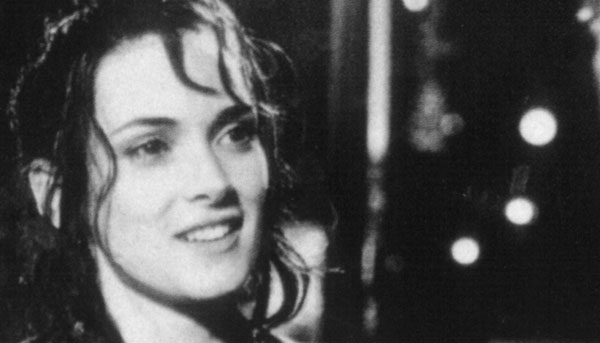
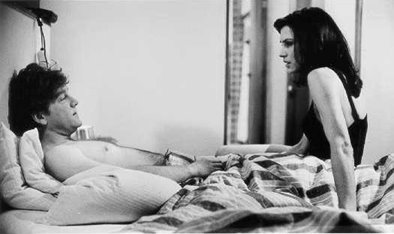
After the international success of The Last Emperor, Bernardo Bertolucci, once a powerful voice in world cinema, stopped making important films and started adding entries to Mr. Skin's database. Stealing Beauty was probably his more memorable of the 90s, but when up against The Sheltering Sky and Beseiged, it's not saying much. The film's a familiar tale of a young American girl Lucy (Liv Tyler) who comes to an artists' commune in Tuscany where her mother, a poet, once lived. The commune is inhabited by a variety of European folk: an Irish sculptor (Donal McCann), his wife (Sinéad Cusack), and adult children (Rachel Weisz, Joseph Fiennes), a former art dealer (Jean Marais), an Italian sex columnist (Stefania Sandrelli), and an English writer dying of cancer (Jeremy Irons), among others. All of this, though in the foreground, is simply a catalyst for the swiping of Lucy's virginity. Characters give her advise that appears to relate to some internal quest Lucy's seeking, but really, it's just aiding her in finally getting fucked.
When Bertolucci is honest about its intentions (those being about Lucy's fuckquest), Stealing Beauty works. It's a highly romanticized coming-of-age tale, beautifully set in Tuscany and with a fitting soundtrack. Along with The Dreamers, we get the feeling that Bertolucci believes that Americans can only become fully-realized sexual beings once they've been immersed in Europe, and that's fine, for it leads to visually lush, skin flicks. But when he tries to pretend his films are about more than that, we lose our trust. There are subplots about Lucy's search for her real father and a desire to rekindle a romance with an Italian boy (Roberto Zibetti), but all these, though still closely linked to Lucy's V-card removal, lead to obvious conclusions. Eventually, the film plays like a sexual whodunit, where characters are simply placed around Lucy just to steer you offtrack as to whom she's gonna bang. We can appreciate that Bertolucci rounded up some iconic screen icons like Marais (Jean Cocteau's former lover), Sandrelli (of his 1900), and Leonardo Treviglio (Italian stage actor, made famous by playing the title role in Derek Jarman's Sebastiane). But, don't be fooled; there's only one thing on Bertolucci's mind here.
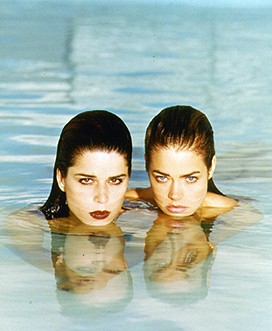
Inspired by a comment that my friend Brad made to me last night about a possible reteaming of Denise Richards and Neve Campbell, both in dire need of a return to the screen, in a film written by Stephen Peters, who wrote Wild Things, I've remembered the extreme fondness I had for the film when I was a wee lad. Wild Things is, above all else, a glorious parade of excess and trashiness. On nearly every level, we're given way too much, which strangely works in the film's favor. It never ceases to inspire a "no, they aren't going to... oh wait, they did" reaction. I could make a list that would go on for pages about everything that is taken to the fullest extreme here. The only thing missing was Denise Richards giving an unsimulated blow job to Matt Dillon. When a lesbian scene between two hot high school girls quickly turns into a bitchy cat-fight, when you get a full view of Kevin Bacon's obviously fluffed penis as he turns around in the shower, when you cast fucking Theresa Russell as Richards' gluttonous, slutty mother -- you know you're in for a treat.
The tentative title for the Richards/Campbell reteaming is Backstabbers, which might as well have been the subtitle for this film. The plot twists and turns appear to be typically Hollywood, but when they come in the droves they do in this film, you can't help but smirk. It's certainly problematic when a film is aware of its own campiness, but Wild Things is so genuinely appealing in its seediness that this doesn't hurt it at all. Richards is perfect in her token role, the rich, pouty-lipped bitch (I really can't think of anyone who pulls it off better than she does). Campbell is delightfully miscast as the girl from the wrong side of the tracks, but still pulls off the alluring cruelty. Bacon is a total sleaze, a pulpier version of his character in Where the Truth Lies. And Dillon plays exactly the person you'd expect that he would have become if his career tanked post-1980s. The only one truly out of place here is Bill Murray, as the lawyer, whose role solely requires him to make unfitting jokes and shoot looks of utter confusion and moritification at Richards. His faces are the exact ones we'd give her if we weren't in on the joke. And because he's not, he's useless here. It's actually most surprising that the film was directed by John McNaughton, whose Henry: Portrait of a Serial Killer was a starkly realist horror film. He made a campy women-in-prison film a few years prior with Anne Heche and Ione Skye (weirdly predicting both of their "coming outs" as lesbians) called Girls in Prison -- though I haven't seen it, I doubt it matches the tawdry brilliance that is Wild Things. The film goes so far over-the-top you can't help but be shocked at the fact that McNaughton decided to cut a scene of Dillon and Bacon naked in the shower together. Now, that's too much.
V for Vendetta - dir. James McTeigue - 2005 - USA/Germany
There’s the occasional film that comes out that allows me to forget my misanthropic ways and sucks me in with its seemingly-appropriate liberalism. Punishment Park, though truly a fine film, was another example of this. V for Vendetta is the latest, a big budgeted science-fiction action film written by the Wachowski brothers and based on a popular graphic novel by Alan Moore. I don’t know if the year is ever truly revealed by one can imagine its not far into the future. Unlike the sometimes bloated depictions of the near future in cinema (Blade Runner and Strange Days come to mind), this is a world we can buy. There’s nothing extra fancy about it, other than the face everyone has their own flat-screen television and talk on more impressive-looking phones. The world is characterized by a nighttime curfew where corrupt police officers roam the streets, and the chancellor of England (John Hurt) is hidden underground and only appears through video screens. England has become a totalitarian society, and we’re to believe that, after a serious war, the United States has lost its world power. None of this seems terribly out of the ordinary, as it never appears to be a far-fetched depiction of our future. The film begins on the 5th of November, where a masked political terrorist named V (Hugo Weaving) destroys a London landmark and aids a young woman (Natalie Portman), who becomes his captive and eventual ally.
I always want to bite my tongue when a film comes along that goes against my beliefs of cinema, yet works satisfyingly to my dismay. The film’s attack is so above ground that the allegories in the film stop being allegories altogether. The film’s surprisingly pro-gay message is right there on the screen, not thinly-veiled as it were in X2 or any of Brian Singer’s other superhero films. Political corruption and its ties to the media aren’t merely suggested, they’re explicit. And the only thing that’s truly subversive about the film is that it was backed and released by a Hollywood studio. Yet, V for Vendetta is a necessary call-to-arms. It’s a film with revolutionary ideas, albeit ideas that are never hidden beneath the surface. Oh, and did I mention it’s entertaining as fuck?
I just wanted to wish a blessed birthday to one of my favorite screen goddesses, Nomi Malone... I mean, Elizabeth Berkley. She turns 34 today, and here's hoping that she gets back on the screen soon. At least her birthday list is easy: someone buy that bitch a dress from Ver-sayce... or just a bag of chips.
And, though Showgirls is certainly her masterpiece, we can't forget that she provided the best moment in all of the seasons of Saved by the Bell. Found here:
Close to Léo (Tout contre Léo) - dir. Christophe Honoré - 2002 - France
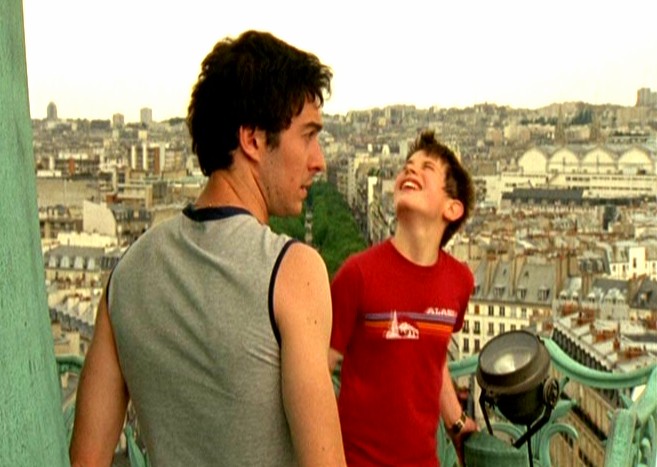
Here is part one of my unofficial Death in France festival that I'm hosting for myself in my room (I'm rewatching Sous le sable later on this weekend as part two). Close to Léo shows us a French family--father, mother, four sons--that must cope with the revelation that the eldest of the brothers, Léo (Pierre Mignard), has been diagnosed with HIV. Adapted from his own novel, writer/director Christophe Honoré politely spares us of the mundane coming-out story (Léo's family already knows he's gay and don't appear to have an issue with it) and takes us directly to the crisis within the close-knit family. The film isn't solely about Léo's coping (or, to be specific, lack thereof) or even the turmoil felt by the youngest, Marcel (Yaniss Lespert), who's been spared the news of his brother's affliction. Instead, it's about the family and how they collectively react. The father, a handsome photo shop owner, and the mother, trying to keep from unraveling, individually take Léo to his doctor visits; the other two brothers, one a goody-two-shoes, the other a slacker, act as if nothing's wrong and become upset when the issue is brought up. Léo's always at the breaking point, seemingly cold to the world outside of his family and accepting of what he considers a death sentence.
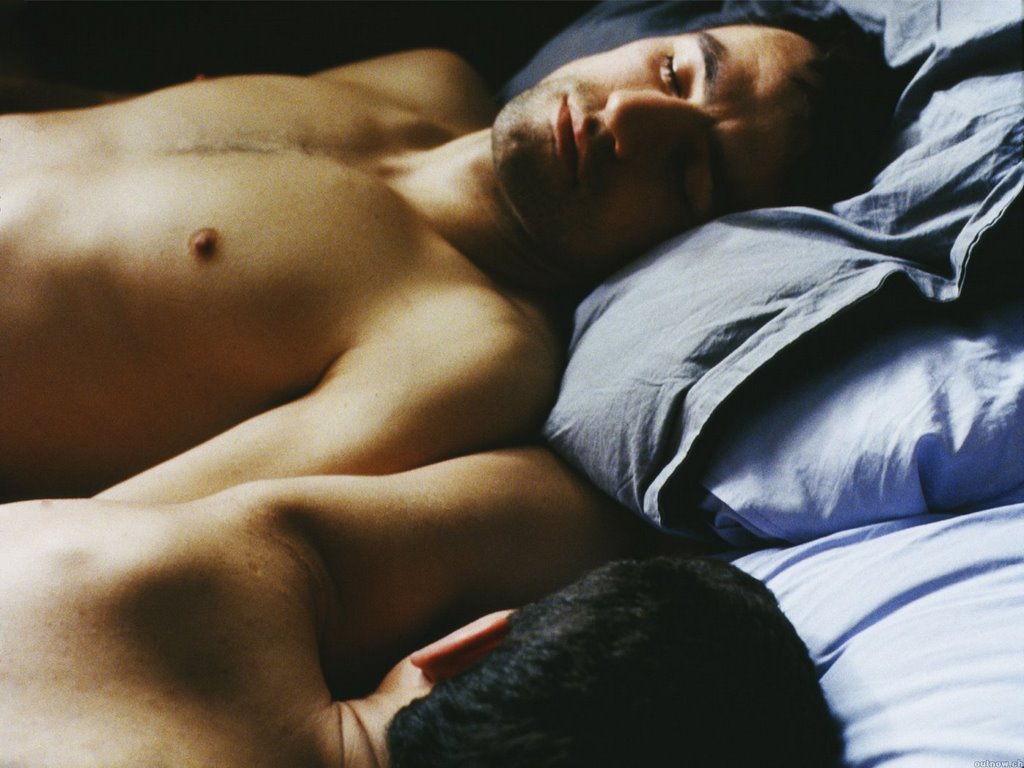
The film is considerably flawed (some of Honoré's stylistic choices are questionable, from both the images and to the especially poor choices in music), yet there's still something remarkable about Close to Léo. Honoré cleverly escapes the trenches of melodrama by combining a satisfying blend of harsh reality and tenderness. The film is gentle without being soft and upsetting without being cruel. Our understanding of the family really blossoms during bedtime scenes, where characters curl up to one another to escape the loneliness or possibly forget for those moments the gravity of Léo's situation. Cradled in each others' arms, the characters and their relationships come alive, which is why the English title Close to Léo works much better than the French one, which literally translates as All Against Léo. It's this tenderness, among other things, that probably made Honoré's horrible adaptation of Georges Bataille's Ma mère the disaster it is. While he understood the close ties of family here, tenderness has no place in dealing with Bataille. Though with Close to Léo, it's the film's gentleness that makes it work.
Caché - dir. Michael Haneke - 2005 - France/Austria/Germany/Italy
A friend of mine really hates bandwagons. So naturally, he chose not to jump on the one for Caché, Michael Haneke's latest and possibly most-widely seen. Naturally, most thoughtful cynics would become weary of something that's attributed nearly unanimous praise. As a cynic, I understand. But as a Haneke fan, I cannot. It's one thing to look through Eternal Sunshine of the Spotless Mind and try to find reasons to dislike it, because your lame sentimental ex-girlfriend thought it was the best thing since sliced bread. It's quite another to take a film like Caché and find a reason to put yourself outside of the majority, even for the simple reason that I've heard so many times before: "they just don't make 'em like they used to." This wasn't his exact reasoning, but I can't say I haven't heard it before. And I can't agree that Caché could be mentioned as an example of one of those films that just can't live up to how they used to make 'em.
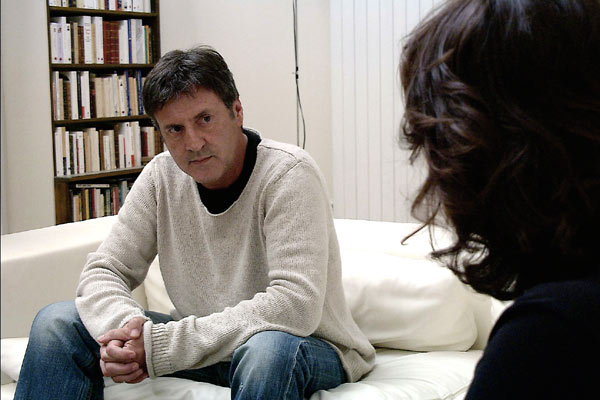
His main criticism was not in the direction, but in the story itself. He couldn't believe that what unfolds in the film could really be attributed to the actions of a child. How can we buy the film if the director assumes that a child must live up to the same moral standards of an adult? Naturally, I agree with this claim, but I do not believe this is what Haneke was doing. The deep-rooted guilt that emerges within Georges (Daniel Auteuil) does come from a despicable act of his childhood, but my friend failed to see what this act really signified. Haneke is a master at presenting the problem without ever speaking its name, and this is where people get confused. Georges is an upper-middle class father and husband, working as a television literary analyst, an almost by default boring liberal (the casting of Auteuil is perfect, as I've always found him to be a forgettable, yet prominent figure in French cinema). The series of videotapes unravels a world of pain and interior guilt on both him and his family, eventually leading back to an unflatteringly selfish act as a child for which he has never repented. Granted, this act, committed by a child, should not be held in the same moral regard as one performed by an adult. However my friend failed to see the issues of class, the issues of race that are unspeakably apparent in this memory.
As I stated before, none of these issues are ever mentioned in the film; they're only suggested. My friend failed to conceive that perhaps this act could have been a signifier for a greater problem for Georges. Georges doesn't just have himself to worry about, for he has both his nuclear family and career at stake, and one directly affects the other. Perhaps there are problems elsewhere, which would explain why Caché only won the best director prize at Cannes, losing the Palme d'Or to L'enfant. Haneke's work as a director is really the most commendable aspect of the film. No image and no scene is throw-away, no matter how insignificant it may initially seem. Under the guise of a thriller, Caché brilliantly confronts the long-seeded guilt of the middle class, intellectually leaving the answers up to the audience. Much discussion has been made of the ending of the film, but I find it to be rather unimportant, though it does open up a flood of supplementary interpretations. Regardless, ignore the backlash and just keep sitting around assembling reasons why you think Charlie Kaufman is a putz.
Sometimes, a film, no matter how good or bad it may be, just cannot connect with me. Today, I received Cassavetes' Opening Night and Maurice Pialat's Loulou in the mail from Netflix, popped Loulou in (which I had seen years ago), and promptly pushed the stop button twenty minutes in. It had nothing to do with the quality of the film, but my particular mood. I just couldn't bring myself to get into a Cassavetes-esque film after watching an actual Cassavetes film. Plus, how many times do I have to see Gérard Depardieu as the rugged French tough guy? And how many times do I have to see Isabelle Huppert slapped? Don't get me wrong, I could watch Huppert get slapped 'til the cows come home... but not today. So I did what I had to do: I sealed the envelope up and dropped it in the mailbox. Maybe another day.
Cinema so rarely gives us that beautiful escapist feeling any more (The Transporter 2, which I may write about soon, is a fine example of the contrary), so when a film does, whether it's of high merit or not, one must appreciate it. Mike Figgis' Hotel is one such example. It's like going on a fucking vacation... and not one of those vacations you had to go on with your parents and siblings where you placed license plate games and stayed in the hotel watching TV the whole time. It's more like a vacation to a gorgeous European locale where you don't speak the language and don't really care. Such artistic pretension hasn't shown its face since Peter Greenaway (a fellow Brit). Well, such satisfying pretention, that is.
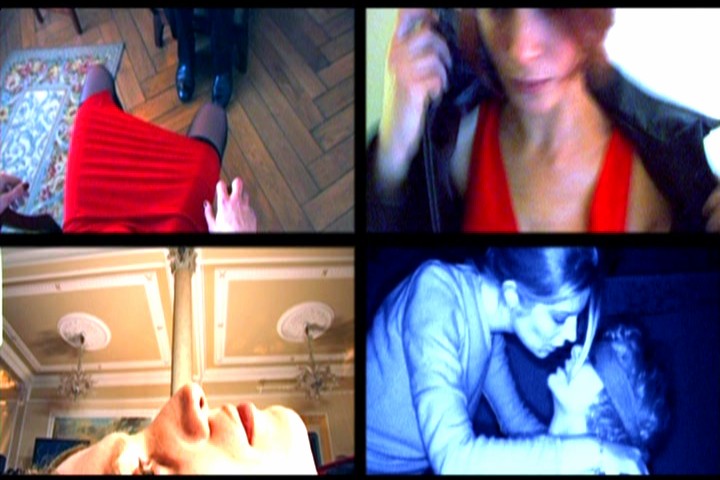
Figgis' Time Code was a digital experiment in which four camera captured real-time action loosely surrounding a Hollywood satire. The feat itself was marvelous, even if the film was deservedly forgotten shortly afterward. He returns to digital experimentation with Hotel, sometimes employing the quad-screen in Time Code, but often using simple split-screens, night vision camera, and the blending of images. American audiences threw their hands up, and the film went hidden for nearly four years until getting a direct-to-video release. There's a lot of fucking stuff going on here, including a British film crew making a tasteless Dogme adaptation of The Duchess of Malfi, an American tabloid whore Charlee Boux (Salma Hayek) making a documentary about the production, a murder subplot, and the hotel staff that appears to be kidnapping people and feeding their bodies to the clientele. All of this sounds like a mess, and it is -- but a rather glorious mess.
I purchased Hotel from my work for around 5 dollars (we had plenty of backstock) and found that multiple viewings really don't enchance the film in any way. One would think a film as convoluted as this would do so, but you soon realize that the magic of Hotel is in your initial blindness to its strange and alarming provocations. I have a particular fondness for films that challenge our senses, even if the final result is as messy as my room looks right now, and especially when its teamed with lofty ambition. To make sense of Hotel would be futile, but I can't say it's not worth a shot to allow yourself to just go with it.
Swimming Pool - dir. François Ozon - 2003 - France/UK
In preparation for Ozon’s latest, Le Temps qui reste, I revisited Swimming Pool and recalled what my friend Brad said about the film: “it’s too clever for it’s own good.” This is certainly the case and even more so when watching the film for a second time, knowing the “surprise twist” that baffled viewers that stumbled upon Swimming Pool expecting a saucy French thriller. In knowing the twist (which I will not give away), one can see the clues Ozon laid out throughout the rest of the film, rather meticulously. Ozon’s craft is not in question here; never did I think previously that the twist was a cop-out ending. However, in looking back, it is certainly possible for someone to be too clever, a surprising thing when you realize how shockingly unclever most Hollywood films are these days. Somehow, Swimming Pool never rises above its cleverness, and, on the surface, its tarty-French-vixen-inspires-the-sexual-awakening-of-a-crusty-old-Brit storyline fails to entice.
On the other hand, Swimming Pool is rather refreshing solely for Charlotte Rampling. In her second film with Ozon (the previous being the sublime Sous le sable), she seems to have found a welcome place in French cinema, one of the few countries where established, over-forty actresses can flourish (see Isabelle Huppert and Catherine Deneuve). Unlike Sous le sable, Ozon strips away her beauty, turning her into just the school marm, sexually-repressed English bitch you’d have imagined the character to be, making us forget that in her 50s, Rampling is still really sexy. But this is to her credit, naturally, as it elevates her above simply being the hot older woman you remember from The Night Porter. Also to his credit, Ozon immerses Swimming Pool with a steaming sexuality, with Ludivine Sagnier (whom he’d worked with twice before) as the voyeuristic object of desire. Swimming Pool may be admittedly clever to the point of distraction and noticeably without the certain moxie that so characterized his earlier films, but as a well-conceived diversion, it works.
Rarely do films come along that solely exist to just make you feel miserable. This is neither a good nor a bad thing. In recent years, very few films can touch House of Sand and Fog, a bitter tragedy of the American dream. Kathy (Jennifer Connelly) is an alcoholic whose husband recently left her. She's falsely accused of unpaid taxes, and her house goes on the market, quickly sold to an Iranian immigrant (Ben Kingsley, who can really get away with playing any race) who's trying to keep his family in a falsely affluent lifestyle. Conflict ensues, and the screen saturates with utter despair. Both characters are flawed to irredeemable extremes, which makes the struggle that much more jarring that neither one is in the right or wrong. The only smirk-worthy aspect of House of Sand and Fog is that it was hilariously released on Christmas 2003, the perfect feel-bad movie for the holidays. That the film is so relentlessly, jaw-droppingly bleak can be admired, though expect it to fuck the rest of your day up. The film really goes beyond criticism; description is all one finds themself doing... and don't be surprised if you start going through the thesaurus trying to find synonyms for "dismal."
Wild Side - dir. Sébastien Lifshitz - 2004 - France/Belguim/UK
In creating my 100th post, I reminded myself of all the wonderful films I saw years ago, that I have yet to revisit. I’d mentioned that Presque rien was certainly one of the more important films of my cinematically formative years, so naturally, while in Paris, I had to check out Lifshitz’s follow-up Wild Side (which was actually the first part of a poorly-conceived double feature with Catherine Breillat’s Anatomy of Hell). Watching films in the French language while you’re in France can be difficult. I speak French, but when it comes to the language in contemporary film, even in a film as quiet and image-heavy as Wild Side, I feel like the dumb American tourist asking a man on the street “par-lay voo on-glay?” The characters never face the camera when delivering their lines and often the words come under their breath. (The clinical, theoretical dialogue of Anatomy of Hell proved much worse, though) So, there were several lines of dialogue that slipped right past me while watching, yet, if you’re familiar with Lifshitz’s work, it doesn’t really matter. Most of his scenes unfold without dialogue where the viewer is left to search for meaning by looking instead of hearing.
Though closely related to the poetry and silence of Claire Denis’ films (as well as using her famed cinematographer Agnès Godard here), his films resemble more mid-period Bergman than anything else. His films aren’t as perplexing or as desolate as Denis’ work, because all of our answers lie within the faces of our characters and the structure. Bergman became obsessed with this idea around the time of his chamber drama trilogy, as most famously with Persona and Cries and Whispers. All of the answers we need to take from their films are placed upon the gazes and expressions of the characters. There are scenes in Wild Side; for example when a character asks to look at another’s hand, we’re surprised to not find a close-up shot of the hands, but the static shot of the faces as the action takes place below the frame. Like Presque rien, Wild Side is a nonlinear collage, placing moments of childhood and moments of the characters’ Parisian life in between the central story of a transsexual, Stéphanie (Stéphanie Michelini), who returns to care for her sick mother (Josiane Stoléru) with her two lovers, a young prostitute from North Africa, Djamel (Yasmine Belmadi), and a Russian immigrant, Mikhail (Edouard Nikitine), who can’t speak French. As the faces tell us what we need to know within the frame, Lifshitz’s style of narrative gives us the answers between the frame. Most of the dramatic moments of the film, such as the death of Stéphanie’s father and beloved sister or Mikhail’s running away from Russia, occur entirely offscreen. This is because Lifshitz is not concerned with melodrama or even our expectations of how a film should be; instead, he focuses on the placement of the lost souls that inhabit the film. We’re not always meant to find out what happens or how it happens, but what is left and what it has done.
Wild Side really was an accomplished follow-up to Presque rien. Wild Side takes us beyond the torments of youth and first love and into the pains and desires of family; it’s almost a further, stronger development of the underlying familial anxieties of Presque rien: absent father, sickly mother. Lifshitz never plays his hot topic interests like transsexuals, North Africans in France, or illegal immigrants for shock value or social acceptance; that his film never is never a parable, and that his characters are never single representations of groups of people, is admirable. It’s not so often directors emerge that really excite me, but Lifshitz has become one of the tops. Expect some further blogs on similar filmmakers in the coming weeks, as I’ve been solely revisiting films that have affected me in the past few years, especially the ones where the filmmaker is aware of the drastic difference between show and tell and the importance of faces versus the importance of dialogue.
Sofia Coppola is public enemy number 1. I was masturbating and laughing reading all the negative reviews of her upcoming Marie Antoinette, when I stumbled across the soundtrack listing, which rendered me cold. That bitch. Why does she have to have such impecable taste in music and make such mediocre films? The track listing (or at least the music from the film) is as follows (I'm not including the classical music she used):
"Natural's Not In It" - Gang of Four "I Don't Like It Like This" - The Radio Dept. "Jynweythek Ylow" - Aphex Twin "Pulling Our Weight" - The Radio Dept. "Il Secondo Giorno Instrumental" - Air "Keen on Boys" - The Radio Dept. "I Want Candy (Kevin Shields Remix)" - Bow Wow Wow / Kevin Shields (uhhhh...?) "Hong Kong Garden" - Siouxsie and the Banshees (fuck!) "Aphrodisiac" - Bow Wow Wow "Fools Rush In (Kevin Shields Remix)" - Bow Wow Wow / Kevin Shields "Plainsong" - The Cure "Ceremony" - New Order "Tommib Help Buss" - Squarepusher "Kings of the Wild Frontier" - Adam Ant & the Ants "Avril 14th" - Aphex Twin "What Ever Happened?" - The Strokes "All Cats Are Grey" - The Cure (is this some weird Valley of the Dolls reference?)
The Radio Dept., a Swedish rock band, is apparently the band she's pimping here ("Keen on Boys" is sublime). You can see an uninteresting video for their wonderful song "Where Damage Isn't Already Done" here via YouTube. At least, New Order's "Age of Consent" which is featured in the trailer, won't be in the film. Apparently this plus a bunch of IDM (I fucking hate the name of the genre, but I think Squarepusher/Aphex Twin music should be in a category of its own) is how she sees the French Revolution. And I bet that bitch matches the images well with it. So on this note, here's a couple other amazing soundtracks to films of varying quality (if you know me, these choices will probably be a bit obvious).
Stephin Merritt's music lends itself beautifully to Pieces of April, a film I tried not to see and then, after hearing Merritt did the soundtrack, tried not to like. Surprisingly, I liked the film a lot -- and not surprisingly, I dug the soundtrack. I haven't seen Eban and Charley, nor do I plan to, but the soundtrack is equally as wonderful. On Pieces of April, he's credited alone, with The Magnetic Fields and his side-project The 6ths (his other side-project Future Bible Heroes doesn't make an appearance, though could you really tell that much of a difference?). "Maria, Maria, Maria" and "The Little Ukelele" off Eban are strongly recommended.
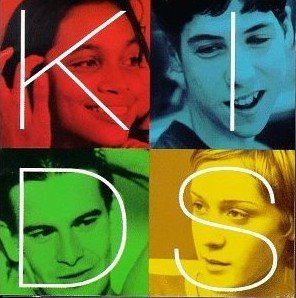
Like Merritt, Lou Barlow's soundtrack to Larry Clark's Kids features various incarnations of him. Most of the songs are attributed to his Folk Imposion, which garnered a hit out of "Natural One," but it's Sebadoh's (Barlow, again) "Spoiled" that's the highlight here and the film's stark, bleak closer. The song wonderfully puts perspective into the film, making you forget, seeing Casper on the couch naked and vacant before the credits go by, Clark's irresponsible sensationalism. Though I don't remember it in the film, Slint's "Good Morning, Captain" off their Spiderland and two Daniel Johnston songs are the non-Barlow tracks.
1. Can - I Want More 2. Aphex Twin - Goon Gumpas 3. Boards of Canada - Everything You Do Is a Balloon 4. Can - Spoon 5. Stereolab - Blue Milk 6. The Velvet Underground - I'm Sticking with You 7. Broadcast - You Can Fall 8. Gamelan Drumming 9. Holger Czukay - Cool in the Pool 10. Lee 'Scratch' Perry - Hold of Death 11. Lee Hazlewood and Nancy Sinatra - Hold of Death 12. Ween - Japanese Cowboy 13. Holger Czukay - Fragrance 14. Aphex Twin - Nannou
Though missing the final song in the film, The Mamas and the Papas' "Dedicated to the One I Love," Lynne Ramsay's soundtrack to Morvern Callar works on levels much more thoughtful than your typical compilation soundtrack. The music works as a plot device, the last present given to Morvern (Samantha Morton), by her dead boyfriend. I would have probably preferred that the soundtrack be entirely the mix tape; the Holger Czukay songs are used during parties Morvern attends and are not on the mix, though his band Can is. Yet it all works beautifully both within the film and, though to a slightly lesser extent, in your CD player.
Lost Highway is probably the only Lynch soundtrack that isn't totally consisting of Angelo Badalamenti's score, though he shows up a lot here, along with Trent Reznor who co-produced this (Nine Inch Nails' "The Perfect Drug" was the big hit off this album). And while certain music was completely of its time (would Lynch really want to use Rammstein in another of his films?), it still makes for moody (surprise) excellence. Some of the highlights are The Smashing Pumpkins' "Eye," Marilyn Manson's weirdly wonderful cover of "I Put a Spell on You," Lou Reed's "This Magic Moment," and David Bowie's "I'm Deranged," which is featured in the opening credit sequence. Naturally, I'd also recommend the soundtracks to Twin Peaks, Fire Walk with Me, Mulholland Drive, and The Straight Story. NOTE: Though used in the film, This Mortal Coil's "Song to the Siren," which Lynch wanted to use in Blue Velvet during the scene where Kyle Maclachlan dances with Laura Dern at the party, is not on here.
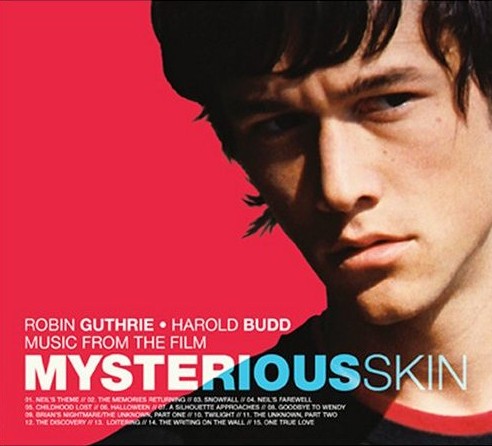
I'm a little biased in that Gregg Araki and I have even closer taste in music than Sofia. Mysterious Skin is a bit different, as its not a soundtrack as much as it is the score for the film composed by minimalist Harold Budd and Cocteau Twins' guitarist Robin Guthrie. Sure, the soundtracks for all his other films are awesome, but Mysterious Skin stands on its own as a work of art comperable to the film itself. Here's a list of the (awesome) songs featured in the film, but not on the soundtrack, in case you're wondering:
Slowdive - Golden Hair (a Syd Barrett cover) Curve - Galaxy Slowdive - Catch the Breeze The Cocteau Twins - Crushed Slowdive - Dagger Ride - Drive Blind Sigur Rós - Samskeyti
1. Hoover - 2 Wicky 2. Portishead - Glory Box 3. Axiom Funk - If 6 Was 9 4. John Lee Hooker - Annie Mae 5. Liz Phair - Rocket Boy 6. Stevie Wonder - Superstition 7. Nina Simone - My Baby Just Cares for Me 8. Billie Holiday - I'll Be Seeing You 9. Mazzy Star - Rhymes of an Hour 10. The Cocteau Twins - Alice 11. Lori Carson - You Won't Fall 12. Sam Phillips - I Need Love
Really the only thing going for Stealing Beauty was the visual landscape of the film and the music that accompanied it. Liv Tyler was remarkably unappealing as the American virgin out to come of age in Tuscany (where better?). The soundtrack mixes the music of a rebellious teenage girl (Liz Phair's "Rocket Boy" is perfect here, though Hole's "Rock Star" is not present on the soundtrack), mood setters ("Alice," "Glory Box," and "2 Wicky"), and the music of a man reflecting upon youth (Simone, Holiday, Wonder).
Like Mysterious Skin, the soundtrack to demonlover has a score from highly influential post-rockers; here, it's Sonic Youth. I find myself listening to this a lot, even though I'd imagine it to be even too sparce for most people to get into, outside of the film.
Don't think I'm just trying too hard to push hip soundtracks from movies I like. For the sake of redundancy, I didn't mention the soundtracks to Buffalo '66 and The Brown Bunny, though, as you can guess, I recommend them highly. I omitted some brilliant soundtracks, like Purple Rain and (of course) Xanadu, simply because they're musicals... and everyone knows how great they are (well, in the case of Xanadu, they should: c'mon, Gene Kelly, Olivia Newton-John, and ELO! on rollerskates). And you better believe I'm fucking excited about the Outkast musical, Idlewild, in theatres next month.
Somersault - dir. Cate Shortland - 2004 - Australia
There are numerous ways that important facets of films can become oblivious to the audience member. In some cases, a reference or issue is lost in time - a moment that was once relevant slips past the modern-day viewer. Often, things are lost in cultural differences - a German viewer might completely overlook a Japanese custom presented in the film. Seldom do these instances hinder a greater appreciation of a film, for the film should have qualities that expand beyond a cultural idiosyncrasy that escaped a particular audience. I don’t doubt there are films that will mean nothing to anyone outside of the time it was made or its country of origin, but those films seem hardly worthy of mention (if I could even think of one). This can also be applied on a more personal level, naturally. When dealing with sentimentality, a filmmaker runs the risk of alienating a good chunk of its audience (really, this could also be said with a director who chooses not to communicate to their audience in this way). Sentimentality asks for an audience member to, at the very least, understand where this is coming from. On a higher level, it asks for you to relate the images and feelings onscreen with your own life. When done poorly, the film can easily turn into a disaster. Even when done well, there’s going to be plenty of people who won’t relate (and maybe they’re the people you don’t want to do so). To grasp Somersault, the first feature by Cate Shortland, one must take into account all of these things.
I read a review of Michael Haneke’s Caché in which a critic commented that the classism within the film went largely over the heads of the American audience. Naturally, there is plenty more for a viewer to take in, even if the dealings with class don’t particularly resonate. The same can be said for Somersault. As Americans, we do not understand class as people of other countries might, and this is truly key to following the course of action in the film. The central figure Heidi (Abbie Cornish) is routinely discriminated by others because of her lower class. The first night she meets Joe (Sam Worthington), he refuses to take her to his parents’ luxurious house and rents a motel; the next day, he lies and tells his father he stayed at a friends’ house. Initially, I was blind to his motives. He’s probably in his mid-twenties, which eliminated the possibility that he might be hiding an affair from his family, yet it all made sense when discrimination continued to fall upon Heidi from other characters. Class may be a strong, fluid theme throughout the film, but not so much to alienate us. As good films work, Somersault is not hindered by this cultural difference.
A film critic is supposed to be impartial, yet I can surely say I’m not. I bring my own personal experience and my own prejudices to the seat. When I write about films then, I don’t try to hide this, though a certain distance is certainly essential if I want anyone to connect to what I’m saying, which is almost exactly the way Somersault unfolds. Shortland does not stray away from the sentimentality we would expect from the tale of a runaway teenage girl trying to pick up her life on her own; Somersault is a bit more maudlin than a film like My Summer of Love or Presque rien (both of which take place during similar moments in youth, which I wrote about here). I commended Olivier Assayas’ Clean for its unsentimental intimacy, yet I’m finding myself praising Somersault for opposite reasons. On a personal level, the film connected with me deeply, allowing me to empathize with characters and relate situations (and, more importantly, sensations, emotions, and feelings) to my own life. This can be applauded on its own for its accuracy and effectiveness in depicting subtle feelings that appear to be prevalent in the process of growing up. Its true strength though is Shortland’s ability to make a subtle and quiet film that doesn’t bore or nauseate. After Heidi and Joe’s first meeting, the film splits in two, insisting upon following Joe now, as well as Heidi, in his loneliness. This could have been a mistake, but, in considering the sentimentality, it keeps the film from being alienating and introspectively suffocating.
Without question, there are problems with Somersault alongside the wonderful moments. While a scene where Heidi notices a man staring at her from his car amiably impedes expectation, the functionality of other minor characters prove all-too-convenient. Somersault never overwhelms us with its dramatic affectations, though some of Shortland’s visuals a bit too radiant for the film. Cultural and personal distances aside, the film succeeds also because of Shortland’s approach to her two characters. They are steadily compelling souls (and well-played by the actors), and she presents their actions without being didactic or naïve. Their flaws make up their character and allow for natural interior and exterior conflict. Within its own unofficial genre (of which there are many others), Somersault falls somewhere in the top tier, benefiting highly from Shortland’s impressive mix of both sentimental and serene beauty.
Black Narcissus - dir. Michael Powell, Emeric Pressburger - 1947 - UK
Is there anything better than saucy nuns? Or a saucy nun melodrama? Powell & Pressburger's Black Narcissus may not rank in seediness with the likes of Ken Russell's The Devils or Walerian Borowczyk's Behind Convent Walls (Interno di un convento), but it's certainly as fiery. Deborah Kerr plays the ice queen, Sister Clodagh, assigned to run a school and hospital in the Himalayas (actually, a rather astounding soundstage), once inhabited by concubines. One would imagine the concubines to haunt the walls of this palace, but instead, it's simply the pretense for the nuns' forbidden longings to come to the surface. Contrary to most nuns-gone-wild tales, it's not the claustrophobia or seculsion that brings about their passion, but the open spaces and the wind. I read that most of these longings and the explosive climax to the film were cut for its original US release in the late-40s in order not to offend the Catholics. This is unfathomable after watching it, but I suppose the US audience was supposed to just marvel at the absolutely glorious Technicolor, aided by cinematographer Jack Cardiff. For more English-produced Technicolor epics set in India, check out Jean Renoir's The River.
Criterion has announced their upcoming releases for October, which you of course can find at their website. The releases include Lodge Kerrigan's (Keane, Claire Dolan) amazing film debut Clean, Shaven, Jane Campion's (The Piano, Holy Smoke!) Sweetie (above), Alfonso Cuarón's (Y tu mamá también) Sólo con tu pareja, and Francesco Rosi's Hands over the City (Le mani sulla città). The titles are surprisingly contemporary for Criterion, but I'm not complaining.
Though I haven't returned to the "Films I Hate" thread in a while, a revisiting of Woody Allen's epic disaster Celebrity has brought me back. Normally, I include two films of a particular theme to tie my hatred to, but, in the case of Celebrity, the only film I can think of to match its awfulness is Robert Altman's Prêt-à-Porter, a star-studded debacle that I couldn't bring myself to talk about in detail. The film left me with nothing other than a terrible taste in my mouth and, for me, that's all that needs to be said. So, Celebrity will stand alone in this post... and it's so bad, it deserves its own individual entry.
Celebrity was released at a point in Allen's career where the waters were questionable. His previous film, Deconstructing Harry, was, in this not-so-humble critic's opinion, his last great film. However, Harry was preceded by another epic Allen failure, Everyone Says I Love You. (His latest, Scoop, starring Hugh Jackman and the loathsome Scarlett Johansson will prove whether the waters are still as murky, after the success of Match Point). Celebrity casts Kenneth Branagh in the Allen role, a failed novelist who has taken to celebrity exposés, and Judy Davis as his neurotic ex-wife. If you'd put glasses on him, Branagh's Allen impersonation might have been too lousy for even MadTV. In every other scene (there's not much consistency), we hear him stuttering and lacing his voice with anxiety, characteristics of speech any Allen fan would naturally attribute to him. Davis plays a more exaggerated version of her gun-wielding former sister-in-law of Allen in Harry, but never to we understand her to be the female Allen, as her neurosis is painfully over-the-top, even for the self-loathing, reflexive nature of the "Woody" character in his own films. While both are accomplished actors, neither rise above their shitty source material or even come close to eliciting the sort of empathy we usually get from your typical Allen characters.
Our supporting characters here(of which there are many) are meant to make the savvy audience member snicker. Actors play inflated versions of themselves... Melanie Griffith as a big Hollywood actress (she wishes), Leonardo DiCaprio as the tumultuous young leading man, Charlize Theron as the obnoxious and perfect runway model. You get the picture. We're to see these people as a Hollywood freak-show (Griffith is masturbatory, DiCaprio is a violent heathen, Theron is the image-conscious partygirl), but they only serve as annoying sketches of Hollywood tabloid. This is certainly what Allen is trying to expose, but it's never as biting as he wants it to be. Instead, it's Allen's egotistical bitterness that bleeds through. Even our "sensible" characters (Joe Mantegna the successful television exec, Famke Janssen the intellectual editor, and Winona Ryder the small town girl lost in the sea of Hollywood monsters) just end up reminding us of better Allen films.
To be honest, I hated Celebrity so much that I couldn't finish it. I realize that one of Allen's strong points, even when he's mediocre as in Match Point, is his endings, but I couldn't take any more. While Celebrity pretty much sucks in every regard, it fails largely because it's not funny. Scenes that sound hilarious (for example, Bebe Neuwirth showing Davis how to perform fellatio on a banana) just aren't; often, you can see where moments of Celebrity could have reminded us why we love Allen, yet they too just don't. There's a sparkle of greatness when Branagh tells Ryder that he desires her because she, the "obscure object of desire," is the living personification of characters he's written about. We almost want to take this moment and smile, but Branagh is so irritating and Ryder so coldly "erotic" that we can't. In fact, the only thing I took from Celebrity was that bad taste in my mouth that I thought I'd never have to endure again.
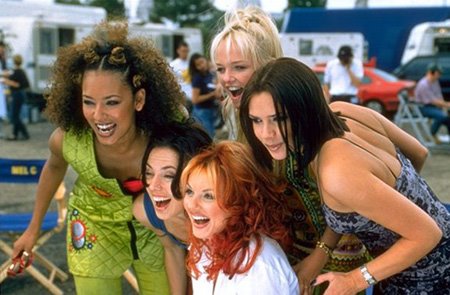
Get a sense of humor. The mere mention of both Spice World and From Justin to Kelly attracts scowls from hell, as if I had just made a joke about someone's dead grandmother and the Holocaust. The Spice Girls and American Idol? I may as well turn in my film criticism resignation, eh? Unfortunately, I shall not... and here, I shall defend both films as enjoyable trash. This will be a nice diversion from my admittedly snotty 100th film post. First off, I will say I was never a fan of the Spice Girls during their hayday, nor have I ever seen an episode of American Idol... but I'm not saying this as any sort of defense of my integrity, but for background purposes only. Spice World, with all its frivolity, throws us back to the days when pop groups made silly films that exposed nothing of the people involved in the music, but a world where these "musicians" act as their media personalities. Most people would throw up at a comparison to A Hard Day's Night, but is that simply because The Beatles are "respected" artists and the Spice Girls are merely a record exec's test-tube creation? Sure, a comparison to The Village People's Can't Stop the Music is closer in accuracy, but only because of the musical stylings. Seeing the Spice Girls run around, going to dance boot camp or being approached by aliens that want their autograph, is not like seeing the Beatles run amiably from their fans, yet who can say that the Spice Girls' brand of pop doesn't lend itself to such silliness?
The Spice Girls never function as human beings in Spice World, but as their personality creations... and even then, they only operate as parts of a single entity. They each have their own quirky traits but never really exist individually. A friend of mine compared their existence in the film to a race of aliens on Star Trek (which I have never, and will never, watch) who are all controlled by one mind. One of their friends (actually, their only friend... an Asian girl, of course, as the eastern hemisphere is not represented in their group) is pregnant and asks all of them to be the collective godmothers (the baby, which is conveniently born when the Girls realize their career isn't as important as friendship, is not surprisingly a girl, bringing one of them to remark about some serious "girl power"). Even when Spice World takes turns for the dramatic (the childbirth and the scandal where their boat tips over when the Girls are singing "My Boy Lollipop" with two 10 year old fans), it strangely works because of its lack of necessity. There is nothing that is necessary about either The Spice Girls or the film; they are candy-coated calories.
From Justin to Kelly is probably even more unnecessary than Spice World, but there's nothing wrong about that. It's a "star-vehicle," pairing the two most popular American Idol finalists in a ridiculous beach romp, à la Frankie and Annette, only with more classless sexual innuendo. In fact, From Justin to Kelly oddly plays out like an 80s soft porn film, with the sex replaced by large choreographed singing-and-dancing numbers. Justin and Kelly end up alone on a boat together, where we'd imagine the two would release their sexual urges for one another. Instead, they sing. Another scene has a trampy girl storming out of a dance-club where she finds herself in a dark alley with a bunch of scary men. Here, we should have the dramatic rape scene, but... you guessed it, more singing and dancing. The singing and the dancing are particularly unmemorable, but maybe their music just isn't my cup of tea.
The scowls I received and will probably receive after writing this are unfounded. Both films are examples of movies whose shitty reputations come from the easiness of their condemnation. The Spice Girls were all over the place, American Idol was becoming a cultural phenomenon -- and both films were throw-backs to musical subgenres that we only laugh about now. It's sort of the same case for something like Gigli, a notorious disaster that really didn't live up to its piss-poor reputation. Sure, it's lousy, but the hatred for it was all a cause of people's distaste for the overexposure of both Jennifer Lopez and Ben Affleck. Was it any worse than the shit that passes as Hollywood cinema any more? No. Spice World and From Justin to Kelly are throw-away films, neither of them worth seeing for non-fans. But, as a non-fan, I can assure you that both films are pretty unfairly tossed around when mentioning some of the worst films of the past 10 years. I repeat, get a sense of humor.
Clean - dir. Olivier Assayas - 2004 - France/UK/Canada
Someone over at the Internet Movie Database, a horrible source for user activity and input, has decided to throw around the word "cliché" on the subject of Clean as if it were... yes, going out of style (get it?). A drug-addicted mother has to straighten out her life before getting custody of her son. Yeah, we’ve seen it before, which always begs the question as to whether we need to see it again. No, we really don’t need to. Yet, this (or these) “reviewer” never really wants to question the intention or whether or not, with these said clichés, the film works. Olivier Assayas is a frantic director, whose films are always time-stamped with turn-of-this-century, and for me, that seems to be okay. Irma Vep and demonlover, his two best-known films, are beautiful messes in ways only the French can pull off. Clean appears to be his least ambitious and least confrontational but is certainly his most accomplished.
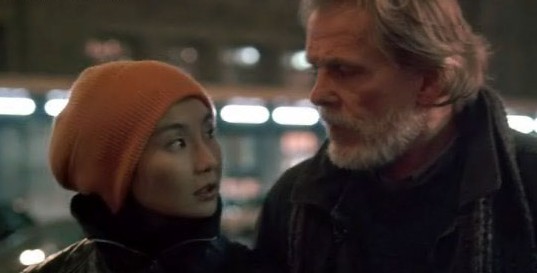
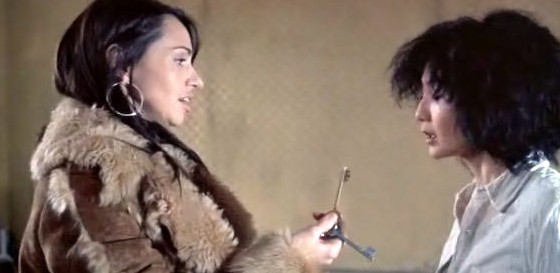
Clean is very much a standard melodrama. Emily’s (Maggie Cheung) lover, a fading musician, dies of a heroin overdose; their son is sent to live with his grandparents (Nick Nolte, Martha Henry) until Emily can clean up her act and somehow adopt a maternal instinct that she appears to lack. She returns to Paris, where she waits tables and attempts to find ways to get her son back, without actually having to establish stability in her own life. Where Clean’s strength lies is in Assayas’ presentation of a familiar tale. I had initially found myself uninterested in his leaving behind of the ambition of his prior films, but an appreciation for Clean functions in the same way that his other films do. The story lends itself to pre-established motifs of stylized drug sequences and/or cinema-vérité rawness, both problematic in their depictions. In cautionary tales of addition, stylized drug sequences always glamorize the lifestyle, enticing the viewer instead of repelling them. Cinema-vérité has reached a point where it no longer shows us the realness of life, but calls attention to itself as a cinematic decoration. Clean is not a medium between these two, but a longing and observant alternative. Nothing is magnified, glamorized, or exploited; Clean is level-headed and intimate, without sickening us with its closeness or getting so close as to hit the characters, or us, with the lens.
Cheung's performance, which won the Best Actress prize at Cannes, is exactly what you don’t expect it to be. This is not to say she doesn’t cry or stare pensively into the distance, because she does. The magic, however, of her performance is not because of this, but because we don’t register it as a “performance.” It’s a bit strange that my appreciation for Irma Vep and demonlover stem from Assayas’ ability to try a helluva lot harder than most contemporary filmmakers to challenge his audience. As a result, his films fail, admirably. Clean manages to benefit for the opposite reasons that made his other films so compelling, yet marks Assayas’ ability as a director who’s got a lot more going for him that his pretentious French sensibilities to provoke.
Here's a rundown of a couple of films I watched in between posting my four-part 100th blog. Each of these films have been released on DVD within the past few weeks.
Why Does Herr R. Run Amok? (Warum läuft Herr R. Amok?) - dir. Rainer Werner Fassbinder, Michael Fengler - 1970 - West Germany
Similarly to Nicolas Roeg’s Walkabout, Why Does Herr R. Run Amok? falls under the category of films that you essentially “get” more than half-way through. But in a good way. You find yourself sitting through most Todd Solondz's films saying the same things (well, in the case of Palindromes, you probably realize there’s nothing to “get”), but it’s much different when it comes to this film. It’s most similar to Katzelmacher, where we receive single-takes of long scenes that seem to go on longer than our comfort level would allow. Specific scenes like one where Kurt Raab tries to find a record of a song he heard briefly on the radio play like Curb Your "Begeisterung" in its awkward hilarity. The girls at the record store laugh at Raab, just as we do. When the film comes to its climax, we are not greeted with a worthy tension-release as in films like Breillat’s Fat Girl; instead it climaxes with a huge dud. The dud, though, completely works, as even in Raab’s escape we find him to be utterly pathetic. There’s also a strange relief and optimism in our pessimistic final twist, as you almost want to applaud the tragic Raab for doing what we all could have subconsciously wanted to do. Also see: Michael Haneke's The Seventh Continent.
Tiresia - dir. Bertrand Bonnello - 2003 - France/Canada
Based on a Greek myth about a person both man and woman at the same time, Bertrand Bonnello’s new film presents us with a man (Laurent Lucas) who kidnaps a transsexual prostitute named Tiresia (Clara Choveaux), holding her captive in his cellar. As time passes, Tiresia begins to transform back into a man, as she’s not able to take her hormones. I don’t like to give away much about films when I write about them, but like the majestic Tropical Malady, Tiresia completely changes its form about an hour in. After being left for dead and blinded, Tiresia (now played by Thiago Telès) develops a clairvoyance, seeing events in the future and cautioning those he sees in his visions. A friend of mine called Bonnello’s first feature, Le pornographe, a disaster, remarking that his use of hardcore sex during one scene was simply a way to get more people to see a bland film about a son trying to reconnect with his father. I didn’t dislike it as much, but it left very little imprint in my memory. Tiresia, though dark in theme, works as a mood piece about faith instead of addressing really any issue of gender. It’s certainly a film that most audiences would easily reject, yet it’s almost easier to just allow Bonnello to take you where he wants you to go. Tiresia plays by its own rules and that alone is commendable. It also helps that Bonnello accomplishes a haunting mood and atmosphere, even if it's not easily discernable what he’s doing or where he’s going.
Cheeky! (Tra(nsgre)dire) - dir. Tinto Brass - 2000 - Italy
Tinto Brass still makes films as if it were the 1970s. We open Cheeky! with our heroine, Carla (Yuliya Mayarchuk), strolling through a London park like Jayne Mansfield in The Girl Can’t Help It to an amusingly high-cheese score, where it just so happens everyone around her is engaging in lusty sex. Everywhere she turns, there’s a woman uncrossing her legs to reveal she forgot to put her panties in the laundry that morning. Or there’s a couple in heat, appeasing one another’s sexual urges. Of course, Carla, looking like an Eastern-European streetwalker dressed up as Brigitte Bardot, joins in on the fun, wearing a see-through skirt and exposing her buttocks to passer-byers. There’s a story that follows involving Carla’s tight-ass boyfriend and her search for an apartment, but really this is only an excuse to introduce Carla to as many sexual partners as possible or place her in a situation where others are about to bang. The playfulness of Cheeky!’s sexuality is admirable and refreshing, even if the film is simply pretext for close-ups of Mayarchuk’s ass and sexual experimentation.
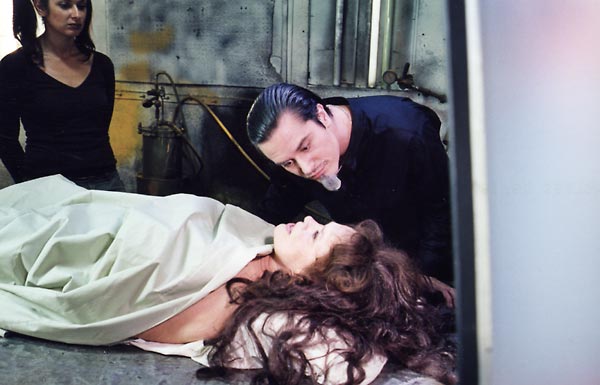
I saw this horrible film a couple of months ago called Stillwater, a thriller about a man's search for his past that made my student films look like Antonioni, and remarked, "if you're going to be fucking Lynchian, at least throw in some dancing midgets." Though I only stated that in my Netflix "Two Cents," I'm convinced Steve Balderson saw that remark and one-upped me. If he was to be Lynchian, he was gunna give me a midget with pasties on. God bless him for that, but fuck him for everything else. He tried so hard to make this film look like he was the heir apparent to Lynch that he actually tried to get Dennis Hopper to play a character named Frank (Hopper backed out, thankfully). Set in Kansas, Firecracker is about an abusive brother (Mike Patton, of Faith No More) who pesters the shit out of his pussy, piano-playing kid brother (Jak Kendall) against his mother's (Karen Black!!) wishes and ends up dead. Somehow this is all linked to a travelling carnival, where he is having an affair with the main attraction of a girlie show (Karen Black!!! again). It's a terrible fucking mess, shot in both black and white and color (a huge pet peeve of mine) and filled with a plethora of blank references to Lynch. Balderson's first feature, called Pep Squad, was equally messy and just as unsuccessfuly lofty in ambition, a black comedy slasher film that eventually turned into a ridiculous indictment of America. He couldn't direct "actors" then, and, even with top talent like Karen Black (!!!!), he still can't. Even on the grounds of seeing Ms. Black play dual roles, one of them a character obviously written for a woman twenty years younger, I cannot allow you to satisfy this curiosity. (Note: Balderson couldn't and didn't read my remarks about Stillwater, as Firecracker was made a year before Stillwater, not that I really needed to clarify this or anything...)
 Stealing Beauty - dir. Bernardo Bertolucci - 1996 - Italy/France/UK
 When Bertolucci is honest about its intentions (those being about Lucy's fuckquest), Stealing Beauty works. It's a highly romanticized coming-of-age tale, beautifully set in Tuscany and with a fitting soundtrack. Along with The Dreamers, we get the feeling that Bertolucci believes that Americans can only become fully-realized sexual beings once they've been immersed in Europe, and that's fine, for it leads to visually lush, skin flicks. But when he tries to pretend his films are about more than that, we lose our trust. There are subplots about Lucy's search for her real father and a desire to rekindle a romance with an Italian boy (Roberto Zibetti), but all these, though still closely linked to Lucy's V-card removal, lead to obvious conclusions. Eventually, the film plays like a sexual whodunit, where characters are simply placed around Lucy just to steer you offtrack as to whom she's gonna bang. We can appreciate that Bertolucci rounded up some iconic screen icons like Marais (Jean Cocteau's former lover), Sandrelli (of his 1900), and Leonardo Treviglio (Italian stage actor, made famous by playing the title role in Derek Jarman's Sebastiane). But, don't be fooled; there's only one thing on Bertolucci's mind here.