27 June 2006

Martial Art-less

A couple of weeks ago, I sort of participated in the 48 Hour Film Project -- for those of you who don't know what that is, it's a contest in which groups of people have two days to write, shoot, edit, and score a short film of the chosen genre. Each group is selected a different genre (from musical to silent film to spy), and the group whose film I helped on, the Drunken Butterflies, were given "martial arts," which is, in my opinion, one of the more difficult (we had mockumentary last year). After the films screen, awards are given out, and the Drunken Butterflies (not surprisingly) only walked away with the Best Costume (the cinematographer Chris' brother Michael Drummund did an amazing job, so this was expected). I'm not bitching about this, as I wasn't terribly pleased with the film anyway. However, after the films are screened, the judges give "suggestions for next year," in which they stated, "maybe you should tone down the racism, sexism, homophobia, and violence." Um.....

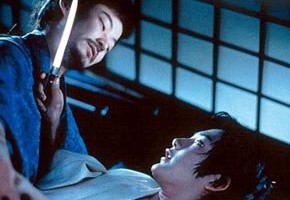
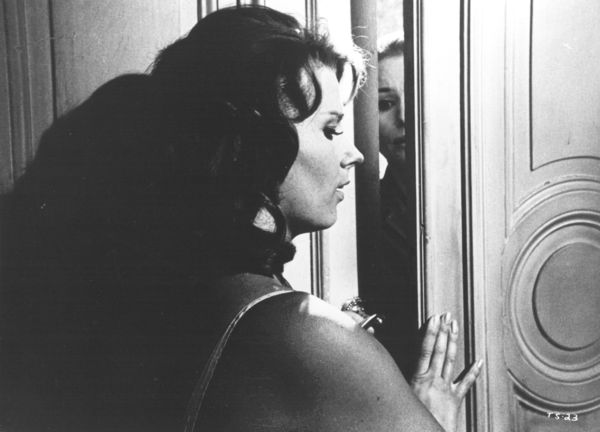
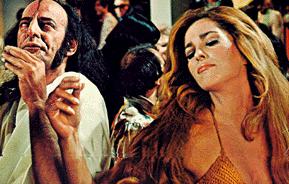
That statement opens a flood of problems with what's wrong with cinema today. Firstly, have these judges ever seen a martial arts film? If they wanted toned down violence, I don't think the genre would exist. In a recreation of a genre picture (which on a broad level is terribly conflicting, but on a smaller, personal level for a filmmaker, a challenging to one's abilities), wouldn't the application of specific genre traits like sexism and racism be necessary? You wouldn't tell someone who was given a task of making a "blaxploitation" film to tone down the racism. Or for melodrama, to tone down the sexism. Secondly, the "suggestions" are simply a testament to our times. Apparently our way of dealing with pre-existing racism, sexism, homophobia is not simply to act like it doesn't exist, but to also soften it and surround it with fluffy pillows and rainbows (non-"homosexual" ones that is). There's a very specific line that should be drawn when regarding film. I'm going to stay away from the movie vs. film comparison and say that perhaps we should distinguish the difference between media and art. Perhaps sexism, homophobia, and racism shouldn't exist in our forms of media (though it still does), but such rules cannot be thrown onto the drawing table in regards to any sort of art form. You can blame Birth of a Nation for the fashion of the Ku Klux Klan, but you certainly must remember it was probably first successful feature-length narrative in American cinema and a brilliantly composed one at that. We can curse it on idealistic grounds, yet how can we say it's "bad" in regards to "art"? The picture above, from Sam Fuller's Shock Corridor, shows a black mental patient holding up a sign that would likely offend most "modern" folk out of context. The character went crazy after failing to meet the expectations of his racial brotherhood when he became the first black man to be allowed into a white college. As a defense mechanism, he has become the people who scorned him. If a film dealing with this sort of subject matter were made today (by someone likely less talented than Fuller), we'd be given a warm-hearted story of struggle and eventually overcoming the odds... hopefully starring Morgan Freeman. Instead, when Fuller directly calls upon the problem of racism, he's direct, and he doesn't candycoat this issue. I know you've been waiting for it, so here is opportunity number 867 for me to rip on Crash. Where Crash differs is in its blind solving of problems. Even though bad shit happens to our characters (Sandra Bullock falls down the stairs!!!), they all walk away with a powerful lesson about, yep, tolerance and understanding (probably peace and love, too).

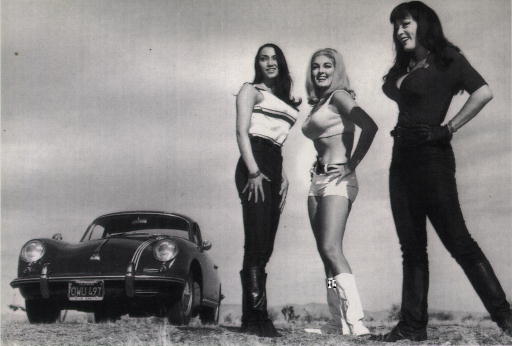
Really, isn't one man's sexist another man's feminist? I've been sort of Russ Meyer-wild lately, so here's another opportunity to bring him up. On the DVD for Beyond the Valley of the Dolls, Roger Ebert briefly discusses Meyer's reputation. On the surface, his films are laced with uncommonly busty ladies. Yet, as Ebert states, in nearly every one of his films, women play the active roles, while men are often just in the background. Women also exert a sexuality, a carnality, that is usually correlated with masculinity. Though perhaps too flip-sided to be considered a successful depiction of feminist theory, it's a helluva lot more progressive than most directors working at the time. Sexism in cinema now exists in the same way racism does. It's still a problem (duh), but we're asked to accept easy answers to a problem that isn't simple.

I must say, the Drunken Butterflies' eight minute martial arts short, entitled Flute Master IV: Spirit of Doom, wasn't meant to combat, critique, or to perpetuate any of these topics (and, I don't know where the judges got that the film was homophobic in any way). It existed simply as an homage to the genre (a genre that perhaps the judges were not terribly familiar with), a genre whose main components consist of violence and sexism. We all know in the days of Kill Bill and Crouching Hero, Hidden Flying Daggers that women have had more active roles in the genre, but this too is a product of our time. Perhaps it's a reflection of the changing times... or perhaps it's an attempt at radicating sexism from the genre (or, if they're feeling really idealistic, society). In any case, thanks for the suggestions for next year, judges. We'll know what to do if we get stuck with the blaxploitation genre!

26 June 2006

My Special Agent, a.k.a. Twin Peaks Anxieties

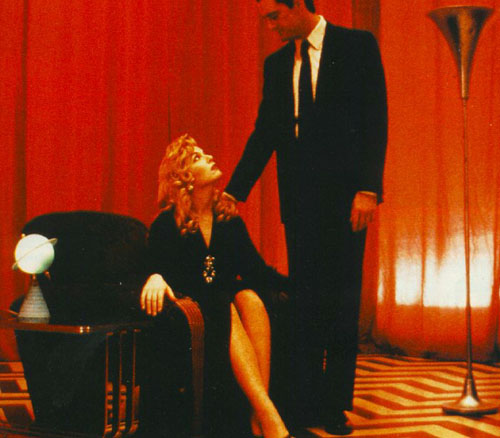
This blog is better suited for my useless myspace blog, but as it's cinematic in theme, I figured I'd post it here. I'm aware that the entire series is regrettably not on DVD, so if you haven't finished the series, don't read this. Occasionally my iTunes likes to pick Julee Cruise/Angelo Badalamenti songs at random to bring me back into my own personal Black Lodge. This time, however, I was being an Internet loser, wasting time on Youtube.com and stumbled upon a bunch of Twin Peaks videos, which began, wonderfully, when I found the video of James (pussy), Donna (slut), and Maddy (R.I.P.) singing "Just You and I," or whatever it's called, which is one of the most wonderful scenes in the entire series. It's a not-so-casual reminder that Twin Peaks isn't merely a prime time soap opera, but a terrifying vision from a master filmmaker. When the show breaks the rules, as in this scene, you fall in love. When the shows breaks the rules, as in the last episode, you're left amazed and angry. Where did the compassion go? Everyone recognizes the second scene really strays faaaaar off track, once we find out who killed Laura Palmer and the unnecessary Windom Earle appears. It's like the film Candyman; the terror of the figure of Candyman goes away once he reveals his face. Once Earle becomes a literal character on the show (unlike Agent Cooper's trusted Diane), we aren't scared anymore... in fact, we're a little annoyed. [ This is just a mid-warning that this post will likely be utterly unscructured ] Anyway, back to YouTube, someone else felt the need to post a video of probably one of the most heart-shattering scenes of the entire series: the moment where Agent Cooper (Kyle Maclachlan) discovers that our killer has struck again. The video is posted below.


There's a visual representation of just one of the moments within the series (and film, Fire Walk With Me) that give me what I call Twin Peaks Anxieties. After about the third viewing of the show/film, I realized that I, shockingly, did not have the soundtrack to the film. So I bought it and got in my car to drive around while listening. The real doozy on the soundtrack actually isn't in the film itself, but the final, murderous episode. "Sycamore Trees," sung by Jimmy Scott, took me back to the Black Lodge, er, the end of Cooper's journey. Realize, at this point, David Lynch has become fed up with the show, perhaps because of the direction it turned and likely because of ABC's failing interest in the series. Realize, now, that Lynch took out such frustration on the characters and, most painfully, his audience. The particular advantage of television over films, as I discussed in my Six Feet Under blog, is the advatange of time. To complete Twin Peaks, it'd take around two days total -- and this is assuming you haven't taken any breaks. By the time our final episode rolls around, we know the town and its inhabitants as if we lived there. We know, by this point, that Laura Palmer's got some shitty taste in men. James is a tool-shed, Bobby's a douche-bag, Leo's a psycho, Jacques is a creep. At some point, we forgive Agent Cooper for turning down the romantic advances of the deliciously tarty Audrey Horne (Sherilyn Fenn) for the ex-nun Annie (Heather Graham, one of the shows few casting mistakes). We're happy Donna (Lara Flynn Boyle) has gotten over the much-welcomed (at least by me) departure of James. And these are only a few of our townsfolk. Aside from the whole impending danger of unholy union of Windom Earle and Bob, things in the town appear to be going smoothly... of course, until Lynch fucks up every one of their worlds. There are certain fatalities that we will let slide, but Lynch eventually crosses the line between acceptable and just insanely cruel. So cruel, in fact, it makes sense that most people did not accept his apology with Twin Peaks: Fire Walk With Me.

Other than the die-hard fans, most of the regular Twin Peaks viewers, when the subject is brought up, respond with feelings of bittersweet confusion. How could a show this brilliant, funny, and hauntingly moving kill itself in such a way? I can't figure out whether or not audience refused to accept Lynch's Fire Walk With Me apology because they didn't want to, or didn't pick up on it? Lynch is, of course, not someone whose films are easily decipherable, especially to those who just don't want to try (Twin Peaks had a slew of fans that were probably unfamiliar with his prior film work). On the surface, the film feels like a knife going deeper into your side. Why do we need to see the last seven days of our iconic, slain Laura Palmer? We know what happened, and it was more disturbing (so we thought) having not seen what had happened to her. Our apology, which we'd probably best understand as a way of Lynch's own personal completion with the show, comes in our final moments, where Cooper (who, as we know, ends up trapped in the Black Lodge) stands with Laura, as an angel joins them. The angel brings us back to a statement Laura says earlier in the film to Donna where she remarks "that the angels won't help you, 'cause they've all gone away." Despite the grimness of the film, we're left with our final, satisfying conclusion here. Cooper, who never met Laura in the flesh, finds eternity with the subject of his final and most important case. My friend Stewart described the relationship between Laura Palmer and Special Agent Dale Cooper as the strongest depiction of true love he'd ever seen. Cooper and Laura are not simply bound by the case at hand, as we discover fully through the film, but through each other's minds. It's makes it that much more heartbreaking to realize that Cooper reaches the end of his selfless journey with this case. If this isn't the epitome of classic cinematic romance.... you know the rest. I'll see you in the the trees...

19 June 2006

Faithless

The Silence (Tystnaden) - dir. Ingmar Bergman - 1963 - Sweden

While probably best known as the conclusion of his nameless trilogy that began with Through a Glass Darkly and Winter Light (and, due to its sexual content, "the largest unwanted audience for a Bergman film" as he put it), The Silence marked some sort of turning point in Bergman's career, perhaps one of the more frightening. His trilogy was a collection of chamber dramas, with limited characters in even more limited space. Through a Glass Darkly found four characters (a father, daughter, son, and husband of the daughter) on a secluded island; Winter Light took place mostly in church vestibules. The Silence has, essentially, three characters, stuck in a nameless foreign country, torn apart by war, and the majority of the "action" takes place in a nearly empty hotel and train. Anna (Gunnel Lindblom) is traveling with her ailing sister Ester (Ingrid Thulin) and curious son (Jörgen Lindström). They are forced to stop their journey in this unknown country to allow for Ester to rest before reembarking on their trip.

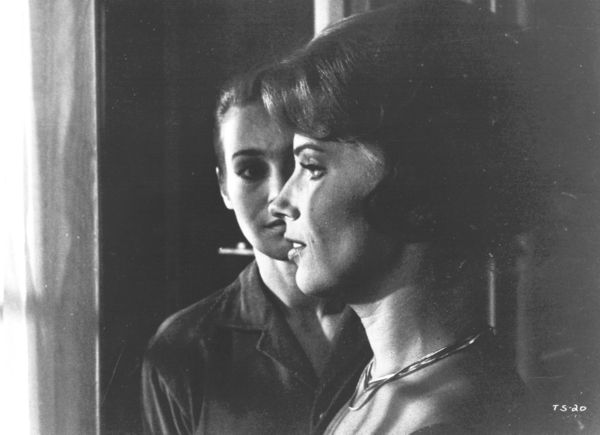
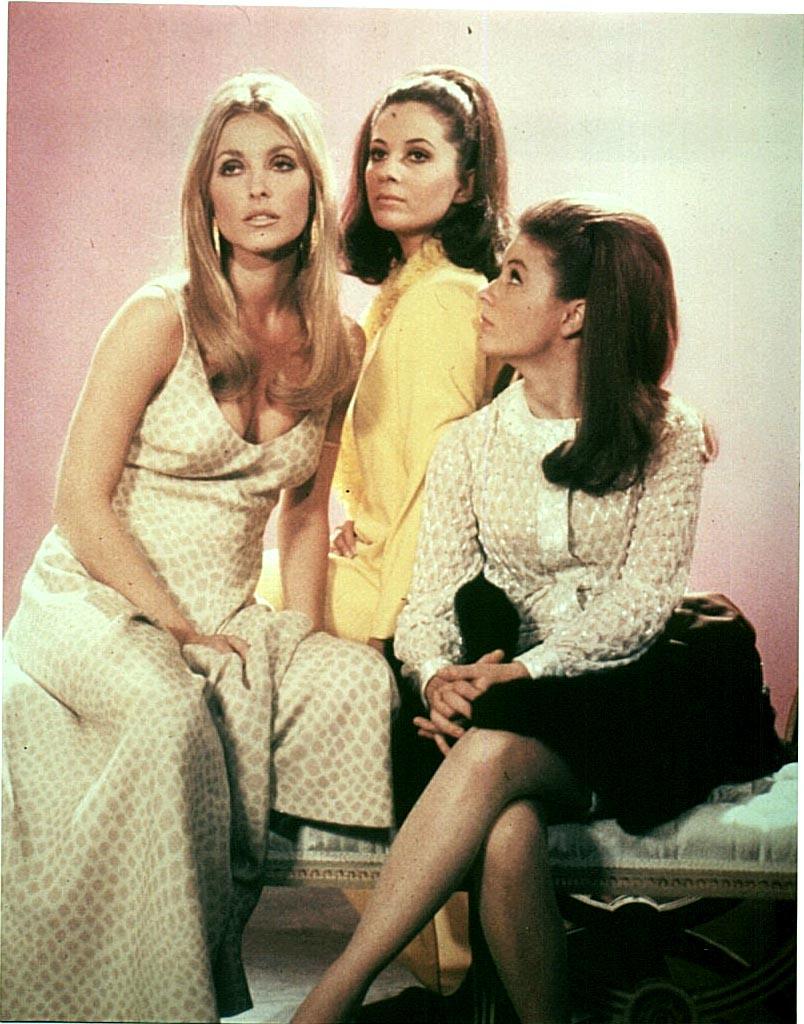
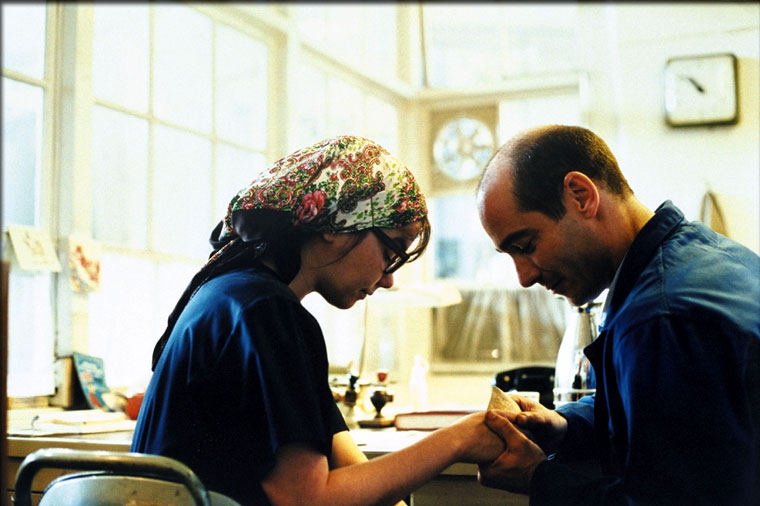
Anna and Ester stand polar to one another. Anna is sensual; Ester is intellectual. Anna doesn't automatically recognize Bach on the radio; Ester masturbates out of crude boredom. While it's mentioned that a pre-existing jealousy and fear had taken over Anna in relation to her sister, we are beyond this point at the beginning of the film. Ester's health is failing fast, and it is her that has adopted this longing and jealousy. Anna has grown tired of her sister, and in her first interaction with someone outside of the family, she expresses, "I wish Ester would die." By now, we're familiar with the piercing dialogue between Bergman characters. They express deep-rooted guilt and despair to one another, saying things we only wish we were in-tune or clever enough to express to the closest ones in our life (or, maybe not). Hatred is amplified to the point of emotional violence and rape, and, as the final installment of the trilogy, we know this all-to-well. This knowledge would make us reluctant to buy into Bergman a third time around if The Silence weren't a different creature altogether. In a method that would be used to its fullest in his later Persona, we realize that Anna and Ester are opposing sides of one person, at tremdenous odds with one another. The framing of the women (as seen in the first still of this post) has become a signature of his, best used in both Persona and Cries and Whispers. The warring between the women becomes especially vivid and pressing when we realize that this is not simply another pairing of despair between Bergman characters.

With this pairing, The Silence becomes easily the most challenging of the three. With Persona's reflexive style, we can easily decipher what's going on between Bibi Andersson and Liv Ullmann. Here, it's still a chamber drama in the style of the previous two. Both Through a Glass Darkly and Winter Light seem comparatively easy to swallow in their quests to thrive under a silent (or noexistentnt) God. In The Silence, God isn't present. If you want to be optimisticic, you can see the title as God's own silence (the original title was apparently The Silence of God), but if you don't, God's silence could be deduced as his own noexistencece. In a Bergman world, this is mighty scary, far more frightening than Hariett Andersson seeing his face in Through a Glass Darkly. When his characters don't even have thopportunityty to blame, scold, and anguish over an unpresent God, they must exist without one. And without one, the stakes are higher, and the pain terminally fatal.

18 June 2006

Foolish

I just wanted to take time out of my not-busy schedule to thank an anonymous poster, alias "some dude," for scrolling through my blog and posting on my second post about the worst films of 2005:

I derive great pleasure from knowing that no one with a measurable IQ would ever take you seriously as a film critic. You are a fool among fools.

Thanks for reading.

17 June 2006

The AFI sets my balls ablaze... in a bad way


The only time I ever watch television is when I find myself bored and lurking around the parents' house. Unfortunately, I found myself in such a state this past week when AFI was counting down "100 Years, 100 Cheers," by far their most ridiculous 100 what-the-fucks to date. I'd already tossed my falafel when I saw an abundance of Katharine Hepburn in their 100 Greatest Romances, the former title-holder of most unnecessary AFI countdown. This year, the AFI has compiled a list of revoltingly feel-good, inspirational shitfests, littered with the occasional film of respect that somehow loses said respectability through association. Don't you love a list that can include The Karate Kid and Preston Sturges' Sullivan's Travels? Well, I don't.

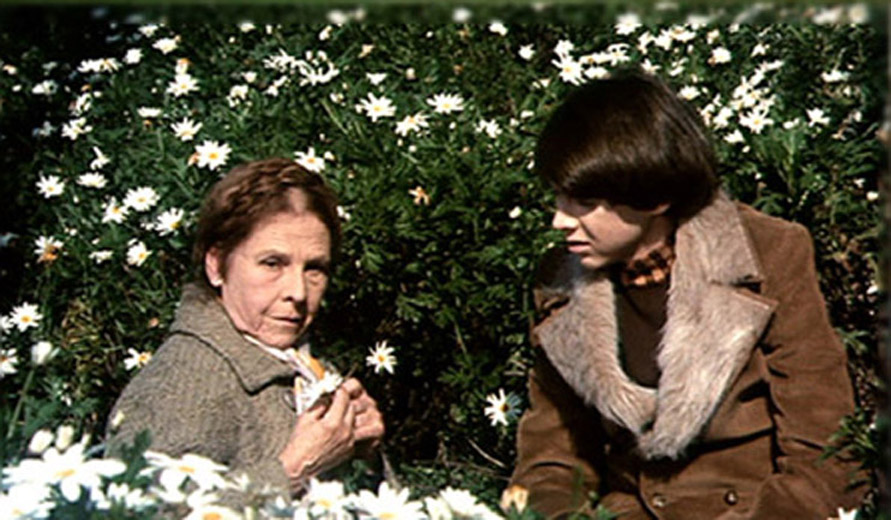
I feel as though the AFI felt like making a list of studio favorites that they were too embarassed to put on their 100 Great Films list. It was like a cesspool of underdog-sports-team-wins-the-gold, little-person-stands-up-to-the-man, dumb honky-realizes-(insert minority here)-is-a-person-too. To have even mentioned films like Harold & Maude in the same breath as Erin Brockovich is unforgivable. Harold & Maude may very well be one of the only films I've ever seen that very bluntly delivers the message to your ears, and yet you're already so in love, you just don't give a fuck. Whoopi Goldberg pointed out when talking about the film that it's inspirational because you can't help but want to meet and befriend Ruth Gordon. This is certainly a true statement, but you can forgive Harold & Maude for being a movie with a "message" because it's so contagiously sweet, hilarious, and (yes) fucking touching.

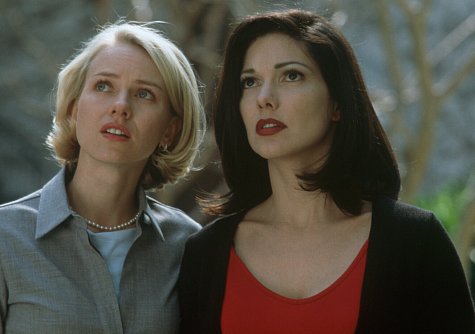
I read a commentary on the 2001 Academy Awards on salon.com a while back, where a Salon critic (at the time, you could have filled Lake Michigan with Salon's film critics' "love" for Mulholland Drive) bitched about giving David Lynch a Best Director nod for Drive. Everyone knows the Academy is a joke (and this was even before Crash won Best Picture!), so throwing in a nomination for Lynch, with everyone fully aware that he wouldn't win, was much, much worse than just not nominating him. The same can be said for films like Harold & Maude; it's sure to piss off people who actually respect cinema as an art-form as opposed to those reminicent of a fucking high school bleacher cheering section. Thanks, AFI, for making my body not have to go through the trouble of digestion that evening.

15 June 2006

Doll Parts

Beyond the Valley of the Dolls - dir. Russ Meyer - 1970 - USA
+
Valley of the Dolls - dir. Mark Robson - 1967 - USA

Valley of the Dolls and Beyond the Valley of the Dolls are certainly two different entities altogether. As my friend Brad stated, Valley of the Dolls is a perfect historical landmark of when Old Hollywood met New Hollywood in the late-60s at the end of the studio system and production code. Beyond the Valley of the Dolls is entirely New Hollywood, taking its cue from the catty, high-camp melodrama of its "predecessor." Why would a big studio like 20th Century Fox take an underground, cult filmmaker like Meyer (Faster, Pussycat! Kill! Kill!) and ask him to create the follow-up to one of their only big money-makers? This is all explained in the wonderfully-packaged 2-disc DVDs that were released on Tuesday. Hollywood couldn't connect with the younger audience any more, so they enlisted Meyer to create what he considers his finest film. While I can't say that I enjoy Beyond more than I do Faster, Pussycat!, it serves beautifully as a reminder of when studio execs had nothing better to do than take chances in the 1970s. Despite its similarities to Valley, Beyond, as it states in an opening paragraph, is "entirely original."

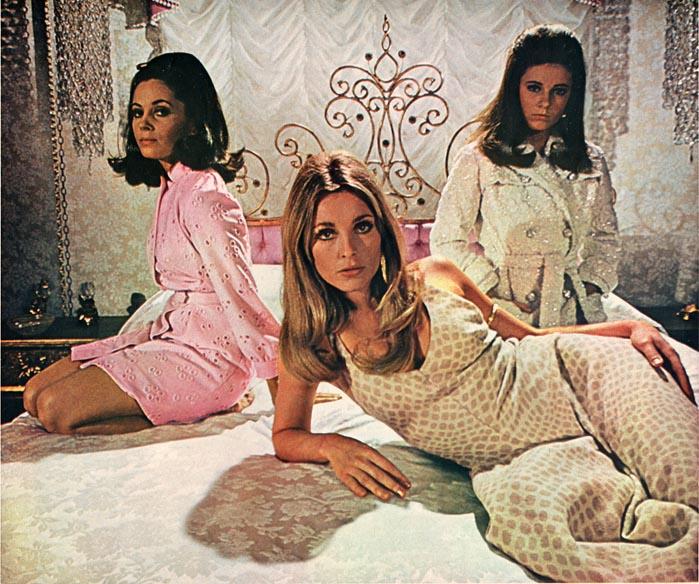
Valley of the Dolls also resonates historically; it's essentially a transition from the women's films of the 1950s on their way to Dynasty. Everything about the production is epic (in some cases, you can use "epic" as a euphemism for "extremely over-the-top"). Three ambitious young gals hit the Big Apple only to discover the horrors and melodrama of backstage show business. At first it seems hard to imagine that Jacqueline Susann's seedy novel and the film at hand were ever taken seriously, but this is where it's magical. Fox gave up the big bucks for the rights and cast two respectable Oscar winners (Patty Duke and Susan Hayward) in their trashiest (and likely flashiest, though it may be hard to imagine roles more juicy and showy than Helen Keller or a woman on death row) roles/performances. The picture quality is immaculate, and the theme song by Dione Warwick is absolutely perfect. It's a case of the Showgirls, where its earnestness and drive to create wonderful cinema elevate it to brilliant camp status, alongside such gems as Mommie Dearest or Maria Montez's Cobra Woman. This, my friends, is true camp -- not the self-designated silliness of late-John Waters or schlock like But I'm a Cheerleader. After watching the film, you'll never truly forget the name NEELY O'HARA, glowing starlet, ripped of her glory by booze, dolls (er, pills), and fags! In the insert that accompanies the DVD, it's stated that Patty Duke, as the monstrous Neely, was rather embarrassed by her performance initially, but has since gotten a sense of humor about it (Faye Dunaway in Mommie Dearest has yet to establish this about hers).

Beyond the Valley of the Dolls takes from Valley of the Dolls a similar premise. Three bright-eyed girls travel to Los Angeles, destroyed by the perils and horrors of show business, fully equipped with full-length musical numbers. Whereas Valley worked because of its sincerity, Beyond works because of a lack of it. You can almost see some execs at 20th Century Fox watching the scene in Valley where Patty Duke walks past the porno theatre that's featuring a skin flick starring her friend Jennifer (Sharon Tate), shouting "Boobies! Boobies! Boobies! Who needs 'em?" Well, the execs pondered, we do! And boobies we got. Large-breasted women are to Russ Meyer as midgets are to David Lynch or trannies are to John Waters. Brad and I discussed how one of the truly remarkable things about Beyond is its relentlessness. There's no breathing room here; at several points, I wanted to give my friend Chris, with whom I rewatched the film, a handful of useful Meyer trivia, but Russ never gave me the chance, as so much was always happening onscreen. Once you get to the Z-Man's Hollywood "happening," you just have to trust Meyer and allow him to take you exactly where he wants you to go -- and, as you soon find out, it's not a very pretty place.
What's most frightening, however, is not what actually happens at the end of Beyond, but where it's coming from. When the horror and murders begin, we're instantly thinking about the Manson Family murders, in which a pregnant Sharon Tate was brutally slain. We're thinking about the end of the 1960s and the war. On a lesser scale, too, we're thinking about Hollywood and what's to become of our beloved, larger-than-life pastime. Notice how all the deaths at the end of Beyond appear justifiable under the conservative right. The megalomaniac fag goes crazy, kills the dyke, the Nazi, the swindler, the girl who had the abortion, and maims the adulteress, before dying himself. There's a scary sense of validation in each of their deaths that I don't think Meyer or screenwriter Roger Ebert meant to be taken as their own points of view. Instead, it serves as an eerie premonition of the ways of the country, and the ways of Hollywood. It gives those consumers what they want: they want these heathens to pay for their devious actions, and they get it, albeit in a deliciously tongue-in-cheek sort of way. There are many arguments in the case of Star Wars being the killer of cinema, an explosive blockbuster (it was actually from Star Wars that the word "blockbuster" came into our vocabulary) at a time when Hollywood didn't know what to do with itself. We've been paying the price ever since. In a Nostradamus sort of way, Beyond the Valley of the Dolls captured the sentiment of a dying generation and, in an alarming way, foretold of the status of our country and our cinema.

11 June 2006

Into the Groove

Desperately Seeking Susan - dir. Susan Seidelman - 1985 - USA

As I'm listening to Ciccone Youth's (a side-project of Sonic Youth) cover of Madonna's "Into the Groove," I couldn't help but remember the bizarre scene in Desperately Seeking Susan where Rosanna Arquette's loser husband confronts Madonna in a dance club, where they're weirdly playing "Into the Groove." As a child, I always found that peculiar -- but now as an adult, I find it weird that I'm thinking about Desperately Seeking Susan. Other than Dick Tracy and maybe (a very large maybe) Evita, this film stands as the only bearable Madonna vehicle, her first post-stardom. It's a silly film about mistaken identities, amnesia, and a bored housewife who finds herself. But why do I like this film (or think I like this film)? Of course, considering I had to open this blog with a reference to Sonic Youth to establish my hip status, I feel guilty. Do I want to like Madonna? Do I actually like her and cannot bring myself to admit this for it's socially uncouth? I very honestly find her recent music to be a huge bag of lousy, not to mention finding her social presence utterly contemptable. Yet, for some reason, there's an unhealthy liking of Madge deep within me. Even when I'm hating her, it's a hatred that stems from love and from fond memories of watching VH1 marathons of her videos and, yes, Desperately Seeking Susan. This is all sick and twisted, so much so that I don't even want to post this blog. Madonna? What the fuck? A friend of mine was telling me about her ex-boyfriend and how he had a room in their apartment dedictaed to Madonna (filled with plenty of posters depicting her chameleon-like personas). When I asked why, the simple response she gave was "why not?" Why not, indeed. Fuck you, Madonna.

Partying

Dave Chappelle's Block Party - dir. Michel Gondry - 2005 - USA

Whether it be good or bad, I always marvel at a film that is completely different from your expectations. Dave Chappelle's Block Party is actually quite simple: a chronicle of the set-up and delivery of a day-long block party in Brooklyn, funded by Chappelle, featuring a handful of respectable hip hop artists. Yet, like all good documentaries, it's much more than the pretense. Strangely directed by Michel Gondry (Eternal Sunshine of the Spotless Mind), the film calls to mind some of the most fascinating and complex documentaries I've seen (Errol Morris, or the Maysles brothers) in that it has a quiet complexity that never spells itself out. It's a music documentary similar, though strikingly different, than The Rolling Stones' Gimme Shelter or Depeche Mode's 101, where the initial musical draw somehow fades into the background. Sure, it's nice to see a collection of the best hip hop artists (Mos Def, Erykah Badu, The Roots, The Fugees, etc) all in one performance, but they become an afterthought.

What stays with us, instead, is a couple married for forty-six years (the wife noticably reminiscent of Little Edie of Grey Gardens) who've designed a house to remind them of the omen of their partnership, Wyclef Jean asking a group of black college students what they would do if they were president, and Dave Chappelle's interaction with a group of daycare children. The latter two sound heavy-handed, but that simply isn't the case. We see Dave Chappelle or Lauryn Hill acting as humans who just so happen to be famous, filled with subtle insecurities. And while this all seems painfully obvious in writing, this all unfolds quietly and poignantly onscreen. While Dave Chappelle's Block Party eventually puts its heart on display in the final ten minutes, you forgive it for doing so, as the rest of the film was so alive, charming, and surprisingly insightful.

06 June 2006

Coming Your Way

This post is just a reminder to you (and me) of what special we can be looking for on the DVD shelves in the coming months.


On June 13th, you can get your hands on special editions of camp classics Valley of the Dolls and Beyond the Valley of the Dolls, both with a plethora of bonus footage from 20th Century Fox.

On June 27th, Michael Haneke's latest (and, maybe even, his best?) Caché hits shelves from Sony. I will be posting a review of Funny Games in the coming days.

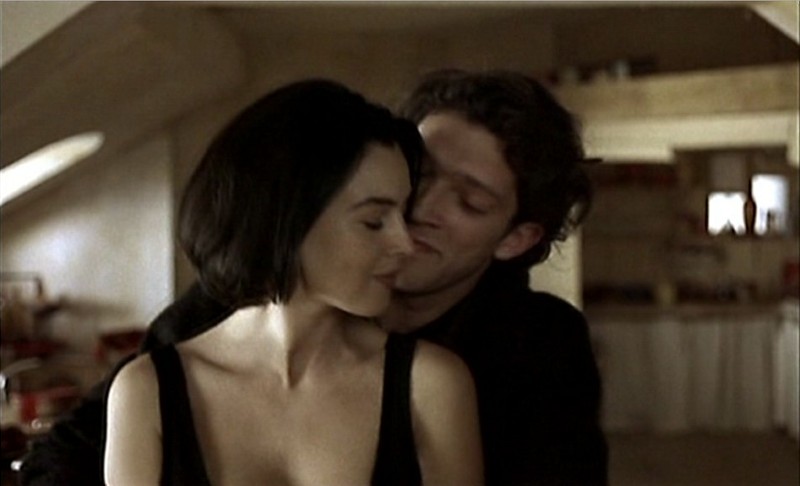
Lionsgate has just announced (nearly 10 years too late) the popular French thriller about sex, infidelity, murder, and apartment-dwelling L'Appartement, starring Vincent Cassel, Romaine Bohringer, and Monica Bellucci, on August 22nd. You have already had the misfortune of seeing the American remake, Wicker Park.


IFC Films, now distributed by Genius Products, is bringing us three films on August 8th, most importantly Lars Von Trier's Manderlay. You can also find Sorry, Haters and CSA: The Confederate States of America on the same day.


For TV fans (or better yet, people who like good comedy), the third and final season, prematurely ended, of Arrested Development on August 29th. You can also pick up the third season of Nip/Tuck, but be forewarned, the final episode is easily the anticlimax of the year. On the 1st of August, you can also get the fifth season of Larry David's brilliant Curb Your Enthusiasm.


Tartan will be releasing the final part in Park Chan-wook's vengeance trilogy, Lady Vengeance, on September 26th. The trilogy begun with Sympathy for Mr. Vengeance and Oldboy.


If high school film noir is your cup of tea, Focus Features' Brick will be out on August 8th, starring Joseph Gordon-Levitt and Lukas Haas.


Criterion will release Eric Rohmer's Six Moral Tales as well as Noah Baumbach's quintessential 90s comedy, Kicking and Screaming, with Parker Posey in August.


And, finally, though I'm forgetting some others, in December, Home Vision will release Benoit Jacquot's À tout de suite.

02 June 2006

Horse Tears

Spirits of the Dead (Histoires extraordinaires): Metzengerstein - dir. Roger Vadim - 1968 - France/Italy

You would bet your bottom dollar that a premise like the one in the Roger Vadim segment of Spirits of the Dead would have been nothing but sheer brilliance. Jane Fonda stars as a decadent, cunty princess whose taste for pansexual orgies and jewels is only matched by her brittle coldness. She makes advances toward a farm boy (played by her brother (!) Peter) who rejects her, thus forcing Princess Jane to order his death. What happens next, you ask? Well, naturally, Peter Fonda's spirit inhabits a horse that proceeds to stalk Jane Fonda's castle. A fucking horse! This all sounds too good to be true, doesn't it? Well, you're right. Vadim has always set his films up to be gloriously campy, especially Barbarella, but he always forgets the "glorious" part. Instead, both his segment in Spirits of the Dead and Barbarella are about as sharp as a plastic spork and as fun as a root canal. The rest of the series is worth seeing, mainly for seeing Alain Delon slap a brunette Brigitte Bardot in the face in Louis Malle's, and for the entirely brilliant Fellini segment Toby Dammit, starring Terence Stamp.

01 June 2006

Vanity Fair

The Heart Is Deceitful Above All Things - dir. Asia Argento - 2004 - USA/France/Japan/UK

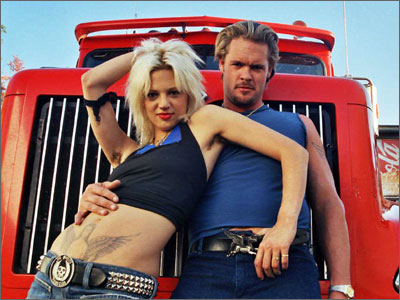
Strangely, I could have made Asia Argento's The Heart Is Deceitful Above All Things a nice double-feature with X-Men: The Last Stand. Both films are adaptations of "literature" I read as a youth (I was a bit younger when I read X-Men, mind you), sort of too late for me to still get into them -- yet, they're still strange pieces of my childhood. I never liked JT LeRoy's book of the same name, yet it was very much something I should have. The inside cover of my copy had a quote from John Waters and, of course, had magnified tales of child abuse and neglect. To be honest, I don't remember why I didn't like the book, but, in retrospect, it doesn't really matter. It still left some sort of impact on me; perhaps not the book itself, but the style and subject of it. Though I'd probably claim other books to better represent my state of mind, The Heart Is Deceitful... fit. And, here I am, several years later, watching a completely unnecessary, yet weirdly alluring, film adaptation from Dario Argento's daughter (I was also really into Argento around the time of reading the book).

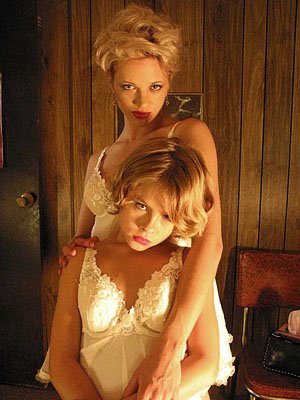
There isn't a whole lot for me to say in the realms of criticism about Ms. Argento's film. Despite the possibility of receiving a plate full of shit from my friend Brad for saying this, Asia, conjuring her inner Courtney Love as Sarah, is actually very effective both in front of and behind the camera. Like in her previous film Scarlet Diva, a wildly indulgent tale of drugs, sex, and fame, she proves that her cinematic eye is at least dangerously compelling, even if her flare for dramatic tension is not. There's one particular scene in The Heart Is Deceitful Above All Things where Jeremiah (Cole and Dylan Sprouse) dresses in his mother's slip and makeup (pictured at the beginning of this blog) and seduces his current "father" (Marilyn Manson). Instead of showing a sure-to-be-creepy sequence of a ten year old boy, dressed like a vampy Shirtley Temple, sexually advance toward his trailer park "daddy," we see Argento playing the boy. Marilyn Manson says lines like, "did your mother put you up to this?" and such as Argento flings her body erotically across the living room and his lap. The scene works magnificently, and that she refuses to have the boy act this scene out adds a level of extreme danger and intrigue, that what is going on is so jarring and so intense, we aren't even allowed to see it.

A film like this truly isn't necesssary; in fact, it plays better as a vain attempt at recognition for Argento. By taking a controversial, well-known source material like the book, she has a built in-audience of fans of the book and fans of the preverse. In addition to this, our road-trip is so hip credential-ladden (Manson, Winona Ryder, Michael Pitt, Peter Fonda, even Lydia Lunch) that there's an added curiosity about her project. She claims she had no idea of the JT LeRoy hoax, but you can't say this didn't work to the film's promotional benefit? Overall, the film, like X-Men: The Last Stand, is not a particularly good one. Both films truly lack the dramatic flare needed to make them emotionally viable. Yet as unnecessary nostalgic pieces of my own youth, they definately served their purpose.

Standing, maybe not tall, but certainly big

X-Men: The Last Stand - dir. Brett Ratner - 2006 - USA

Enough of these arty French movies, let's see some fucking explosions. And explosions are certainly what I got in the final X-Men installment with Brett Ratner (Rush Hour) replacing Brian Singer as director. And the changes are more noticeable than you want them to be... yet, for some reason, I didn't fucking mind. The X-Men series apparently functions in the way I like films to do so. No one really gives a shit about the beginning or the end; it's all about the middle. And X2 is certainly the gem in the "trilogy." The first X-Men is all exposition, establishing our mutant heroes, and The Last Stand sends them on their way. Unlike the Lord of the Rings, the X-Men trilogy doesn't feel like a continuous story cut into three films; each of the films serves their own purpose. The first and third are the bookends; the second is where the magic is. However, if you regard these three films as simply one, you won't feel as cheated as it seems most people did with X-Men 3.

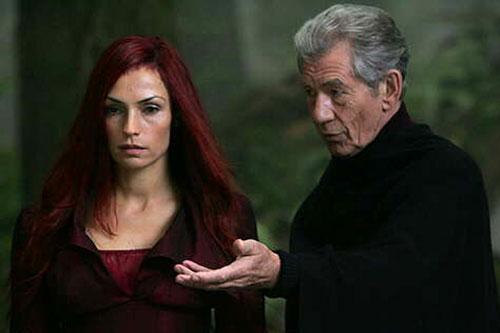
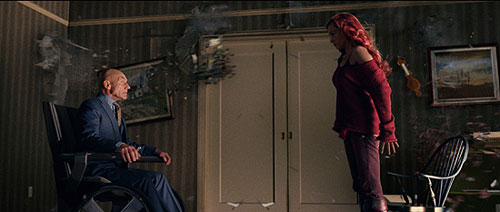
The social parallels are still present, but Ratner doesn't give us time to breathe... so really, the ideas as to whether or not we, the audience member, would accept this cure for whatever our social deviance may be are truly an afterthought. Though this is unfortunate for the intellectual viewer among the slew of action/sci-fi/comic nerds, X3 works because it refuses to follow the preconceived expectations we have for it. Us ex-nerds may have remarked that Rogue and Iceman never "date" in the comics (in fact, they're totally different generations of X-Men) or raise our eyebrows that it's never revealed that Wolverine (Hugh Jackman) and his nemesis in X2, Lady Deathstrike, were former partners. But whatever... X3 takes you by surprise in that it decides to nearly abandon the comics. Sure, Jean Grey (Famke Janssen) as the Phoenix is lifted from there, but it has nothing to do with aliens inhabiting her body, and it works better here. While I must report that Halle Berry stays until the end of the film, the deaths here are wonderfully surprising and effective. I'm almost embarassed at this paragraph, where I'm dissecting differences between the films and the comics, but I should admit that I used to be a huge fan.

Overall, X-Men 3 is not a good movie. It forgets what made both the comic and the first two films so wonderful. My friend Chris remarked, "if you really look at X3 as simply the last hour and a half of X2, it really isn't that bad." And... it isn't. It's big and loud and flashy, and our new characters (Beast, Juggernaut, Angel, Kitty Pride) are pretty forgettable. Yet I can help but simply nerd out with this film. Both Ian McKellen as Magneto and Janssen as the Phoenix are, quite simply, far better actors than a film of this nature needs (or deserves). McKellen's knowing and patronizing glances and Janssen's uncontrollable sexuality and intensity somehow elevate this above a film you'd expect from Brett Ratner. While Singer (who turned down the project to spread his homosexuality onto another comic book adaptation, Superman) is surely missed here, Ratner surrounds X3 with moments of surprise... both in a bad way, and sometimes, admittedly, in a really awesome sort of way too.

29 May 2006

Is Cannes as shitty as the Oscars?

The obvious answer is "no," Cannes is not nearly as awful at the Academy Awards -- after all, I don't think Crash was ever in competition there. However, I can't say some of the more recent Palme d'Or winners don't have something in common with those Best Picture Oscar winners, in that they'll probably all be forgotten in ten years. This is hardly a criticism of this year's awards ceremony, as I've seen none of the films yet, but, really, who got super excited when they heard the new Ken Loach film won the Palme d'Or? Certainly not me. In the past seven or so years, the Cannes jury have been leaning toward political films and subdued (read: boring) neo-realist films. The only two American films to go home with the Palme d'Or since the mid-90s were hot button-pushers (Gus Van Sant's Elephant, Michael Moore's Fahrenheit 9/11). This year we've got a period piece about politics in 1920s Ireland, which teams well with Roman Polanski's win for The Pianist in 2002. And, of course, we have the Belgian Dardenne brothers, who won last year with L'Enfant and in 1999 with Rosetta, both nicely paired with Nanni Moretti's "human drama" The Son's Room (La stanza del figlio), a trio of films so quiet they were barely remembered by the time they even got to the United States. And then, of course, there's Lars von Trier's Dancer in the Dark, a film that doesn't appear to fit with these boring Cannes trends, but maybe the jury, lead by (groan) Luc Besson that year, mistakenly took the film for a a stark drama/political statement on immigration in America instead of the absurdist musical melodrama snuff flick it really is.

I suppose I just find it strange to see a film like Rosetta or Elephant taking top honors in recent years alongside previous winners like Antonioni's Blow-Up, Coppola's Apocalypse Now, Demy's The Umbrellas of Cherbourg (Les parapluies de Cherbourg), Carol Reed's The Third Man, or Fellini's La dolce vita. Then again, I suppose it's much simpler judging things as time had passed. For all the Cannes jury knew at the time, maybe La dolce vita would be as quickly forgotten as The Son's Room. I suppose also that I'm looking at some of the greatest hits of the festival; I mean, you've seen the 1962 winner O Pagador de Promessas (Payer of Promises), right? Oh, maybe not. I had the scary thought in my mind that maybe there's nothing wrong with the Cannes jury, and maybe it's just cinema that's getting continuously shittier as time goes on. I wiped my brow shortly after that thought and remembered that we can still look forward to the always sure-to-be-challenging works of nouveau auteurs like Michael Haneke, Pedro Almodóvar, Lars von Trier, etc. I guess I should just quit bitching; you'd rather see a neo-realist drama take the top prize than some Russell Crowe/Ron Howard flick, right?