12 April 2006

Love Isn't Stronger than Death: Films I Hate, Part 1

A friend of mine wanted me to make a list of films that everyone (specifically, he) should see before he dies... and that's a big ol' can of worms. I don't even think I have the authority to make such subjectively objective claims. So instead of making a list of films that tickle my fancy, I'm going to be compiling a list of films that do the very opposite: films that make the thought of slurping up a bowl of a Japanese woman's fresh vomit appealing (thank you, Audition, for that image). Better yet, just to truly express my distaste, films that would make me want to do that while Starr Jones gives me a rim-job. Here are two films to soldify that image in your head. More to come!


Ken Park - dir. Larry Clark, Edward Lachman - 2002 - USA/Netherlands/France

The progression of Larry Clark's films is disturbing. He entered the film world with Kids, an "important" film about New York teens spreading HIV all over the place. Despite all its controversy, Kids is hardly the shock-fest Entertainment Tonight wanted you to believe. It was a "wake-up" call with mostly simulated sex between real New York teens (though over half of the cast has gone on to make other films). We'll skip over his Drugstore Cowboy remake, Another Day in Paradise, as Melanie Griffith grosses me out, but then, he brought us the "shocking" true life tale of a bunch of Florida teenagers who brutally murdered their friend in Bully. Instead of being a made-for-Lifetime drama showing bored mothers the shit their kids are up to (preferably starring Cadance Cameron and Tracey Gold), he cast a bunch of Hollywood slutfaces (Bijou Phillips, Brad Renfro, Rachel Minor aka Macaulay Culkin's ex-wife), creating what felt more like his soft-porno exposé of the rich and fucked-up, intercutting the real-life drama with unnecessary and vulgar close-ups of Bijou Phillips crotch as she exits a car and "introspective" shots of Rachel Minor lying about her room and pissing, all in the full nude. This isn't even to mention the creepy homosexual subplot involving the bully (Nick Stahl), gay porno, and his best friend (Renfro). Bully didn't make the cut for the very reason that Clark followed up Bully with an even more deplorable, even more salacious, even more painful film... and, here we come to Ken Park.

What's the next logical step after simulated teenage sex and softcore "kinky" sex? Well, unsimulated teenage sex, of course. And better than that, his Kids screenwriter Harmony Korine had taken a brief break from shooting heroin to pen the screenplay. We've got teenage girls giving head to teenage boys, a teenage boy going down like a kitten to his bowl on his girlfriend's mother, another teenage boy masturbating to climax to the grunts of tennis players as he strangles himself with his grandmother's belt. Boy, these American teens are dirty! It's somewhat telling that Ken Park has reached just about every country in the world, except the United States. While in Paris, some friends of mine attended a screening of it (against my wishes) during an "American Teens Gone Wild" marathon, which also included the remarkably awful Thirteen, which followed in an argument with two Frenchmen who claimed Ken Park to be a minor masterpiece. I'm still not sure we saw the same film. Instead of Kids, Bully, or Ken Park being parables, Clark, with his cinema-vérité style, presents his tales as a hard reality. He, probably unintentionally, takes us away from that reality with Ken Park's shitty production qualities (my friends swear a boom-mic can be seen in at least two shots), but I couldn't leave the film without thinking that this was indeed how he wanted the world to see American teenagers. Granted, this view is no worse than something like She's All That, but, c'mon, this is what those Europeans want. The French obviously bought into this depiction of small-town American teenagers, ignoring the cold fact that Larry Clark is simply a provacateur: to some, a smut-peddler, but to me, a preverse fetishist. And I can deal with fetishes. I can sit through Bruce La Bruce's skin-head obsession, David Cronenberg's fascination with clinical gore, David Lynch and Luis Buñuel's female duality mania. And, maybe (though probably not), I'd be able to deal with Clark's fixation on teenage sexuality if he didn't try to pretend that he doesn't have this fixation. He blankets this unhealthy obsession with a scary pretense of frightening "wake-up calls" to Americans. Ken Park, however, feels so much less of a wake-up call as Larry Clark flinging his hands up and just showing us the horrors of American teens, one hand on the camera... the other on his dick.

Boxing Helena - dir. Jennifer Chambers Lynch - 1991 - USA

Oh, Madonna. It's truly scary to think of how many bad movies Madonna could have made. In addition to being considered for the lead in this heap of shit, Madonna had the oppertunity to add more turkey's to her Thanksgiving feast of a film resumé. She turned down the role that later went to Gina Gershon in Showgirls (though her in that film might have been truly astonishing), the Sharon Stone role in Casino (fuck you, Scorsese fans, this film sucks), the Michelle Pfeiffer role in The Fabulous Baker Boys, and even the Meryl Streep role in Music of the Heart. It'd be considered good career moves on Madonna's part, if she hadn't actually chosen to be in Body of Evidence, Shanghai Surprise, The Next Best Thing, and Girl 6; it's strange to think that her two best roles were in Desperately Seeking Susan and one of Abel Ferrara's lesser films, Dangerous Game. But, really, Madonna turning the lead down was only the first of a series of disastors that surrounded David Lynch's daughter Jennifer's film debut. Kim Basinger also backed out of the project, resulting in a high-profile law-suit in which the makers of Boxing Helena probably cleaned up the production costs. Eventually, Helena became Sherilyn Fenn, one of Lynch's daddy's sultry muses, a decision that probably killed her career.
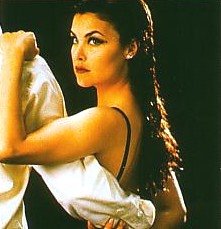
Now any red-blooded male who ever watched Twin Peaks had fantasies of kidnapping Fenn (or, specifically, Audrey Horne) and locking her up at their place. They probably wouldn't have done what Julian Sands does here, which is tie her up and then cut off her limbs, but you get the picture... it's a male fantasy. One could write for hours about the silliness of Boxing Helena on just about every front, but there's worse problems here. Ms. Lynch, who is shockingly directing another film this year after a welcome thirteen year hiatus, must think we're pretty fucking stupid. On the Internet Movie Database, she's quoted as saying that Boxing Helena is "a metaphor and a comedy." Oh, really? What could a man's sexual fantasy about kidnapping a woman he can't have and then cutting off her limbs represent? Get your thinking caps on, kids. And, not only does Ms. Lynch use painfully obvious "metaphors" here, but she lets us know just how fantasy-oriented the film is by ending the film with Sands waking up from a dream! I get it now! When I was a teenager who dreamed of being Sherilyn Fenn's personal slave, I dismissed the ending of Boxing Helena as Lynch's insufficiency to really wrap up her film by including that awful television cop-out (omigod, J.R. wasn't really shot! Roseanne never really won the lottery!). Now, I see it as Lynch's inability to execute subtlty. I don't blame someone for not trusting their audience... did you see how much money Big Momma's House 2 made? But, in helping her viewer solve the "intricate" puzzle that is Boxing Helena, Lynch turns out to be even more stupid than her audience.

11 April 2006

Time Changes, Part II: Still Curious?

I didn't intend for the past post to be a two-parter, but since posting, I found out that Vilgot Sjöman, director of the hugely controversial I Am Curious (Yellow) died the other day. I Am Curious (Yellow) is one of those boring black-and-white foreign-language films that shocked your grandparents (especially after Jackie Kennedy was seen leaving a theatre screening the film!! Oh, heavens.) On the Criterion disc for the film, there's a documentary entitled The Battle for 'I Am Curious (Yellow)', which better depicts the uproar the film caused back in the late-60s than I can. Basically, the film came out, had a bunch of naked people in it (it's rumored to have been the first mainstream film to show a penis; another fellow Swede, Ingmar Bergman, had to cut a quick shot of an erect penis out of Persona just a year prior), and became the subject of a number of US court cases, only to become the highest grossing foreign-language film in the United States, until the heyday of Miramax feel-gooders in the mid-90s (Il Postino beat the record). Essentially, I Am Curious (Yellow) is far more important than it is good; it's Godard-meta, before Godard even was... and to an equal level of tedium. Basically the question I posed in my previous blog resurfaces, but the answer here is far more clear. As I don't have an extensive knowledge of the realms of exploitation cinema, the question of desensitation versus the quality of the films discussed could very easily be answered by someone with a better knowledge of the subject matter. Here, we have a film that the US deemed pornographic, yet couldn't even quality for an NC-17 rating these days (I may take back that statement, as tame shit like Young Adam and Where the Truth Lies were both given that rating). But, really, I Am Curious (Yellow)'s frank sexuality is hardly as racy as an episode of HBO's Real Sex. I don't wish to insult I Am Curious (Yellow), though I wouldn't say I like the film. It will always remain a landmark of cinema, pushing the US further away from censorship (especially in the case of something as non-threatening as sexuality).

10 April 2006

Joe Dallesandro's Dirty Laundry

Double Feature:
The Gardener (a.k.a. Seeds of Evil) - dir. James H. Kay - 1975 - USA
+
Killer Nun (Suor Omicidi) - dir. Giulio Berruti - 1978 - Italy

No one ever thought Joe Dallesandro's appeal (namely that of being a rugged Warhol tough-guy with a chiseled body) could really work outside of the Warhol world. Well, contrary to that thought, he made a number of other films, from Steven Soderbergh's The Limey to Serge Gainsbourg's film adapatation of his song Je t'aime moi non plus. And, of course, a couple of sleazy-sounding horror films, like the two I've selected for this post's double feature. To quote Travis Crawford in his review of the deplorable Let Me Die a Woman:

"One of the defining characteristics of many classic exploitation films was that they often “sold the sizzle, not the steak” – in other words, thrill-hungry audiences were frequently tantalized and tempted into theatres with promises of more than what would ultimately be delivered on screen."

Both The Gardener and Killer Nun fall into the selling-the-sizzle category. The Gardener has Dallesandro as the hunky title character whose garden feeds on the flesh of humans; Killer Nun has him as a doctor (you read that right) who's trying to help the sex-hungry, heroin-addicted, possible-murdereress, likely-lesbian Sister Gertrude (played by Anita Ekberg, immortalized in La Dolce vita, sleazed and heaved up here, some eighteen years later). Strange that with such promising descriptions, neither film comes close to getting the steak on our, the hungry viewer's, plates. Both are remarkably skimpy on the nudity and rather dull on the gore. We never actually see any of the flowers kill people... instead, we have daunting music accompany the close-ups of the flowers, followed by a frightened look on the face of the victim, another shot of the flower (this time closer!), and then the victim on the ground with a puddle of blood (yes, it's always a puddle, never pool-sized). The deaths in Killer Nun all manage to be surprisingly unthrilling (I think most would consider this a lesser entry in the nunsploitation genre, for better suggestions go here: the reviewer strongly suggests to have a good porno ready for afterwards.) It's telling how far we've come. Someone who's seen a Catherine Breillat film or even the Hills Have Eyes remake won't even blink, as neither films packs a memorable tawdriness or gruesomeness. Have we come so far as to yawn during films that may have grossly offended audiences thirty years ago? Or are these just two meager entires into the exploitation genre? I guess when you really think back... nothing Joe Dallesandro ever did was truly shocking, except for maybe his nonchalant attitude toward being (constantly) naked. I don't care what your sexual leaning is, Dallesandro's incesant nudity got to the point of simply existing outside of a sexual nature (I opted not to include a naked photo... but if you're so inclined, google image search it), like when the family quit saying anything whenever grandma's boob fell out of her shirt. Though Killer Nun scores higher on the blasphemy meter than it does on the sleaze one and although The Gardener never delivers the revolting deaths you might expect, knowing these crucial details may ensure for a more enjoyable viewing.

08 April 2006

The Squid Vs. the Whale


The Squid and the Whale - dir. Noah Baumbach - 2005 - USA

This joke about the "versus" comes from a couple (two people whom Bernard (Jeff Daniels) might refer to as philistines) who came into my work to rent the film, putting it alongside a Steven Segal shoot-'em-up and a sleazy direct-to-video gore flick. The conversation with my co-worker was as follows:

Co-worker: Why the hell did they rent The Squid and the Whale...?
Me: Maybe they thought it was The Squid Vs. the Whale.... you know, like Freddy Vs. Jason?
CW: Or Alien Vs. Predator?
Me: Bingo.
CW: But, did they see the cover-art? There's nary a squid nor a whale on the cover.
Me: Titles can be misleading. And most people only see what they want to see. When I saw Grizzly Man, I saw two "leather-daddy" couples walk into the theatre. I think they left mid-way through the film.
CW: Well... if it really was The Squid Vs. the Whale, who do you think would win?
Me: I've got my money on the squid. I'm taking this shit home tonight, just to find out.

And took that shit home, I did. And while I don't want to spoil the ending, I will say the final battle between squid and whale comes to as uneventful a climax as those two other Hollywood battles. While I may be a tad facecious, upon rereading my last sentence, I've found that it still remains an acurate statement about The Squid and the Whale.


I'm going to go back to the old Wes Anderson (he produced this one) connections here. As in my Junebug/Thumbsucker blogs, I've discussed the plague that Anderson has cast upon the realm of American "independent" cinema, creating irony into a clumsy artform and embracing phony, hip, oh-très-Nouvelle Vague stylization. (Baumbach originally wanted Bill Murray in the Jeff Daniels role... he should thank his lucky stars Murray was too busy if he didn't want his film to turn into yet another Bill Murray picture) Like his earlier Kicking & Screaming (that quintessential 90s one with Parker Posey, not the Will Ferrall one), The Squid and the Whale is a talk-fest, never imposing a showy, hip stylization over its story (though I don't think I've ever seen the streets of New York look as clean as they do in this film). I'm not a script-guy. I don't talk with people about "witty dialogue." Whit Stillman (Metropolitan, The Last Days of Disco) irritates the shit out of me. I'm also not a "hip reference" sort of guy either. Quentin Tarantino also bugs the fuck out of me. Yet both of these elements totally work here. The dialogue is hysterical, without question along the lines of some of Woody Allen's best work (the Allen comparison doesn't end here... keep reading). And the hip references -- Daniels' character often makes hauty references to F. Scott Fitzgerald and remarks that a woman in the film "resembles a young Monica Vitti"... cleverly enough, though the character is never pointed out, in the background of the following scene, there's indeed a girl who bears a striking resemblance to Signora Vitti) -- those hip references are never to show off how film- and literary-savvy Baumbach is; all the references simply work in shaping the Daniels and his effect on his son (Jesse Eisenberg).


So where does The Squid and the Whale go wrong? My friend Stewart commented on the similarities between Junebug and Thumbsucker once. He said it was really hard to understand what we were supposed to take from either film. They present themselves as intimate portraits, but try to tackle too many characters (most of which within the family structure) for us to really grab ahold of anyone. The Squid and the Whale, thankfully, does not fall under the same trappings. The four central characters (Daniels, Eisenberg, Laura Linney, Kevin Kline's son Owen) grow onscreen beyond a mere sketch, their growth not necessarily in a "learning" sense but in a interior painting sort of way. We understand them as humans more than we do as characters, though the even separation in the family (Daniels/Eisenberg vs. Linney/Kline) does seem rigidly scripted. Instead, the real downfall here (though the fall isn't hard enough for me not to recommend this film to others) is Baumbach's incorrect assumption that poignancy cannot come from humor. What begins as a film with easily the most consistently hilarious dialogue of the past year ends humorless and purposefully vague (though almost existing for the satisfaction of the literary viewer). It feels as if once Baumbach wanted to give us the emotional conclusion to his tale, he had to axe the funny (Luke Wilson's suicide attempt in The Royal Tenenbaums comes to mind, here). As Annie Hall proves (not my favorite Allen, but certainly a good counter for this film), a comedy doesn't have to put a pause on its humor once the director decides to get to its emotional core. The Squid and the Whale's conclusion certainly doesn't kill the film, though it'd be nice to see if Baumbach learns from his mistakes here and creates something as good as his promise.

06 April 2006

If only Flightplan were this good...

Keane - dir. Lodge Kerrigan - 2004 - USA

As the better of the "Where's my daughter?" flicks of 2005 (Flightplan maybe being the only other one), Lodge Kerrigan (sometimed credited as Lodge H. Kerrigan) has become the American auteur no one's ever heard of. Around the time of the 2004 Toronto Film Festival, Keane was one of three of what critics considered the important American independents (Gregg Araki's Mysterious Skin and Todd Solondz's Palindromes being the other two), yet snuck quietly into and out of theatres a year later before anyone could tell their friends how good the film was. And, while I have a strong admiration for Mysterious Skin, Keane appears to be the best of the three. (I think Palindromes is loathesome, by the way). While we can applaud Araki for his handling of complex emotions, it's still an Araki sort of subtlety. Keane, instead, is silently raging. Everything here boils beneath the surface, and Kerrigan composes each scene (mostly in single-takes) with a hauntingly subtle intensity, which is paired brilliantly with Damian Lewis' rich performance as the title character. The DVD, released by Magnolia Pictures, includes an alternately edited version of the film by Steven Soderbergh, which I haven't watched; most agree Kerrigan's edit is better, but it's an original idea for a DVD special feature. You should totally see it, 'cos isn't it always cooler to like movies no one's ever heard of?


On a side-note, I read... I think on the Internet Movie Database... that despite the huge failure of Basic Instinct 2, Sharon Stone is ready for 3! Only in the director's chair... I guess I don't have to fully extinguish my desire for a Showgirls for whatever-the-fuck we're calling this decade. And, if not, she's also primed and ready for sequels to both Total Recall and The Specialist (though, didn't she die in Recall?)

04 April 2006

Ice-Picked and Stoned

Basic Instinct 2 - dir. Michael Caton-Jones - 2006 - USA/UK

Bad idea. Ever since Sharon Stone reportedly disapproved of having David Cronenberg direct this sequel to the 1992 megahit that created a 90s sex symbol out of her, it looked as if Basic Instinct 2 (formerly with the subtitle, Risk Addiction) was going to be a huge disaster. Cynics like myself, though, had our fingers crossed that it would be so disasterous as to become one of the great bad movies of the past couple years (the unquestionably bad, but strangely boring, Gigli and Glitter need to drop down that list soon). Unfortunately, this is not the case. Basic Instinct 2 is awful in all the ways we didn't want it to be.


The real problem may have been caused by the ridiculous control that was given to Stone in the making of this film (they couldn't have made it without her, and she knew it). Rumors circulated that the sequel would have Stone passing the torch (er, ice pick) to a younger maven, but everyone knows Stone wouldn't have anything to do with that. It almost seemed a little surprising that Stone would have played the mother of a teenage sexpot in Jarmusch's Broken Flowers. She doesn't want any reminders of the trials of time (after all, she was one of the few actresses today to become successful post-30). There was also another rumor that Stone wanted to be teamed with Catherine Deneuve, as Madame Deneuve's young protege. That sounded a lot more likely, but nothing surfaced with those rumors. Apparently Paul Verhoeven was game for a while, but the production delays kept him in the Netherlands. Instead, we get a director with a boring resume (City by the Sea, The Jackal, anyone?), no Joe Eszterhas, and a non-star in the male lead. Bradford and I discussed that one of the many sick pleasures of the original was seeing someone as big as Michael Douglas play a coke-addicted cod. I can hardly say that I held the same pleasure in seeing David Morrissey (who I'd only seen prior in Peter Greenaway's Drowning by Numbers, as Joely Richardson's doomed lover) spiral into the deceitful web of Catherine Tramell. The power given to Stone essentially ruined this film, as the film appears to be warped in ways to make Stone look better than to truly make a deliciously trashy follow-up. At several points, you forget Stone is "playing" the character Catherine Tramell, as the analyst comments on her "omnipotent personality disorder."


Though the dialogue crosses the line into good/bad territory a few times, the script seems a bit more competent that you might expect. It's pretty typical Hollywood thriller, twist after twist after... you get the point. Somehow the competence of the screenplay makes this film even worse. I got the impression that this was an Ashley Judd script floating around Hollywood that someone eventually picked up and revamped it to include the vixen Catherine Tramell. Very little is mentioned about her ice-pickin' days in San Francisco, and really the only thing that lets us know it's the sequel to Basic Instinct is Stone herself, who (I hate to say this because I'm sure many people have said it already, and I'm sure I thought this would be the case before I even walked into the theatre) does her best impersonation of herself from the original. There's certainly none of the pizazz or even seediness of the original present here. In fact, the film's "kinkiness" is about on par with the Joel Schumacher/Nicolas Cage Hollywood bore-fest 8mm and probably makes that Rosie O'Donnell film Exit to Eden look decidedly decadent. Tramell's a bisexual (though, unlike the first, we never see it onscreen), dominant, asphyxiation loving thrill-seeker, most of those descriptions we're unfortunately only told through the narrative.


Ultimately, Basic Instinct 2 fails for the same reasons Showgirls succeeds: they both take themselves too damn seriously. Without Verhoeven, BI2 is a snooze-fest (where the fuck is all the sex and nudity anyway??) and hopefully Stone's final onscreen "risk."

28 March 2006

Don't Lie to Me

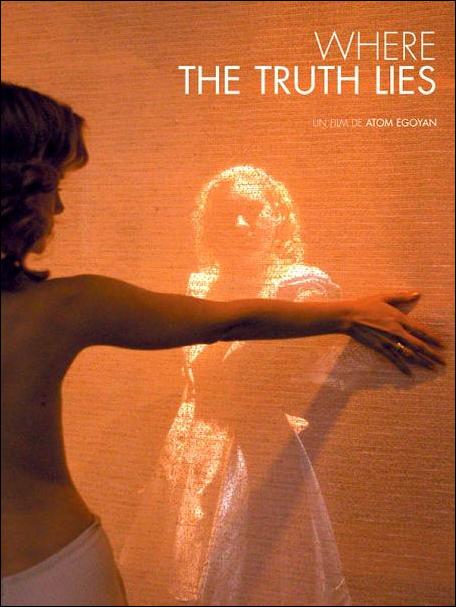
Rant of the Day: Where the Truth Lies - dir. Atom Egoyan - 2005 - Canada/UK/USA

Though the title doesn't pose a question, the truth, unfortunately, lies within the narrative. Atom Egoyan's other films have always been mysteries, but never concretely. Instead, it isn't until after you watch the film, that you realize an unposed question has been answered. Where the Truth Lies, his latest, makes the mistake of letting us know what we're looking for (quite literally the explanation of a woman's death). Young journalist Karen O'Connor (Alison Lohman) is writing a story about the woman's death, her body found in the bathtub of two television icons (Kevin Bacon, Colin Firth). The question is posed, the answer is found... and yet this leads us to none of the human, emotional conclusions we came to with The Sweet Hereafter, The Adjuster, or Exotica. This, too, may be the fault of our lead actress who makes our investigation unfulfilling and uninvolving. Egoyan has used young actors to varying degrees in the past: radiantly (Sarah Polley in The Sweet Hereafter) and simply just effectively (Mia Kirshner in Exotica, David Alpay in Ararat). But here, he goes dead wrong. But it's probably too easy to blame the starlet for what's truly wrong with Where the Truth Lies. Perhaps all Egoyan wanted to do was make a good ol' Hollywood murder mystery (though its structure is far more Citizen Kane than Agatha Christie), but this doesn't make the disappointment in the film's climax nor the uncompelling lead excusable. And how dare he bring back three of his regulars (Arsinée Khanjian, Don McKellar, and Gabrielle Rose) in a single scene as publishing execs, only to remind us of the wonder and awe that he once created... and may never create again.

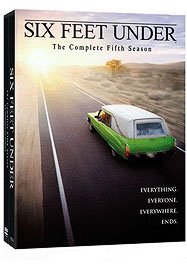
DVD of the Week: Six Feet Under: Season 5

In case you couldn't guess, the final season of Six Feet Under is the DVD of the week. What, did you think I was going to pick Memoirs of a Geisha?

27 March 2006

Ghost of Love

So it's been a while, hasn't it? I know this blog is dedicated to film criticism, but I'm making an exception here, as I just finished the final episode of Six Feet Under, HBO's critical darling that finished its five-year run this past summer. Six Feet Under emerged alongside The Sopranos and Sex and the City, legitimizing HBO and making its credibility soar above the Matthew McConaughey movies, sex specials, and the occasional stand-up hour they were previously known for. In a sense, HBO was taking a chance, something Hollywood hasn’t done in a long time. Out of the three HBO darlings, Six Feet Under was the riskiest: an entire show about death? Alan Ball, an Oscar winner for American Beauty, apparently created the series after the death of his sister and created something far more poignant and beautiful than his beloved Oscar winner.

Television? Film purists scoff at the suggestion that television might have produced something even remotely meaningful. Television brought about the death of cinema. As I believe Godard said, television removed the audience’s ability to “look.” Of course I believe this to be true, though I’ve never known life without television. Come fourteen, I unplugged reception on my TV and allowed it to be only used for film-viewing (aside from the Twin Peaks obsession I had… but, I allowed myself that indulgence because David Lynch was a filmmaker… he wasn’t Ray Ramano or Ted Danson). Somehow, though, thanks to HBO’s risk-taking, television has finally become something to truly rival the cinema. What TV has that film doesn’t is the advantage of time. Though most television shows have a structure to their episodes (Six Feet Under always begins with a death that essentially shapes the rest of the episode, Law & Order solves the crime by the end credits), there’s a serious investment one can make in the characters that film doesn’t have. Do you not feel closer to a character after spending thirteen hours with them, as opposed to ninety minutes? This, too, is what makes it harder for me to talk about Six Feet Under than a film I just watched. I’ve spent over sixty hours watching this family, their secrets, their pains, their joys… and it’s gotten to the point where I know them nearly as well as I know some of my close friends. But despite all these distracting emotions, Six Feet Under, as a whole, stands as one of the most powerful artistic explorations of the human condition.

The show itself is a helluva a lot better than you are. You may hate a particular character (I know plenty of people who can do without the emotionally-unstable Brenda (Rachel Griffiths, who was probably the only known actor prior to the show's premiere)) or character's action, but the camera, nor the show, never does. Probably the greatest strength of Six Feet Under is its ability to allow the characters to unfold, fuck up, cry, reflect without ever throwing a blanket of judgement over them. This is not to say characters don't pay for their actions, but the show allows for the other characters to pass out the judgements. A character's infidelity, lie, or mistake adds to their own complexity and our own understanding of this complexity. Why would David, at the time perfectly happy in a relationship, accept a blowjob from a stranger? Why does Claire fall back into a relationship with a man she knows will never work for her? I could site examples for a long time, but what I'm trying to get it the way Six Feet Under shows us the inhabitants of its world. Actions don't always have their simple cause and effect. Point A doesn't have to lead to Point B.

As for Season 5... (I'm going to get emotional)
The show closes its book perfectly. It's almost hard for me to separate myself from my feelings here. I can't even fathom taking its series finale and looking at it objectively. I know these people too well (this bond may be even more strong than the bond I discussed in my blog about The Virgin Spring). The culmination of five seasons with the Fisher family became something far more stirring, rich, painful, beautiful than perhaps anything I'd seen in the cinema in the past year or so. I'm sort of hating myself right now for not even knowing the words to express how I feel/felt. I may have to post more when I can separate myself better from this. Sorry it seemed as if I had a lot to say.

14 March 2006

Nobody Gonna Sleep Here Tonight

Blogger isn't uploading my pictures today... so fuck them. Anyway, I shall be out of town until next week -- so don't expect any posts, not that I've really posted anything of quality lately.

11 March 2006

What are YOU excited about?

Actually, I don't care to know the answer to the above question. I just wanted to let you know what I'm excited about: cinema-wise, that is. Not that I'm ever excited about anything else, really. I've been working on a couple of posts, but my self-esteem has been murdered in the past forty-eight hours in regards to film criticism. Don't worry, I'll take some Prozac and get back to ripping apart Crash again soon. Until then, get excited with me.

Volver - dir. Pedro Almodóvar - 2006 - Spain
Ol' Pedro has reteamed with Carmen Maura (so wonderful in
Women on the Verge of a Nervous Breakdown), after a reported falling out during the filming of Kika. And, less excitingly, with Penélope Cruz, whose only watchable films (All About My Mother, Live Flesh) happen to have been directed by him. Maura's ghost returns to solve the problems she couldn't while she was living. I hope it's as good as Just Like Heaven. Or... maybe a little better. Sounds to me like it's going to be another of his "serious" films, but I'll go and enjoy it nonetheless. Coming in June from Sony.


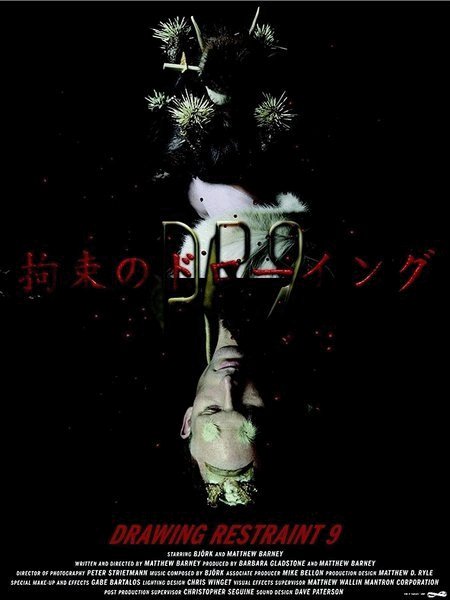
Drawing Restraint 9 - dir. Matthew Barney - 2005 - USA/Japan
I actually can't say I'm excited about this one, but I'm sure I'll drag my ass to the theatre to see it, even though supporting Matthew Barney's self-indulgence isn't really a joyous pasttime of mine. This time around, he's got his baby's mama Björk parading around in geisha-attire. Like his
Cremaster cycle, it's bound to be visually astounding, and, unlike Cremaster 3, this one only runs just a little over two hours. IFC Films will have this one out soon.

Mary - dir. Abel Ferrara - 2005 - France/Italy/USA
Now here's one that's got me ecstatic. A new Abel Ferrara film! Initial rumors suggested that Vincent Gallo was going to star alongside Sarah Polley. These rumors proved false; instead we've got Matthew Modine as Jesus and Juliette Binoche as Mary Magdalene. Fuck
The Da Vinci Code; I'm sure this one'll piss of Christians even more (that is, if they even hear about it). The IMDb says it's coming in June, but I haven't found a studio for it. Keep your rosary out.

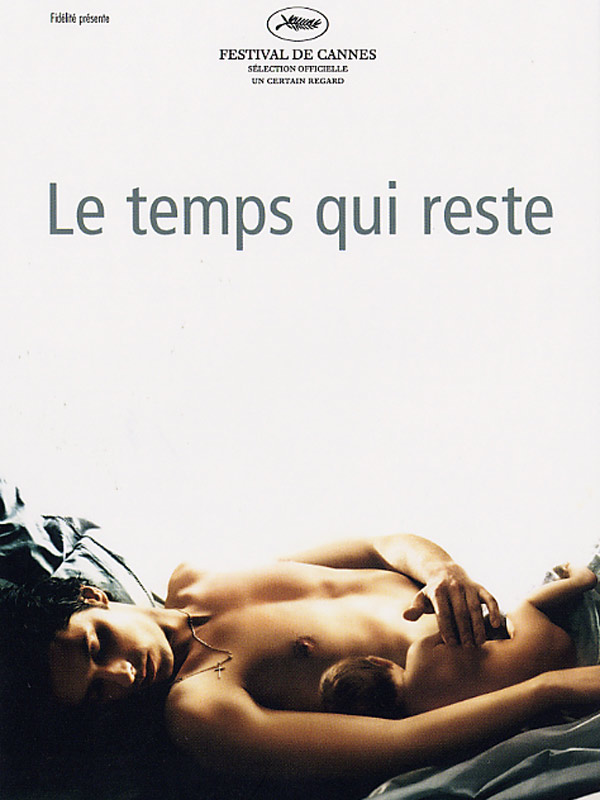
Le Temps qui reste - dir. François Ozon - 2005 - France
So
5 x 2 was a bit of a disappointment, sure. But Le Temps qui reste is supposed to be the second installment of a trilogy Ozon began with his marvelous Under the Sand (Sous le sable). Strand should have this one out at the beginning of June.

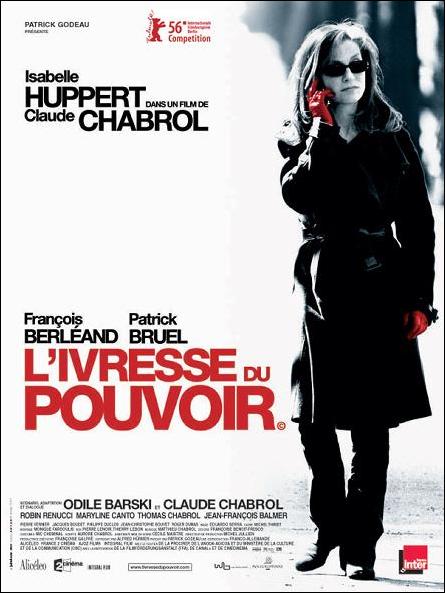
L'Ivresse du pouvoir - dir. Claude Chabrol - 2006 - France
Or literally,
The Intoxication of the Power (expect the title to change before making it stateside). I'm not saying Isabelle Huppert is necessary for Chabrol to make a good film -- but it helps. And in the past ten years, his only memorable films (La Cérémonie, Merci pour le chocolat) have featured Madame Huppert, so this looks to be a safer bet than his prior Flower of Evil (La Fleur du mal). Plus, the guy's pushing 80; he's not going to have many more chances. No word on a US distributor.

Inland Empire - dir. David Lynch - 2006 - France/USA
Laura Dern's in trouble! That's all that's known about Lynch's new feature, which will probably be making its debut around May at the Cannes Film Festival. Plus, Lynch got a bunch of his regulars back: Angelo Badalamenti doing the score (would it be a Lynch film without?) and Harry Dean Stanton, Dern, Justin Theroux, and Kyle (My Special Agent) Maclachlan in front of the camera. It's also his first digital feature... so we'll see how that goes. Can't wait for this one? Check out his short
Rabbits, with Naomi Watts, here.

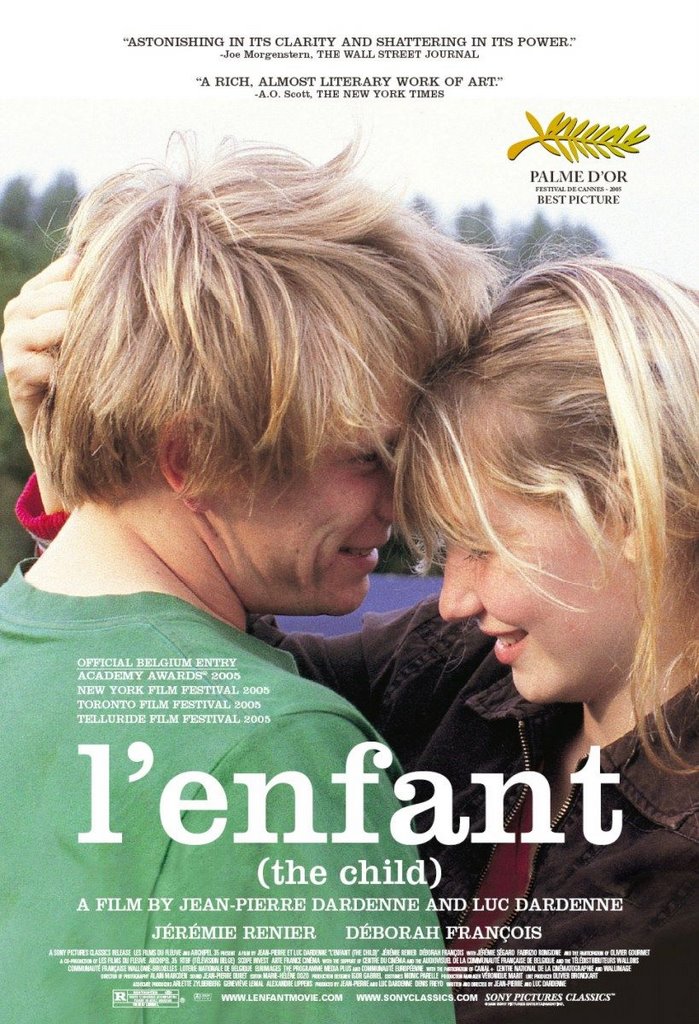
L'Enfant - dir. Jean-Pierre Dardenne, Luc Dardenne - 2005 - Belgium/France
Looks like US audiences
will get to see the 2005 Palme d'Or winner in time for the 2006 festival in May. A young couple decide to exploit their baby for money. The Dardenne brothers have always been odd favorites at Cannes. This is their second Palme d'Or win (after Rosetta in 1999)... I'd hardly say they fit the image of a Cannes darling (the Coens, Lynch, Von Trier, Haneke, or Wong Kar-wai are among others), but maybe it's because they don't fit that the French hold them in such high regard. Expect a slow, sparce drama here. Sony releases it later this month.

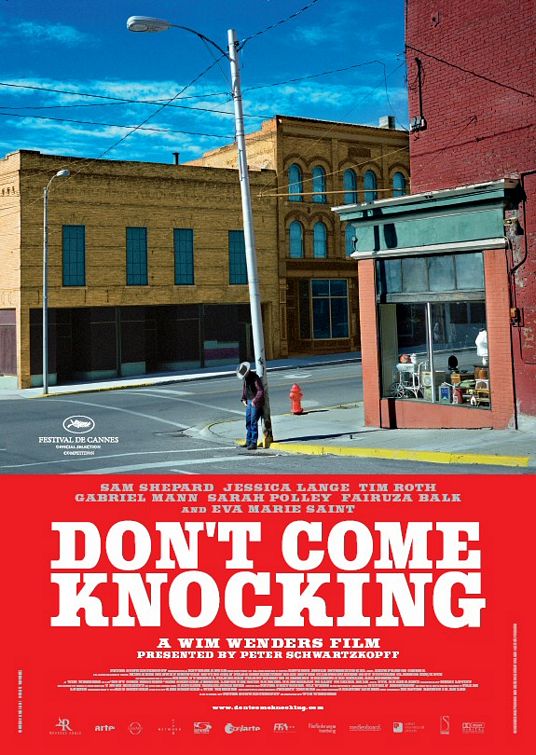
Don't Come Knocking - dir. Wim Wenders - 2005 - USA/Germany
Still fascinated by the desolate American South after
Paris, Texas, Sony's dishing out Wenders' latest. Bradford mentioned to me that you can only have one favorite of the short-list of New German filmmakers: Fassbinder, Herzog, Wenders, Schlöndorff. Fassbinder died; Herzog and Wenders now work in the US; Schlöndorff now makes boring Holocaust films. This one had better be good enough that I forget about Million Dollar Hotel.

The Heart Is Deceitful Above All Things - dir. Asia Argento - 2004 - USA
I know I've talked about this before on here, and I know you know I hated the book. But my weird crush on Asia Argento just won't die. And this new poster is pretty rad. GreenCine Daily linked an interview with Argento on SuicideGirls.com, where she reveals how much she loves Roman Polanski, that her best friend is Gaspar Noé
(Irréversible), that she was unaware (and doesn't really give a fuck) that J.T. LeRoy didn't exist.

And I apologize, but I had to turn the "word verification" on for posting comments. I was getting too many porn links to ass-fuckin she-males with big titties.

10 March 2006

Grizzly Gardens

Double Feature Time!
Grizzly Man - dir. Werner Herzog - 2005 - USA
+
Grey Gardens - dir. Albert Maysles, David Maysles, Ellen Hovde, Muffie Meyer - 1975 - USA

Is Grizzly Man the new Grey Gardens?? Though the alliteration in titles is cute, I think the both of these docs have a lot more in common than I initially thought... and I don't think I ever could have realized this until seeing Grizzly Man in a packed theatre as I did tonight. It's always nice to see a film with a big crowded audience after everyone had already gotten their chance to catch the DVD or its initial theatrical run. The sense of familiarity provides a comfortable atmosphere with people who are there for the same reason you are... which, as I found out tonight, is to laugh at Timothy Treadwell. The purpose and creation of these films differ greatly. Grey Gardens always feels like a horribly uncomfortable accident to me. Did the Maysles brothers really know what they were getting into when they decided to make a film about Big and Little Edie? It's been said they decided to make this film instead of one about Jackie Kennedy's sister (the Edies are distant relatives of Jackie Kennedy)... but every time I see the film, I can't help but picture their wide-eyed, crooked-eyebrowed faces as Little Edie rants about... I have no idea what. Herzog knew what he was getting into. He chose the footage himself, let alone choosing to direct this project. While the films show startling moments of intimate insanity, I think the audience has taken both films out of the director's hands. Herzog's commentary on man and nature is beautiful and startling. Little Edie's breakdown at the end of Grey Gardens is both terrifying and heart-breaking. Yet, is that why we're watching these films? Some could argue for that. But how can we ignore the built-in camp, moments so bizarre the only thing we can do is laugh? Though both Little Edie and Timothy are figures deservant of sympathy, they're both fucking nut-cases... and they reveal their insanity for the camera. Thankfully, too, Grey Gardens and Grizzly Man are films we can enjoy on intellectual terms as well as on a hilarious popcorn movie level. But, really, who gives a fuck about intellectually looking at a movie? I just wanna see Little Edie dance!

08 March 2006

Nope

I'm sure if you've read any of my previous blogs, you know exactly how I felt about this past Sunday's Academy Awards. Hollywood's homophobic, Reese Witherspoon is adorable, montages blow. You get the picture. I will update as soon as my god-damn finals terminate.

28 February 2006

Peter Greenaway and Others

For all those wild and crazy Peter Greenaway fans out there (I know there aren't many), Zeitgeist Video is releasing a collection of his early films, including the pseudo-documentary epic The Falls on April 11th, for all those who don't have a region-free DVD player (as BFI released all of these a long time ago on DVD). I think maybe this will encourage me to revist some of his best work, specifically A Zed and Two Noughts and, of course, The Cook, the Thief, His Wife and Her Lover, since I don't think his Tulse Luper Suitcases series will be in the States any time soon. Expect some longer criticisms of these films at a later date. Right now, I'm going to immerse myself in some lurid Abel Ferrara after finishing Rois et reine. Here's what you may be interested in on DVD tomorrow:

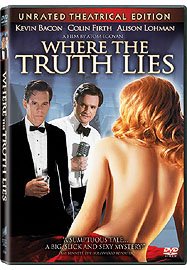
Where the Truth Lies - dir. Atom Egoyan - 2005 - Canada - Sony Pictures

Be sure to get the unrated version if you want to see Kevin Bacon and Colin Firth tag-teaming some young girl. It's strange that sometime after his sublime adaptation of Russell Banks' The Sweet Hereafter, Atom Egoyan became a forgettable director. This may have to do with his lousy Felicia's Journey and challenging, but ultimately messy Ararat. Bradford (Being Boring) saw it in the theatre and gave it an enthusiastic yawn.


Werckmeister Harmonies - dir. Bela Tarr - 2000 - Hungary - Facets

Cinephiles wet themselves over this film. I haven't seen it. I will soon.


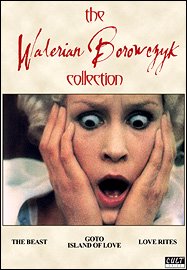
The Walerian Borowczyk Collection - Cult Epics

And for the sickos out there, pick up the Walerian Borowczyk boxset, which includes a single-disc edition of his notoriously vile La Bête, his steamy Love Rites (Cérémonie d'amour), and, for the first time on DVD, Goto, Island of Love (Goto, l'île d'amour).