30 November 2007

An amnesiac, a hot stalker girl, and an angsty Taiwanese homo walk into a bar... or, A Wasted Day of Film

Amnesia: The James Brighton Enigma [Amnésie - L’énigme James Brighton] - dir. Denis Langlois - 2005 - Canada

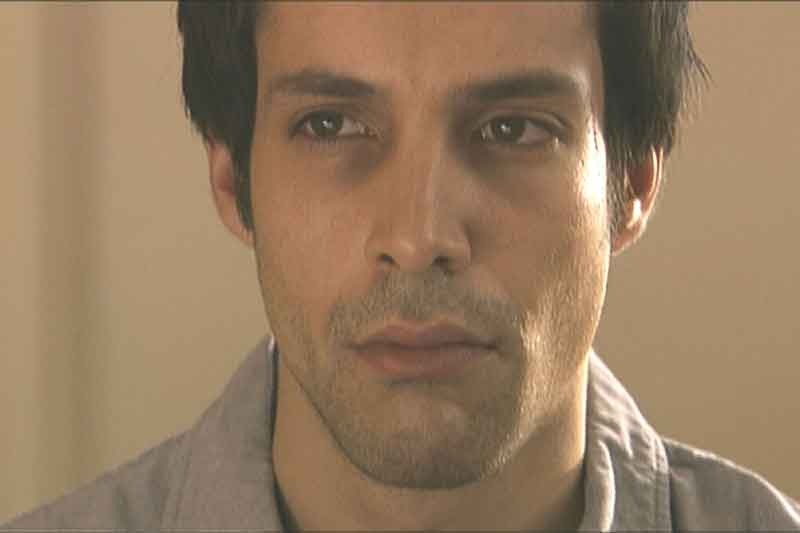
You probably already know that the words “based on a true story” are like nails on a chalkboard for me. It’s sort of a taste aversion, like how I can’t drink root beer because I barfed after having it when I was a kid. In Amnesia, director Langlois attempts to dispel such negative notions of the “docudrama,” by using the true story of an American man who woke up naked in Montréal with no memory of his identity as a means to explore ideas of “nature vs. nurture.” All the man remembers is his name, James Brighton (which ends up not really being his name), and that he’s gay. Langlois focuses on the gay thing by with little success. He sets up the possibility of intrigue and seems satisfied with just simply asking the question. In fact, he doesn’t really “ask” anything as much as he just implies that there’s an underlying question lurking around. When the possibility that James (Dusan Dukic), whose real name is Matthew Honeycutt, is faking his amnesia for attention, the question becomes a further distraction as Langlois never believes this theory. Instead, he offers the audience typically distorted flashbacks of James/Matthew being harassed and beaten up by a group of “straight guy” clichés. Amnesia ends up being an idea film with nothing to say and Langlois a lousy psychological researcher who’s happy enough to just to ask the questions instead of looking for the answers.

The Spectator [La spettatrice] - dir. Paolo Franchi - 2004 - Italy

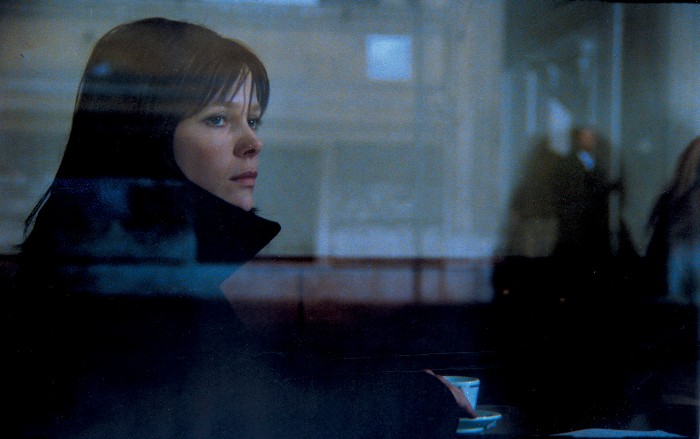
She’s pretty, she’s shy, and she stalks you because she loves you. Maudlin Valeria (Barbora Bobulova) is translator by day, window stalker by night. When Valeria finds that the subject of her voyeurism enters her day world, all becomes disrupted… blandly. The Spectator purposefully calls to mind Hitchcock’s Rear Window in the lousiest respect. It’s a suspense-free “thriller,” reminiscent more of this year’s wretched The Page Turner than the worst thing Hitchcock’s ever made. There’s even a dead dog! Director Franchi fills The Spectator with empty provocations and Valeria with shallow motives. Our confusion about why a girl like Valeria would ever do what she does never feels like decisive fascination on the director’s part as it does the work of a clueless screenwriter. Franchi made his follow-up this year at Venice with the sexually-explicit Fallen Heroes, which will hopefully show an improvement if it ever gets released stateside. Oh, and thanks Facets for a DVD that makes a 2004 film look as washed-out as one from the 60s with no restoration.

Eternal Summer - dir. Leste Chan - 2006 - Taiwan

Taiwanese queer cinema loses some of the magic that Tsai Ming-liang invoked in my mind with Eternal Summer. Why are films about repressed gay teenagers in love with their better-looking straight best friend still made? Eternal Summer offers no reason for existing, other than having a cute lead actress (Kate Yeung) and passable cinematography. Let’s try to keep this plot line for talentless film students who’ll never get funding for their feature-film screenplay. Carrie (Yuen) falls for shy Jonathan (Bryant Chang), realizes he’s a poof and goes for his best friend Shane (Jonathan Chang), a ne’er-do-well basketball star. Blah blah blah, you know the rest; I just wish the director had realized this before making this compost pile of a film.

Y'know, I like "indie" movies...

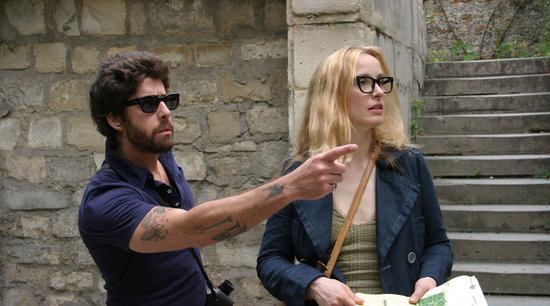
Oh, yeah, the Independent Spirit Awards. Isn't that just a big party with John Waters or Sarah Silverman as host? I hear the stars can booze it up there, so it always makes watching a helluva lot more interesting than the sterile Academy Awards, but I always wonder what constitutes a film to be nominated and not nominated? This year, Gus Van Sant's Paranoid Park is up for a handful of prizes, but IFC won't be releasing it until next year. And, is A Mighty Heart really an independent film? Whatever. Also, spare your comments about the photos I chose of Adrienne Shelly and Zoe Cassavetes, nominated for their screenplays, and pictured with cameras. Also, looking at the list of cinematographers, I begin to wonder, "has there been a striking, important American director of photography in the past 20 years?" The nominees are as follows:

Best Feature

The Diving Bell and the Butterfly [Le scaphandre et le papillon] - dir. Julian Schnabel - France/USA
I'm Not There - dir. Todd Hayes - USA
Juno - dir. Jason Reitman - USA
A Mighty Heart - dir. Michael Winterbottom
Paranoid Park - dir. Gus Vant Sant - USA/France

Best Director

Todd Haynes - I'm Not There
Tamara Jenkins - The Savages
Jason Reitman - Juno
Julian Schnabel - The Diving Bell and the Butterfly
Gus Van Sant - Paranoid Park

Best First Feature

2 Days in Paris [Deux jours à Paris] - dir. Julie Delpy - France/Germany
Great World of Sound - dir. Craig Zobel - USA
The Lookout - dir. Scott Frank - USA
Rocket Science - dir. Jeffrey Blitz - USA
Vanaja - dir. Rajnesh Domalpalli - India/USA

John Cassavetes Award [for features made under $500,000]

August Evening - dir. Chris Eska - USA
Owl and the Sparrow - dir. Stephane Gauger - Vietnam/USA
The Pool - dir. Chris Smith - USA
Quiet City - dir. Aaron Katz - USA
Shotgun Stories - dir. Jeff Nichols - USA

Best Screenplay

Ronald Harwood - The Diving Bell and the Butterfly
Tamara Jenkins - The Savages
Fred Parnes, Andrew Wagner - Staring Out in the Evening
Adrienne Shelly - Waitress
Mike White - Year of the Dog

Best First Screenplay

Jeffrey Blitz - Rocket Science
Zoe Cassavetes - Broken English
Diablo Cody - Juno
Kelly Masterson - Before the Devil Knows You're Dead
John Orloff - A Mighty Heart

Best Actress

Angelina Jolie - A Mighty Heart
Sienna Miller - Interview
Ellen Page - Juno
Parker Posey - Broken English
Tang Wei - Lust, Caution

Best Actor

Pedro Castaneda - August Evening
Don Cheadle - Talk to Me
Philip Seymour Hoffman - The Savages
Frank Langella - Staring Out in the Evening
Tony Leung - Lust, Caution

Best Supporting Actress

Cate Blanchett - I'm Not There
Anna Kenrick - Rocket Science
Jennifer Jason Leigh - Margot at the Wedding
Tamara Podemski - Four Sheets to the Wind
Marisa Tomei - Before the Devil Knows You're Dead

Best Supporting Actor

Chiwetel Ejiofor - Talk to Me
Marcus Carl Franklin - I'm Not There
Kene Holliday - Great World of Sound
Irrfan Khan - The Namesake
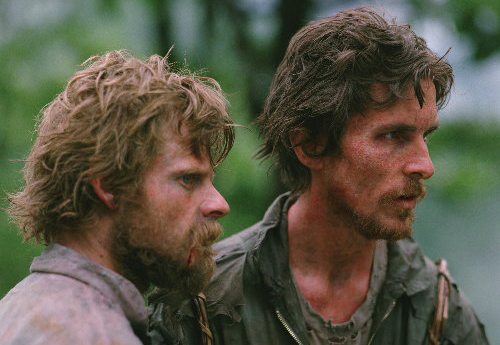
Steve Zahn - Rescue Dawn

Best Cinematography

Mott Hupfel - The Savages
Janusz Kaminski - The Diving Bell and the Butterfly
Milton Kam - Vanaja
Mihai Malaimare, Jr. - Youth Without Youth
Rodrigo Prieto - Lust, Caution

Best Documentary

Crazy Love - dir. Dan Klores - USA
Lake of Fire - dir. Tony Kaye - USA
Manufactured Lanscapes - dir. Jennifer Baichwal - Canada
The Monastery - fir. Pernille Rose Grønkjær - Denmark
The Prisoner; or How I Planned to Kill Tony Blair - dir. Petra Epperlein, Michael Tucker - Germany/USA

Best Foreign Film

4 Months, 3 Weeks and 2 Days [4 luni, 3 săptămâni şi 2 zile] - dir. Cristian Mungiu - Romania
The Band's Visit [Bikur Ha-Tizmoret] - dir. Eran Kolirin - Israel
Lady Chatterley - dir. Pascale Ferran - France
Once - dir. John Carney - Ireland
Perespolis - dir. Vincent Paronnaud, Marjane Satrapi - France

O Hell to the No

O Jerusalem - dir. Elie Chouraqui - 2006 - France/UK/Israel/Italy/USA/Greece

For the sake of film goers everywhere, I wish people of different nationalities, religions, and races would stop being friends. Really, keep your friends within the same belief system, because then filmmakers wouldn’t have to resort to using these friendships as the human interest for their depictions of cultural struggle. O Jerusalem dreadfully continues this trend, placing American Jew Bobby (JJ Feild) and Middle-Eastern Arab (Saïd Taghmaoui of La Haine and Hideous Kinky) in the middle of the early stages of the war for Jerusalem. I’m not denying that the continuing struggle between the Arabs and Jews in Israel wouldn’t make for gripping cinema, but it sure doesn’t show here in a film as painfully laughable as O Jerusalem.

The religious struggle was tackled in a similarly unsuccessful fashion this year in Eytan Fox’s The Bubble, which brought the conflict to present day Tel Aviv where a star-crossed Jew and an Arab fall for one another amid the state of divergence. Both The Bubble and O Jerusalem resort to melodrama to awkwardly bring the conflict to its otherwise pacifist characters, trivializing any vision or standpoint their intentions might have displayed. Both directors could use lessons from Paul Greengrass, whose Bloody Sunday and United 93 poignantly freed themselves of cheap sentimentality and struck a deep chord with their audience.

No matter what director Elie Chouraqui intended with this project, O Jerusalem is sadly mistaken in every single regard to filmmaking. The actors, which also include Ian Holm as someone who comes off as a Saturday Night Live (or, more accurately, MadTV… it’s that bad) version of Albert Einstein, never overcome the pitiful dialogue, no matter how gifted they may have been in other films. I almost began to feel sorry for the otherwise talented Taghamaoui, who looked like he couldn’t control his laughter during the scene where he decides to enter combat. Chouraqui never establishes the characters to anything more than their religion and gives them shallow motives for involvement. Although he’s French, Chouraqui further puzzles the audience by filming nearly the entire thing in English, a trend that I thought, after a film like Babel, would be quickly dying out. It’s no wonder that both Judi Dench and Winona Ryder dropped out of O Jerusalem before filming began; it would have made The Shipping News and Mr. Deeds, respectively, look like high marks of their career.

29 November 2007

MGM Catalogue for February

MGM has announced a handful of catalogue titles for February today. In addition to a collector's edition of Billy Wilder's Oscar-winning The Apartment, teen comedies Some Girls with Patrick Dempsey and Jennifer Connelly and Zapped! with Scott Baio will be available on 12 February. Also, look for Paul Schrader's Touch with Bridget Fonda, Christopher Walken, LL Cool J, Gina Gershon, Tom Arnold and Skeet Ulrich and Kenneth Branagh's ensemble comedy Peter's Friends with Emma Thompson, Hugh Laurie, Stephen Fry, Imelda Staunton, and others. None of the above really tickles my cookie, but I thought I'd let you know anyway.

25 November 2007

Preemptive Strike; or I Know Who Killed My Career

I Know Who Killed Me - dir. Chris Sivertson - 2007 - USA

I don’t follow Lindsay Lohan’s “career” or private life very closely, but I can state with some certainty that I Know Who Killed Me came out three years too early. I Know Who Killed Me is precisely the schlock-y B-movie that an actress whose career had been dead for a while would make, not the film to officially signify falling off the map. It’s also the sort of film that applauds itself in making reference to one of her more popular films (here, it’s Freaky Friday) by adding a level of sleaze on top of it. Lohan again takes on dual roles, one a peppy high school girl who wants to become a writer, the other a down-on-her-luck stripper. Dakota Moss, the stripper, becomes mistaken for Aubrey Fleming, who has been missing for several weeks. Someone probably should have kidnapped and tortured Aubrey’s parents (played by Neal McDonough and a slumming Julia Ormond) for giving her such a horrible name.

I Know Who Killed Me is the preposterous thriller you’d imagine it to be. There’s a stupid mythical twist near the end that never makes sense to anyone other than the filmmakers, and when the villain is finally revealed, the screenwriter apparently forgot that the establishment of the character would have no bearing on the particular Lohan character that uncovers the truth. Thus, I don’t think there’s any motive given for the brutal dismemberments, which is fine because I could barely be bothered to pay much attention, let alone care about what was going on by that point. The director, for some puzzling reason, paints the film in a hyper-blue that reeks of film school incompetence. I would probably suggest following a viewing of this shit with Kieslowski’s magnificent Blue just to give the color a better frame of reference.

I recall little of Freaky Friday, but I have little doubt that Lohan performed better there than she did with I Know Who Killed Me. I guess in someone’s mind the fact that Aubrey and Dakota both have that raspy martini-soaked Lindsay Lohan voice (even though one of the girls is a goodie-goodie) and even the same hairstyle and fake color would make the identity confusion more plausible. It’s also worth mentioning that Lohan is the only stripper in the joint who remains fully clothed throughout her dance, though I think everyone with access to a computer has seen her naked. These puzzlements just further draws in one’s confusion as to the purpose of this fiasco. Certainly, Lohan could have found a better project to shed her child star image (if she hadn’t already done so in the tabloids). Perhaps there's some meta level of appreciation in Lindsay Lohan trying to save the good girl version of herself, but ood luck trying to find anything worth salvaging in I Know Who Killed Me; my efforts proved futile.

I Know Who Killed Me began an unintentional double-feature with the film Pretty Things (Les jolies choses) with the lovely Marion Cotillard, the front-runner in this year's Best Actress race for La Vie en rose, also playing dual roles. I really had no idea what to make of Pretty Things going in, aside from my adoration of Cotillard (particularly in a dual role) and the potential for provocation as being adapted from a novel by Virginie Despentes, director of the dreadful Baise-moi. If nothing else, Pretty Things became much needed reassurance that I should quit holding actors on a pedestal. As wonderful as Cotillard was in La vie en Rose and as effective as she may be here, no grand artist would have ever allowed themselves to be part of such manure. Pretty Things was the much-needed ice-cold shower that I needed to unseat the golden calves that are actors.

22 November 2007

Mumble and Silence

Benten Films has announced their second DVD release, two films by Aaron Katz: Quiet City and Dance Party USA. Following in the footsteps of their first release LOL, Katz's films also fit into the mumblecore subgenre that the kids like so much. The set, which includes both titles, will be released 29 January.

I also neglected to mention Strand's pending release of Apitchatpong Weerasethekul's Syndromes and a Century for the 15th of January when I did my round-up of the notable releases announced for 2008. The film made small rounds across the country this past summer, and I hear it's wonderful. This is coming from someone who loved Tropical Malady so much he just about foamed at the mouth.

20 November 2007

Blog-a-thon for early December

I just wanted to let you all know about Short Film Week Blog-a-Thon, hosted by Ed at Seul le cinema and CultureSnob. Please shoot them an e-mail if you want to participate. I will likely be dissecting the genius and nuances of every Christina Aguilera video out there to show my support of the artistry of the short format! So mark your calendars.

19 November 2007

Eat Me Out; or How Did New Queer Cinema Die?

[Written as part of the Queer Film Blog-a-thon hosted by Queering the Apparatus]

When did the worldview of the cinematic homosexual get its blue skies? There will always be films that mark the beginning of an era. Birth of a Nation, Breathless, Star Wars, The Maltese Falcon, sex lies and videotape - these films will forever be known as the stepping stones of their respective genre or movement in film. Most would attribute Todd Haynes’ Poison, which won the Grand Jury Prize at Sundance in 1991, as being the birth of the New Queer Cinema era. Though the movement likely died at the end of the 90s, it took a while for the signs to appear. Yeah, there was desexualized Will & Grace and hyper-sexualized Queer as Folk on television by 2000, but the first signs of NQC’s death came to me in the form of a little movie called Eating Out.

What exactly happened between Gregg Araki’s Nowhere and Q. Allan Brocka’s Eating Out? For starters, Araki “switched teams” near the end of the 90s, dating actress Kathleen Robertson (Lucifer from Nowhere), casting her as the lead in his nominally heterosexual Splendor, and giving his fans the first real happy ending of his career (some might argue the case for Three Bewildered People in the Night, but show me five people who’ve actually seen that film). Gus Van Sant directed the Oscar-winning Good Will Hunting and followed it with a shot-for-shot remake of Hitchcock’s Psycho. Todd Haynes also got the attention of the Academy with his ode to Douglas Sirk, Far from Heaven. And Swoon director Tom Kalin didn’t make another feature until this year with Savage Grace, fifteen years later. The forefathers of NQC changed their stripes, packed their bags, and headed elsewhere. Enter Eating Out. Where was the gay youth of American to turn to without James Duval sulking and contemplating the meaning of love and existence? He wasn’t there anymore. Times had changed, schools started gay-straight alliances, and gayness, in whatever form, was a major part of the average American’s television sets. Perhaps it wasn’t the director’s intention, but Eating Out rose to the occasion, filling the long-empty shoes of River Phoenix or Duval or, even, Bruce LaBruce, and with Eating Out, what we got was the beginning of the sunny era of queer cinema populated by exercises in bad taste disguised as romances where chiseled bodies took the place of shaggy hair, tattoos, and your favorite Siouxsie and the Banshees T-shirt.

Eating Out’s only relationship to anything worthy in queer cinema history comes through filtration. Eating Out is more closely the spawn of American Pie than My Own Private Idaho, and through American Pie, the connection to John Waters is made. Even with Waters, the linkage is distant. With Pink Flamingos and Female Trouble, Waters provided skewed, ironic visions of a happy ending, whether it be Divine being honored as the filthiest person alive or her crowning achievement in the electric chair. What becomes of Eating Out is a sex farce of gross-out proportions, teamed with naked hunks and a pink ribbon of a happy ending. Instead of the boy of our hero’s dreams turning into a giant bug , the flaming homo gets that dreamboat, ripped from the pages of an Abercrombie & Fitch summer catalog.

Though I’m pretty sure it didn’t gross over $200,000 at the US box office, Eating Out triumphed in the DVD sales, particularly from TLA Video, spawning a sequel (with the fitting and poetic subtitle Sloppy Seconds), and signaling the death of an era of film. In the film’s defense, it probably never set out to change anything, other than a bunch of aging West Hollywood fags’ underwear, and it hardly stands as the worst of the lot that followed. For the bottom of the barrel, why don’t you try Todd Stephens’ Another Gay Movie, which takes the thematic relationship between Eating Out and American Pie to the highest level? [I would recommend you check out my friend Bradford Nordeen’s condemnation of the film to get a better idea] And yet, Eating Out proved that there was a market for its brand of shallowness in gays who could tell you the first, last, and middle name of all the hosts of Queer Eye for the Straight Guy but couldn’t name a single film directed by Derek Jarman.

As Bradford said everything I could have wanted to about Another Gay Movie, I’ll spit my venom toward Everett Lewis instead. Lewis threw himself onto the NQC scene in 1996 with Skin & Bone, a seedy depiction of how the mean streets of LA claimed the hearts of three street hustlers. The film was dark and distressing, though notably overshadowed by Bruce LaBruce’s finer, and more controversial, Hustler White. Six years later, Lewis made his next film, Luster, and oh, how the world had changed. Luster was a film that could have been made by your pretentious class artfag, who’d watched The Doom Generation way too many times without ever absorbing anything beyond the surface, and without the finances to supply a Cocteau Twins or Nine Inch Nails soundtrack. In fact, the characters in Luster exist as some of the more reprehensible Araki figures as depicted by someone who merely stole the preliminary character sketches. In quick summation, Araki treated his characters with both boundless admiration and a harshly critical eye, condemning them for the same reasons he loved them. His depiction of the shallowness of youthful desires and loneliness was so accurate that most of his detractors ignorantly place the word “vapid” to describe the films themselves. In Luster, a slutty blue-haired record store clerk just can’t find the right man in Los Angeles, climaxing in a final scene where he strips himself naked in order to “give himself” fully to the elusive, desired object of affection. Earnestness met its new best friend in that scene, with Lewis clumsily turning his happy ending into more jerk-off material than emotional substance.

His clumsiness and ineptness as filmmaker came full circle, however, with 2005’s FAQs. In FAQs, a clean-cut, good-looking twentysomething escapes an attempted rape on a porno set and falls into the arms of a black drag queen, who’s there to save the day. As he did with Araki in Luster, Lewis takes his surface-level understanding of queer cinema history and butchers it, placing the implied notions of other, better films into the uncomfortable foreground of nauseous preachiness. In films like Michael Stock’s woefully underseen Prince in Hell, New Queer Cinema introduced the reinvention of the family structure, grouping together the abandoned lost souls in a radical “fuck you” to the Republican ideal of family life. With FAQs, this becomes the focus of the film, with lessons of superficial tolerance on the side. I can hardly bring myself to criticize the sub-Pia Zadora style of acting in FAQs as there’s so much else wrong within, but the piss-poor acting from just about everyone in the cast truly illuminates the cardboard nature of FAQs. I’ve been more profoundly moved by bumper stickers. Did I forget to mention that one of the lessons the sage drag queen passes on to her “children” is to love their bodies and spend at least half an hour naked per day? Lewis never shyed away from an excuse for male frontal nudity, particularly from “actors” with less than 5% body fat. Is he trying to tell us that loving our bodies is a lot easier to do when we look like models? Unintentionally, that’s what he got across.

Alternatives still exist. With The Raspberry Reich, a hilarious political porno, Bruce LaBruce never threw away his integrity, even as his fetishist eye became more and more prominent in later films like Skin Gang. Araki met my forgiveness for Splendor with Mysterious Skin, and with the financial gain and freedom he received from Good Will Hunting, Van Sant blossomed as an artist. With such hatred directed at the films of Q. Allan Brocka (his Eating Out follow-up Boy Culture was just as horrendously ill-approached and saturated with a manufactured happiness) and Everett Lewis, you might suspect me an insufferable cynic, yet it’s not just filmmakers of highly questionable talent that have painted their characters’ skies the deepest of blue. Mysterious Skin, The Raspberry Reich, and Van Sant’s “Le Marais” segment of Paris je t’aime all place their subjects outside of the darkness. And still, the placement of these characters out of the darkness the filmmakers had so beautifully depicted in their earlier films still so vastly contrasts the reprehensible films of which I’ve already spoken. Unlike the tidiness and finite nature of Eating Out and others, the ends of Mysterious Skin, The Raspberry Reich, and “Le Marais” glimmer with hope in opposition to dubious glee. Each elevate themselves from the story-centered nature and show their hope with its murkiness still lingering and its closure open-ended. Perhaps the sun is indeed coming out for the once-angst-ridden gay youth of cinema… let’s just hope it’s captured by someone who knows how to make a film.
18 November 2007

Region 2 for you...

Artificial Eye has released a quartet of box-sets of the films of Aki Kaurismäki, making just about every one of his films readily available in the UK. I’m pretty sure not a one of the films inside the sets have ever been released stateside, so this would probably be your best bet in discovering the most famous director in Finland’s history and a personal favorite of Jim Jarmusch.

You can also check out François Ozon’s latest, entitled Angel, on 27 November from Wild Side Vidéo. The English-language period film based on a novel by Elizabeth Taylor stars Charlotte Rampling, Sam Neill, and Romola Garai (Atonement, Scoop, Vanity Fair) in the title role. The film, as of yet, has no US distributor.

On 6 December, BAC Films will release Christophe Honoré’s musical Les chansons d’amour (Love Songs) in both a collector’s, which includes the soundtrack, and standard editions. The film premiered at this year’s Cannes, stars Louis Garrel, Ludivine Sagnier, and Chiarra Mastroianni, and will be released early next year in the States by IFC Films.

Wes Craven’s Deadly Blessing, starring a very young Sharon Stone and a very scary Ernest Borgnine, was released last month by Arrow Films in the UK. Also in horror, Lionsgate UK released Jaume Balagueró’s Fragile (Frágiles), with Calista Flockhart. Balagueró previously directed the disastrous Darkness.

Tartan UK released Pen-ek Ratanaruang’s Invisible Waves last week. The film has been caught up in rights issues in the States, with Palm losing them and now (possibly) getting them back. The film re-teams Ratanaruang with Japanese actor Tadanobu Asano (Last Life in the Universe) and famed cinematographer Christopher Doyle.

Just days after its premiere at Venice, Pathé threw out Ken Loach’s latest, It’s a Free World…, his first film post-Palme d’Or for The Wind That Shakes the Barley. Bluebell Films will be releasing Jacques Rivette’s Love on the Ground (L’amour par terre) early next year. Hard to come by in the US, the film stars Jane Birkin, Gerladine Chaplin, André Dussollier, László Szabó, and Jean-Pierre Kalfon. Network UK also released John Schlesinger’s Madame Sousatzka in September, with Shirley Maclaine, Twiggy, and Shabana Azmi. Universal has no plans to release the film stateside any time soon.

Back to Rivette, Arte Vidéo released his latest, Ne touchez pas la hache (Don’t Touch the Axe, or The Duchess of Langeais as it will be called in the US) on 3 October. The film stars Jeanne Balibar and Guillaume Depardieu and will be released theatrically by IFC Films early next year.

Teresa Villaverde’s controversial Transe, about a young Russian woman’s attempts at a better life in western Europe, was released last week by Aventi in France. The film stars Ana Moreira, Robinson Stévenin, and Andrei Chadov, though Vincent Gallo was initially attached to the project. Transe premiered at Toronto in 2006.

17 November 2007

More on the way...

Here's a rundown of some notable DVD releases for 2008 that I haven't already brought to your attention. I'll have a list of what you're missing outside of North America sometime tomorrow.

8 January 2008
Though you're probably most excited about the Korean creature feature Dragon Wars (D-War), here are a few others that might be of interest. Strand will be releasing Daniel Sánchez Arévalo's film debut, DarkBlueAlmostBlack (Azuloscurocasinegro), about a young man's dealings with his ailing father. The film premiered at Toronto in 2006. Water Bears Films will release three DVDs this week: Go West, about internal struggle in the destruction of the former Yugoslavia with Rade Serbedzija (Before the Rain, Eyes Wide Shut); the surreal romance Madagascar Skin, with John Hanna; and a collection of three short films from Greek/British director Constantine Giannaris (From the Edge of the City). The titles include North of Vortex, Caught Looking, and A Place in the Sun.

15 January 2008
Tom DiCillo's comedy Johnny Suede, with a pompadour-donning Brad Pitt, Catherine Keener, Nick Cave, and Samuel L. Jackson, will make its much-delayed US DVD release from Anchor Bay, though it seems his most recent film, Delirious with Steve Buscemi and Michael Pitt, has already made its way out of theatres.

22 Jaunary 2008
Gather together your favorite theatre students (hopefully, that will result in one person at most) for Molière, which most critics compared to Shakespeare in Love as opposed to your run-of-the-mill biopic. French heartthrob of my dreams, Romain Duris, plays the artist before he hit it big. The impressive supporting cast includes Ludivine Sagnier, Edouard Baer, and Laura Morante.

29 January 2008
As it was unofficially announced before making my list of MIA DVDs for 2008, I didn't include Anthony Mann's glorious epic El Cid on the list. The Weinstein Company will release the film, which stars Charlton Heston and Sofia Loren, as the first entry on their Miriam label, which will take the place of what was once Wellspring. Like their releases of Cinema Paradiso, the DVD will be available in a "deluxe edition" and limited 3-disc collector's edition. Magnolia will also release Ira & Abby, from Jennifer Westfeldt, the star and writer of Kissing Jessica Stein. Still about Jews but free of lesbians, Westfeldt and Chris Messina (you may remember him as Claire's Republican boyfriend near the end of Six Feet Under) play the title characters with the likes of Jason Alexander and Fred Willard in support. You can also pick up King of Kong (subtitle: A Fistful of Quarters), a "sports" documentary of epic proportions as a good-natured family man tries to top the all-time high-score of Donkey Kong from an asshole my friend calls a walking Ben Stiller character who looks weirdly like Nick Cave. Check it. Two Nick Cave reference, one post.

February Criterions
Shit, Criterion be releasin' a fuckin' Godard film an' some movie 'bout Chinese dynasties an' some movie from that dood who made Repo Man. Apparently a two-disc of Pierrot le fou, a proper DVD release for Bernardo Bertolucci's Academy Award-winning The Last Emperor, and Ed Harris performing a coup-d'etat in 19th century Nicaragua in Alex Cox's Walker were enough to supply the entire month's Criterion roster. Yeah, awesome month, but I always look forward to the surprise announcement from them (we all knew these 3 were coming). A collection of Ernst Lubitsch musicals will make the month's Eclipse series.

5 February 2008
You can check out Julie Delpy in all her vanity with 2 Days in Paris this week, along with the ever-alluring Rosario Dawson fighting back against her rapists in Descent, which will be available in uncut NC-17 version, as well as the video-store friendly R-rated edit. Universal will have out a double-feature of Imitation of Life, including the 1934 John M. Dahl version as well as Douglas Sirk's more famous 1959 melodrama with Lana Turner. Cross the Canadian lesbian romance When Night Is Falling off my MIA list, as Wolfe will release it as part of their Vintage Collection. And, finally, Kino will bring a box-set of the films of Sergei Paradjanov, including his best regarded film Shadows of Forgotten Ancestors.

12 February 2008
In a curious move, Home Vision will release a single-disc version of The Double Life of Véronique, which may mean you should finally shelve out the money for the Criterion disc. I have no conformation that the double-disc, which has four shorts on it, is going to be discontinued, but if it does, don't say I didn't warn you. Strand will also be putting out Eytan Fox's The Bubble. From the director of Walk on Water and Yossi & Jagger, the film follows three friends in Tel Aviv, their failed attempts at romance, and their relationship with an Israeli Jew. It's not very good, by the way, though I falsely reported when it was hitting theatres that actor Lior Ashkenazi was not in the film (he has a brief cameo as an actor in the play Bent). Ben Affleck's overpraised Gone Baby Gone will also be released.

19 February 2008
First Run Features will release Daniel G. Karslake's For the Bible Tells Me So, a documentary which premiered at this year's Sundance about Christianity and homosexuality. The film balances right-wing bashing with Christian's ridiculous misinterpretation of Bible passages, as well as (most interestingly) how strict Christian families have dealt with homosexuality attacking (I jest) their families. Kurt Cobain: About a Son features a number of previously unreleased audio footage of the oft-misunderstood Nirvana frontman's self-reflection. Magnolia will be releasing Brian De Palma's Redacted and Barbet Schroeder's Terror's Advocate (Avocat de la terreur) on the same day. Redacted is a pretty hot topic as of lately, and you can easily find plenty of articles discussing it... De Palma also won the Best Director prize at this year's Venice Film Festival. Schroeder's documentary focuses on Jacques Vergès, a French political figure who notoriously defended certain Nazi officers. Koko, the Talking Gorilla, this isn't.

11 March 2008
I thought I had added Rolf de Heer's The Quiet Room to my MIA list, but I didn't find it on there. Anyway, Image will be releasing this 1996 drama about a young girl who stops talking. The film was released around the same time as Ponette, unfortunately overshadowed by the sizable praise for that film's young actress. Magnolia will continue their political streak, releasing Tony Kaye's Lake of Fire on the same day. Kaye, who's kept a low-profile after the sparks between him and Edward Norton flew on the set of American History X, spent several years exposing both sides of the abortion debate, apparently to much success.

16 November 2007

Lynchian Overkill

I usually try to keep close tabs on what's being released around the country, so I found it much to my surprise that a film entitled Lynch, about - you guessed it - David Lynch's "creative process," is making its round in New York City. As I've stated before, Lynch just ceases to thrill me after all these years... and Inland Empire, along with More Things That Happened, have been the nail in the coffin. Naturally, I can't resist him completely (my ennui was spared just two weeks ago by a return to Twin Peaks), but I think the digital format has steered him far away from even my smallest of interests... and with Peaks still fresh in my memory, maybe what's been lost in the transfer from film to video is truly Lynch's charm.

I also was shocked, and pleased, to see that Rialto, who've most recently released Melville's Army of Shadows, is presenting a new print of Jean-Jacques Beineix's lovely Diva. Being that it was under Beineix's eye that I not only fell in love with Béatrice Dalle but perhaps French cinema in general, I can only hope that Diva will be coming my way soon. If not, I can at least be sure that a Criterion release will follow sometime next year.

15 November 2007

Stop Me If You Think You've Heard This One Before

Paris je t’aime - dir. Various - 2006 - France

Here's problem presented in the anthology, Paris je t’aime. The short film format is something that either these famed directors have never truly worked in before or that feature-length narratives have clouded their memory of. Most of the directors here have decided to spoil their five minutes with a cheap gimmick, presenting something in one way, only to “surprise” us with a totally different understanding of what we just saw. Alfonso Cuarón is the most guilty, using his now signature single-take to show a dialogue between Nick Nolte and Ludivine Sagnier where Mademoiselle Sagnier discusses how “Bruno” is holding her back and she’s wanted Nolte to “do this” for a really long time. Much to our relief, they aren’t planning on fucking, and Bruno isn’t her boyfriend. Instead, Nolte is her father, and he’s finally going to babysit baby Bruno. Nolte has become strangely typecast as the crusty father or father-in-law of the French (see Four Days in September and Clean), solidified now with Cuarón’s nice-looking but dumb “Parc Monceau.” On the flipside of this, Richard LaGravenese’s (A Decade Under the Influence, Living Out Loud) “Pigalle” (those who know Paris will recognize this as the “red light district”) plays with the same elements of false presentation in a surprisingly effective manner as married actors Bob Hoskins and Fanny Ardant add some spice into their romantic life.

The other problem presented here is that many of the directors figured: short time, big sentimentality. In Gurinder Chadha’s (Bend It Like Beckham) “Quais de Seine,” a teenage boy skips out on his rude friends to help a Muslim girl. Various lessons in forced tolerance follow. Even in Walter Salles and Daniela Thomas’ “Loin de 16ème,” the otherwise-lovely tale of Catalina Sandino Moreno’s excursion to the sixteenth arrondissement results in an unfortunate I-knew-that-was-coming moment that just about ruins the beautiful shots of Moreno running through the subway system.

To save you the trouble of having to endure the lousy entries of the eighteen, here are the ten I could handle (and I do mean "could handle," not "enjoyed"):

- Gus Van Sant’s “Le Marais” with Gaspard Ulliel, Marianne Faithfull, Elias McConnell
- The Coen brothers’ “Tuileries” with Steve Buscemi
- Christopher Doyle’s “Porte de Choisy” with Barbet Schroeder (I’m not sure this one is particularly “good,” but it’s something)
- Isabel Coixet’s “Bastille” with Miranda Richardson, Sergio Castellitto, Leonor Watling, Javier Cámara
- Nobuhiro Suwa’s “Place des Victoires” with Juliette Binoche, Willem Dafoe, Hippolyte Girardot (which is actually worth it for the shot at the end of the film of Binoche holding a glass of wine up to Gena Rowlands)
- Olivier Assayas’ “Quartier des Enfants Rouges” with Maggie Gyllenhaal, Joana Preiss
- Oliver Schmitz’s “Place des Fêtes” with Aïssa Maïga, Seydou Boro
- LaGravenese’s “Pigalle” with Hoskins, Ardant
- Wes Craven’s “Père-Lachaise” with Emily Mortimer, Rufus Sewell, Alexander Payne
- Alexander Payne’s “14ème Arrondissement” with Margo Martindale

“Le Marais,” “Quartier des Enfants Rouges,” and “14ème Arrondissement” are the only ones I’d say I "liked" in case you were wondering.

13 November 2007

Also on the horizon...

Image Entertainment will release Douglas Buck's remake of Brian De Palma's Sisters. Buck previously directed the horror anthology Family Portraits, which is kind of a mixed bag of gore and human relations. The remake stars Chloë Sevigny, Stephen Rea, and Lou Doillon (daughter of Jacques Doillon and Jane Birkin) in the Margot Kidder role (I think). I'll likely indulge my curiosity, but this could be really fucking awful. Available on 11 March 2008.

Trois en plus?

Filmbo's Chick Magnet is reporting that Lionsgate has "officially" listed the four titles to be available in their Jean-Luc Godard box: Passion, Prénom Carmen, Détective, and Woe Is Me [Hélas pour moi]. Godard fans should hold their celebration, as this box has been skeptical since DVDEmpire started listing it last summer. It will be, however, the first R1 release of all but Prénom Carmen, which has been long out-of-print from Fox Lorber. I'd like to cross three more DVDs off my list of the unavailable in R1, but I'm going to wait and see how this pans out.

12 November 2007

More Greenaway

As rumored, Zeitgeist will release remastered editions of Peter Greenaway's A Zed and Two Noughts and The Draughtsman's Contract, two visually sumptuous, darkly humorous from the master of visual excess. I hesitated announcing this, as I'm trying to sell off my Fox Lorber Zed and Two Noughts, so hopefully prospective buyers won't see this. Available 12 February 2008.

11 November 2007

What Is It Good For?

Flanders [Flandres] - dir. Bruno Dumont - 2006 - France

At one point a couple years ago, I (along with a handful of others) noticed a trend in contemporary French cinema. There was this abundance of films coming from the country that struck a certain blend of controversy. Most of them were minimalist examinations of human relations that traveled beyond realism to metaphysical art pieces. They usually contained unsimulated sex, though it was never for titillation or even a pragmatic depiction of life. Some of them were gruesome, films whose minimalism aided in the dread and shock of the eventual violence. They were generally considered part of a movement of French extremism, though a friend of mine preferred something along the lines of analytical, anatomical art films. Catherine Breillat was sort of their unofficial leader, if for no other reason than the residual hatred she stirred from her films. With her latest film Une vieille maîtresse, however, she appears to have moved on (whether it’s forward or backward I can’t say). Bruno Dumont was one of the chief filmmakers of this so-called movement, whose The Life of Jésus (La vie de Jésus) and L’humanité won him praise that was swiftly taken away with 2003’s Twentynine Palms. I, naturally, loved Palms, but it’s safe to say that people decided to stop paying attention afterward. His latest, Flandres, was awarded the Grand Prix at last year’s Cannes Film Festival, but with little fanfare. No US distributor wanted it, and it was released on a total of two screens sometime in May this year. Over a year and a half after its Cannes debut, Koch Lorber quietly released it onto DVD this Tuesday.

After finally seeing it, it makes a kind of unfortunate sense that no one knew quite what to do with Flandres. On its surface, Flandres is a war film about no war in particular. The decision to leave the war unnamed poses as difficult in marketing in a country that’s currently at war in the Middle East. Audiences want their war films didactic, whether undeniably patriotic or bluntly skeptical, and they want a name. It’s that name that gives these films their so-called power and keeps them from revealing any form of art. But that’s being hypothetical; the box office failure of Rendition and the soon-to-be-failure of Lions for Lambs proves that American audiences really don’t want anything to do with the war right now… at least not in their cinema. On another surface level, Flandres retains the minimalist approach Dumont exhibited in Twentynine Palms. In fact, I’m not terribly sure what I took or what I’m supposed to take from the film. Yet I can’t say it hasn’t found its place in my afterthoughts. It reminds me a bit of Claire Denis’ Trouble Every Day. Both films appear to give the viewer close to nothing in way of plot or action (though both are notably violent and grisly), yet there’s something unnerving at work. Some of the most difficult films I’ve ever watched appear simple, a sort of wolf in sheep’s clothing, though seeing Béatrice Dalle bite the flesh off a young boy or a soldier being castrated aren’t the images you’d associate with a sheep.

On another level, Flandres is about the effects of war on life and vice versa. Dumont introduces the film with two friends, quiet farm boy Demester (Samuel Boidin) and neighbor Barbe (Adélaïde Leroux). They go on walks together and fuck apathetically in the grass. Barbe meets Blondel (Henri Cretel) at a bar, fucks him in the back of his car, and introduces him to her and Demester’s small circle of friends. It turns out that Demester and Blondel are both enlisted in the same squadron. Thus a love triangle begins, but Dumont isn’t as interested in the triangle as much as the psychology of those involved and their subsequent actions. The story is rather stripped down as none of the characters are ever revealed to be human beings, and as usual for Dumont, he uses non-actors to play the parts (I’d be surprised if you’d heard of any of Dumont’s actors, save Katerina Golubeva who appeared in a few Claire Denis film and infamously had unsimulated sex with Guillaume Depardieu in Pola X, though you’ve probably already forgotten about that). His use of non-actors, especially as homely as they tend to be, is just as effective as Catherine Breillat’s casting of a Gucci model and a porn star in her super-meta Anatomy of Hell. Without asking for “performances,” he boils Flandres down to implications and intentions. One isn’t supposed to deduce motive or understanding from the actor’s face as you might in an Isabelle Huppert film, but instead make assertions from actions. Flandres is a film whose understanding is completely onscreen and, at the same time, nowhere to be found within the frame.

NOTE: The comment about non-actors does not apply to L'humanité, as the actors were not only professional but took home the best actor and actress prize at that year's Cannes.

08 November 2007

How's Annie?

Approaching something like Twin Peaks, which I just completed this evening with a viewing of Fire Walk with Me for what is probably the fifth or sixth time, is certainly not an easy task. I found myself at an embarrassing loss for words when trying to tackle Six Feet Under, and that didn’t even have the added difficulty of approaching the abstractions of David Lynch. So instead of trying (I’m still in the digesting process right now), here are some thoughts and observations about my return to Twin Peaks, 2007.

Boy, do I feel dumb never making the connection that the dancing midget is the physical “Black Lodge” manifestation of the One-Armed Man’s severed arm? He tells Cooper this in Fire Walk with Me, and I’ve always referred to him as “The Arm” - so boy do I feel stupid.

I ask this of those who’ve ventured to Twin Peaks on more than three occasions: can you still sit through any scene involving James’ departure from Twin Peaks? My interest toward James is lacking to begin with, but when he’s not moping and crooning with Donna and Maddy, I could just do without him… so throw in an Ann Coulter-looking tramp trying to blackmail him in the murder of her wealthy husband and I’m spent. My last viewing was with TP virgins, so I couldn’t really hit the fast-forward then, but this time around, I couldn’t press it quicker.

What was Diane Keaton thinking directing an episode of this show? Her other directing forays have been slight, to put it as nicely as I can, so what drew her to Twin Peaks? The episode she directs, which occurs somewhere in the middle of season 2, looks like the worst Lynch impersonation I’ve ever seen (I took several film production classes, so I’ve seen my share). She relies, poorly, on image layering and quirky visual jokes. The episode is actually somewhat climactic as the James/Evelyn bullshit finally comes to an end as well as the sometimes-tiresome story of Ben Horne’s Civil War obsession, yet Keaton handles it like a second-year undergraduate film student. Don’t quit your day job, Diane.

According to Lynch, Fire Walk with Me was to be the first in a series of films surrounding the Black Lodge. Fire Walk with Me, as many have lamented, is certainly frustrating, but in the best sort of way. Lynch introduces Special Agent Chester Desmond (Chris Isaak) and Phillip Jeffries (David Bowie), both characters whose fates bring them to the Black Lodge and around that dangerous green ring. Most sources claim that Lynch scraped the intended sequels because Fire Walk with Me didn’t fare well financially, but I ask, what Lynch films do? Mulholland Drive and The Straight Story both made modest amounts at the US box office, but Lynch isn’t really known for crowding the house. I think the financial excuse was merely to ward off the hatred that was brewing among those Twin Peaks fans who couldn’t stand where Lynch was taking the series.

Do you think Josie Packard would have been a little more tolerable if Isabella Rossellini, who was originally cast instead of Joan Chen, took the part? There’s something about Chen’s whispery delivery, and the fact that everyone on the show feels the need to comment on her supposed beauty that just turns me off. Really, Josie’s character is sort of a hybrid of Catherine Martell and Audrey Horne, a hardened backstabber with a girlish innocence about her. I’m not sure whether it’s Chen, but it doesn’t work for me.

I’m working on a longer Peaks piece, more elaborate than the last one I did… but don’t hold me to that.

After AfterDark

AfterDark Films, the studio responsible for such abortions as Captivity and The Abandoned as well as a bunch of other horror films you've hopefully never heard of, have chosen to pull the film Frontière(s) from their "8 Films to Die for" tour. Frontière(s), or Frontier(s) as it's translated, premiered this year at Toronto as part of their midnight screenings. The film received a handful of praise and was to be the only film AfterDark Films would release of any interest to me. It got an NC-17 rating from the MPAA and got bumped... Do people under 17 actually go to these screenings anyway? According to their website, they plan a separate release for the film, uncut (as they say); so much for any desire I once had to check out their otherwise shitty "8 Films to Die for."

I guess not

Darlings, don't get your hopes up on that sort-of announced Sony release of Roman Polanski's exquisite Repulsion, as the future is looking grim. Two websites, DavisDVD (which looks to be rather defunct at the moment) and TLAVideo.com (who still lists the projected December 11th release date, though with the old UPC code), led fans to believe that, perhaps, Repulsion might get the treatment it deserves in the US, a treatment that was not given by the two previous studios, neither of which worth noting, who released dollar-bin releases of the classic (one didn't even have images from the film on the box; instead a lousy photo-shopped picture of Catherine Deneuve). As no other site appears to be listing this release, I think it's dead in the water. You can still keep your fingers crossed, but I wouldn't press them together too tightly.

LinkWithin

Blog Widget by LinkWithin