16 November 2007

Lynchian Overkill

I usually try to keep close tabs on what's being released around the country, so I found it much to my surprise that a film entitled Lynch, about - you guessed it - David Lynch's "creative process," is making its round in New York City. As I've stated before, Lynch just ceases to thrill me after all these years... and Inland Empire, along with More Things That Happened, have been the nail in the coffin. Naturally, I can't resist him completely (my ennui was spared just two weeks ago by a return to Twin Peaks), but I think the digital format has steered him far away from even my smallest of interests... and with Peaks still fresh in my memory, maybe what's been lost in the transfer from film to video is truly Lynch's charm.

I also was shocked, and pleased, to see that Rialto, who've most recently released Melville's Army of Shadows, is presenting a new print of Jean-Jacques Beineix's lovely Diva. Being that it was under Beineix's eye that I not only fell in love with Béatrice Dalle but perhaps French cinema in general, I can only hope that Diva will be coming my way soon. If not, I can at least be sure that a Criterion release will follow sometime next year.

15 November 2007

Stop Me If You Think You've Heard This One Before

Paris je t’aime - dir. Various - 2006 - France

Here's problem presented in the anthology, Paris je t’aime. The short film format is something that either these famed directors have never truly worked in before or that feature-length narratives have clouded their memory of. Most of the directors here have decided to spoil their five minutes with a cheap gimmick, presenting something in one way, only to “surprise” us with a totally different understanding of what we just saw. Alfonso Cuarón is the most guilty, using his now signature single-take to show a dialogue between Nick Nolte and Ludivine Sagnier where Mademoiselle Sagnier discusses how “Bruno” is holding her back and she’s wanted Nolte to “do this” for a really long time. Much to our relief, they aren’t planning on fucking, and Bruno isn’t her boyfriend. Instead, Nolte is her father, and he’s finally going to babysit baby Bruno. Nolte has become strangely typecast as the crusty father or father-in-law of the French (see Four Days in September and Clean), solidified now with Cuarón’s nice-looking but dumb “Parc Monceau.” On the flipside of this, Richard LaGravenese’s (A Decade Under the Influence, Living Out Loud) “Pigalle” (those who know Paris will recognize this as the “red light district”) plays with the same elements of false presentation in a surprisingly effective manner as married actors Bob Hoskins and Fanny Ardant add some spice into their romantic life.

The other problem presented here is that many of the directors figured: short time, big sentimentality. In Gurinder Chadha’s (Bend It Like Beckham) “Quais de Seine,” a teenage boy skips out on his rude friends to help a Muslim girl. Various lessons in forced tolerance follow. Even in Walter Salles and Daniela Thomas’ “Loin de 16ème,” the otherwise-lovely tale of Catalina Sandino Moreno’s excursion to the sixteenth arrondissement results in an unfortunate I-knew-that-was-coming moment that just about ruins the beautiful shots of Moreno running through the subway system.

To save you the trouble of having to endure the lousy entries of the eighteen, here are the ten I could handle (and I do mean "could handle," not "enjoyed"):

- Gus Van Sant’s “Le Marais” with Gaspard Ulliel, Marianne Faithfull, Elias McConnell
- The Coen brothers’ “Tuileries” with Steve Buscemi
- Christopher Doyle’s “Porte de Choisy” with Barbet Schroeder (I’m not sure this one is particularly “good,” but it’s something)
- Isabel Coixet’s “Bastille” with Miranda Richardson, Sergio Castellitto, Leonor Watling, Javier Cámara
- Nobuhiro Suwa’s “Place des Victoires” with Juliette Binoche, Willem Dafoe, Hippolyte Girardot (which is actually worth it for the shot at the end of the film of Binoche holding a glass of wine up to Gena Rowlands)
- Olivier Assayas’ “Quartier des Enfants Rouges” with Maggie Gyllenhaal, Joana Preiss
- Oliver Schmitz’s “Place des Fêtes” with Aïssa Maïga, Seydou Boro
- LaGravenese’s “Pigalle” with Hoskins, Ardant
- Wes Craven’s “Père-Lachaise” with Emily Mortimer, Rufus Sewell, Alexander Payne
- Alexander Payne’s “14ème Arrondissement” with Margo Martindale

“Le Marais,” “Quartier des Enfants Rouges,” and “14ème Arrondissement” are the only ones I’d say I "liked" in case you were wondering.

13 November 2007

Also on the horizon...

Image Entertainment will release Douglas Buck's remake of Brian De Palma's Sisters. Buck previously directed the horror anthology Family Portraits, which is kind of a mixed bag of gore and human relations. The remake stars Chloë Sevigny, Stephen Rea, and Lou Doillon (daughter of Jacques Doillon and Jane Birkin) in the Margot Kidder role (I think). I'll likely indulge my curiosity, but this could be really fucking awful. Available on 11 March 2008.

Trois en plus?

Filmbo's Chick Magnet is reporting that Lionsgate has "officially" listed the four titles to be available in their Jean-Luc Godard box: Passion, Prénom Carmen, Détective, and Woe Is Me [Hélas pour moi]. Godard fans should hold their celebration, as this box has been skeptical since DVDEmpire started listing it last summer. It will be, however, the first R1 release of all but Prénom Carmen, which has been long out-of-print from Fox Lorber. I'd like to cross three more DVDs off my list of the unavailable in R1, but I'm going to wait and see how this pans out.

12 November 2007

More Greenaway

As rumored, Zeitgeist will release remastered editions of Peter Greenaway's A Zed and Two Noughts and The Draughtsman's Contract, two visually sumptuous, darkly humorous from the master of visual excess. I hesitated announcing this, as I'm trying to sell off my Fox Lorber Zed and Two Noughts, so hopefully prospective buyers won't see this. Available 12 February 2008.

11 November 2007

What Is It Good For?

Flanders [Flandres] - dir. Bruno Dumont - 2006 - France

At one point a couple years ago, I (along with a handful of others) noticed a trend in contemporary French cinema. There was this abundance of films coming from the country that struck a certain blend of controversy. Most of them were minimalist examinations of human relations that traveled beyond realism to metaphysical art pieces. They usually contained unsimulated sex, though it was never for titillation or even a pragmatic depiction of life. Some of them were gruesome, films whose minimalism aided in the dread and shock of the eventual violence. They were generally considered part of a movement of French extremism, though a friend of mine preferred something along the lines of analytical, anatomical art films. Catherine Breillat was sort of their unofficial leader, if for no other reason than the residual hatred she stirred from her films. With her latest film Une vieille maîtresse, however, she appears to have moved on (whether it’s forward or backward I can’t say). Bruno Dumont was one of the chief filmmakers of this so-called movement, whose The Life of Jésus (La vie de Jésus) and L’humanité won him praise that was swiftly taken away with 2003’s Twentynine Palms. I, naturally, loved Palms, but it’s safe to say that people decided to stop paying attention afterward. His latest, Flandres, was awarded the Grand Prix at last year’s Cannes Film Festival, but with little fanfare. No US distributor wanted it, and it was released on a total of two screens sometime in May this year. Over a year and a half after its Cannes debut, Koch Lorber quietly released it onto DVD this Tuesday.

After finally seeing it, it makes a kind of unfortunate sense that no one knew quite what to do with Flandres. On its surface, Flandres is a war film about no war in particular. The decision to leave the war unnamed poses as difficult in marketing in a country that’s currently at war in the Middle East. Audiences want their war films didactic, whether undeniably patriotic or bluntly skeptical, and they want a name. It’s that name that gives these films their so-called power and keeps them from revealing any form of art. But that’s being hypothetical; the box office failure of Rendition and the soon-to-be-failure of Lions for Lambs proves that American audiences really don’t want anything to do with the war right now… at least not in their cinema. On another surface level, Flandres retains the minimalist approach Dumont exhibited in Twentynine Palms. In fact, I’m not terribly sure what I took or what I’m supposed to take from the film. Yet I can’t say it hasn’t found its place in my afterthoughts. It reminds me a bit of Claire Denis’ Trouble Every Day. Both films appear to give the viewer close to nothing in way of plot or action (though both are notably violent and grisly), yet there’s something unnerving at work. Some of the most difficult films I’ve ever watched appear simple, a sort of wolf in sheep’s clothing, though seeing Béatrice Dalle bite the flesh off a young boy or a soldier being castrated aren’t the images you’d associate with a sheep.

On another level, Flandres is about the effects of war on life and vice versa. Dumont introduces the film with two friends, quiet farm boy Demester (Samuel Boidin) and neighbor Barbe (Adélaïde Leroux). They go on walks together and fuck apathetically in the grass. Barbe meets Blondel (Henri Cretel) at a bar, fucks him in the back of his car, and introduces him to her and Demester’s small circle of friends. It turns out that Demester and Blondel are both enlisted in the same squadron. Thus a love triangle begins, but Dumont isn’t as interested in the triangle as much as the psychology of those involved and their subsequent actions. The story is rather stripped down as none of the characters are ever revealed to be human beings, and as usual for Dumont, he uses non-actors to play the parts (I’d be surprised if you’d heard of any of Dumont’s actors, save Katerina Golubeva who appeared in a few Claire Denis film and infamously had unsimulated sex with Guillaume Depardieu in Pola X, though you’ve probably already forgotten about that). His use of non-actors, especially as homely as they tend to be, is just as effective as Catherine Breillat’s casting of a Gucci model and a porn star in her super-meta Anatomy of Hell. Without asking for “performances,” he boils Flandres down to implications and intentions. One isn’t supposed to deduce motive or understanding from the actor’s face as you might in an Isabelle Huppert film, but instead make assertions from actions. Flandres is a film whose understanding is completely onscreen and, at the same time, nowhere to be found within the frame.

NOTE: The comment about non-actors does not apply to L'humanité, as the actors were not only professional but took home the best actor and actress prize at that year's Cannes.

08 November 2007

How's Annie?

Approaching something like Twin Peaks, which I just completed this evening with a viewing of Fire Walk with Me for what is probably the fifth or sixth time, is certainly not an easy task. I found myself at an embarrassing loss for words when trying to tackle Six Feet Under, and that didn’t even have the added difficulty of approaching the abstractions of David Lynch. So instead of trying (I’m still in the digesting process right now), here are some thoughts and observations about my return to Twin Peaks, 2007.

Boy, do I feel dumb never making the connection that the dancing midget is the physical “Black Lodge” manifestation of the One-Armed Man’s severed arm? He tells Cooper this in Fire Walk with Me, and I’ve always referred to him as “The Arm” - so boy do I feel stupid.

I ask this of those who’ve ventured to Twin Peaks on more than three occasions: can you still sit through any scene involving James’ departure from Twin Peaks? My interest toward James is lacking to begin with, but when he’s not moping and crooning with Donna and Maddy, I could just do without him… so throw in an Ann Coulter-looking tramp trying to blackmail him in the murder of her wealthy husband and I’m spent. My last viewing was with TP virgins, so I couldn’t really hit the fast-forward then, but this time around, I couldn’t press it quicker.

What was Diane Keaton thinking directing an episode of this show? Her other directing forays have been slight, to put it as nicely as I can, so what drew her to Twin Peaks? The episode she directs, which occurs somewhere in the middle of season 2, looks like the worst Lynch impersonation I’ve ever seen (I took several film production classes, so I’ve seen my share). She relies, poorly, on image layering and quirky visual jokes. The episode is actually somewhat climactic as the James/Evelyn bullshit finally comes to an end as well as the sometimes-tiresome story of Ben Horne’s Civil War obsession, yet Keaton handles it like a second-year undergraduate film student. Don’t quit your day job, Diane.

According to Lynch, Fire Walk with Me was to be the first in a series of films surrounding the Black Lodge. Fire Walk with Me, as many have lamented, is certainly frustrating, but in the best sort of way. Lynch introduces Special Agent Chester Desmond (Chris Isaak) and Phillip Jeffries (David Bowie), both characters whose fates bring them to the Black Lodge and around that dangerous green ring. Most sources claim that Lynch scraped the intended sequels because Fire Walk with Me didn’t fare well financially, but I ask, what Lynch films do? Mulholland Drive and The Straight Story both made modest amounts at the US box office, but Lynch isn’t really known for crowding the house. I think the financial excuse was merely to ward off the hatred that was brewing among those Twin Peaks fans who couldn’t stand where Lynch was taking the series.

Do you think Josie Packard would have been a little more tolerable if Isabella Rossellini, who was originally cast instead of Joan Chen, took the part? There’s something about Chen’s whispery delivery, and the fact that everyone on the show feels the need to comment on her supposed beauty that just turns me off. Really, Josie’s character is sort of a hybrid of Catherine Martell and Audrey Horne, a hardened backstabber with a girlish innocence about her. I’m not sure whether it’s Chen, but it doesn’t work for me.

I’m working on a longer Peaks piece, more elaborate than the last one I did… but don’t hold me to that.

After AfterDark

AfterDark Films, the studio responsible for such abortions as Captivity and The Abandoned as well as a bunch of other horror films you've hopefully never heard of, have chosen to pull the film Frontière(s) from their "8 Films to Die for" tour. Frontière(s), or Frontier(s) as it's translated, premiered this year at Toronto as part of their midnight screenings. The film received a handful of praise and was to be the only film AfterDark Films would release of any interest to me. It got an NC-17 rating from the MPAA and got bumped... Do people under 17 actually go to these screenings anyway? According to their website, they plan a separate release for the film, uncut (as they say); so much for any desire I once had to check out their otherwise shitty "8 Films to Die for."

I guess not

This summary is not available. Please click here to view the post.

18 October 2007

Cuatro / cinq / et, je t'emmerde, FFC!

Paramount has officially announced the long-overdue documentary Hearts of Darkness: A Filmmaker's Apocalypse for the 20th of November. The film serves as a wonderful companion piece to Francis Ford Coppola's Apocalypse Now, a lot like Burden of Dreams to Fitzcarraldo (though I don't think Apocalypse Now is shitty, as I do about Fitzcarraldo).

UPDATE: And, Eclipse has announced Akira Kurosawa's I Live in Fear as part of January's Eclipse series, which will include Postwar Kurosawa films.

UPDATE 2: Shut the fuck up Francis Ford Coppola. You've probably heard about him bitching about Jack Nicholson, Al Pacino, and Robert De Niro... and, as I'm sure many people have noted, this reeks of hypocrisy. Sure, any and all cinephiles are probably less-than-pleased with any of the work those three have done in the past decade or so... but, you!? Wasn't your last movie an adaptation of a John Grisham novel? And before that, a shitty comedy with Robin Williams? Wasn't Fran Drescher and Jennifer Lopez in that too? Also, thanks for re-editing and bringing that piece of ass The Legend of Suriyothai to the US. It was groundbreaking... oh wait, no, it just sucked. Stay in your vineyard and shut up, Francis; you're actually making me defend Jack "Anger Management" Nicholson, Al "Simone" Pacino, and Robert "Hide and Seek" De Niro. Thanks a lot.

17 October 2007

Who Knew?

Who knew Fellini would lend so well to gay pornography? Sure, you knew there was bound to be a not-so-clever homage to the director with a title like , but that isn’t his only pornographic adaptation out there. New York-based pornographer Michael Lucas released last year, La dolce vita -- you guessed it, a hard-porn gay remake of the Fellini classic… and with high production values, too. Naturally, Anouk Aimée’s character was recast as a man, but, as seen above, they still used a woman, and not a tranny, for Anita Ekberg. With all of its decadence, can you really say you're surprised at this? Apparently the homosexual community is in high support of renowned world cinema classics, as La dolce vita isn’t the only film to get a queer update, though the only porn as far as I know. In the past year, remakes of both Antonioni’s L’avventura and Max Ophüls’ La ronde have been released on DVD, entitled Phoenix and Nine Lives, respectively. Though I don’t know for sure, I would imagine that Bergman’s Persona or even Cries and Whispers (though that would be really sleazy) would be ripe for a lesbian porn feature… and though a reworking of the classics would normally irk me to no end, I can’t say I don’t find these films, at least, inspired in their ambitious endeavors.

16 October 2007

Number two - and, now, 3!

I had hoped that Criterion would scratch another title off the MIA list with their January releases, and lo and behold, my wishes were granted. They will be releasing Agnès Varda's Le bonheur, along with La pointe-courte and a box with Cleo from 5 to 7 and Vagabond (in a remastered edition, I believe). I would have included Alf Sjöberg's Miss Julie on the list, had Criterion not released it already in the Janus box-set. The DVD will be available, outside of the box, in January as well. As for the rest of the Criterion discs for January: Lindsay Anderson's This Sporting Life with Richard Burton and Cornel Wilde's The Naked Prey.

UPDATE: Number 3 has been announced as well - Spike Lee's She's Gotta Have It, which was long believed to be a Criterion property. Well, looks like MGM will be releasing it in January. Don't worry, I won't be making a separate announcement for each of the DVDs I listed, but 3 already is looking good to me.

15 October 2007

What do a scary kid, a lesbian track star, pot brownies, old people making porn, Lars von Trier and Heather Graham have in common?

A couple of the more savvy studios have already announced a handful of titles for the early-2008 DVD schedule. I always wonder why the beginning of the year isn’t a bigger landing ground for interesting DVD releases, as the studios “drop the kids off at the pool” with their theatrical releases around this point. Granted, there’s always those “we opened in NY and LA for one day for Oscar consideration” films that trickle down during these months, but theatre-going in January blows.

Here’s a few of the announced DVDs for January and February of 2008:

Adrift in Manhattan - Available in an “unrated” edition, the film follows a couple of Yanks as they go about their daily subway transit in the Big Apple. Stars William Baldwin and Heather Graham.
Affair to Remember, An - 50th Anniversary Edition
Amateurs, The [aka The Moguls] - A film about a bunch of old farts that decide to make a porn flick with a huge (and weird) cast that includes Jeff Bridges, Tim Blake Nelson, Joe Pantoliano (or Joey Pants, as we like to call him), Ted Danson, Lauren Graham, that beast Jeanne Tripplehorn (I hope she is the lead actress in the porn), Judy Greer, Steven Weber, and that stupid, deep-voiced guy who played Ray Romano’s older brother on that stupid TV show.
Big Bang Love: Juvenile A - Apparently, this is Takashi Miike’s personal favorite of all of his films, even better than it’s a boys-in-love-in-prison film. For Miike to say this is his favorite is a bold statement as I think he releases at least five films a year.
Breaker Morant

Death Sentence - I like Kevin Bacon. I’ll see it. It’s bound to be better than The Brave One.
Eagle vs. Shark
Eugénie de Sade - Jess Franco’s erotic adaptation of the Marquis de Sade, starring the luscious Soledad Miranda.
Golden Door - Seriously, this film is really good; rent it when it comes out. The combination of Agnès Godard’s cinematography and Charlotte Gainsbourg’s presence should be reason alone.
Guess Who’s Coming to Dinner - 40th Anniversary Edition - Not me.

Heart Is a Lonely Hunter, The - Alan Arkin is a deaf-mute, sentimentality follows.
In the Shadow of the Moon
Joshua - 20th Century Fox buried this film deep, canceling numerous of its releases, all for no good reason, it’s excellent.
King of California - Why do I have to see Evan Rachel Wood in every other film out these days?
Kingdom, The - Series 2

Klimt - I won’t see this… John Malkovich is in it.
Lake Placid 2 - The SciFi channel makes a lot of shit, but here’s hoping that Cloris Leachman belts out the lines like Betty White did in the original: “If I had a dick, this is where I’d tell you to suck it.”
Not for or Against [Ni pour, ni contre] - From the director of that horrid L’Auberge espagnol, with Diane Kruger, Vincent Elbaz.
Personal Best - First time on DVD, see Mariel Hemingway lez it out while running track.
Ritz, The - Terrence McNally’s play is supposed to be much better than this film adaptation, but I love the fact that the main character mistakes Rita Moreno for a drag queen. Also starring Jerry Stiller, F. Murray Abraham, and Treat Williams.

Scenes of a Sexual Nature - A British sex comedy with Hugh Bonneville, Adrian Lester, Ewan McGregor, Tom Hardy, Eileen Atkins, Sophie Okonedo, and Polly Walker.
See How They Fall [Regarde les hommes tomber] - From the director of The Beat That My Heart Skipped and Read My Lips, with Jean-Louis Trintignant, Jean Yanne, Bulle Ogier, Mathieu Kassovitz.
Sex & Breakfast - Ew, an American sex comedy with Macaulay Culkin, Eliza Dushku, Kuno Becker, Tracie Thoms.
Smiley Face - Gregg Araki’s stoner comedy (yeah, I know) with Anna Faris, Jane Lynch, Adam Brody, John Krasinski, John Cho, Marion Ross, Danny Trejo. The cast is appealing, but I guess Araki didn’t know how to follow up Mysterious Skin.
Sunshine - Danny Boyle’s ode to the beauty of sun and Cillian Murphy.

Tell Me a Riddle - Oscar-winning actress Lee Grant (Shampoo, Valley of the Dolls) directs this road film about old people and death.
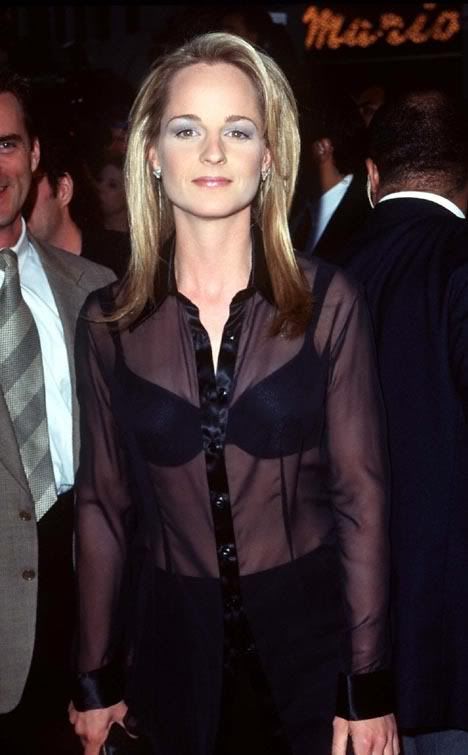
Twister - Special Edition - Could you really pair anyone worse than Bill Paxton (I actually typed Bill Pullman, because I really don’t know the difference) and Helen Hunt as a lame couple chasing tornados? Oh, and if you want to barf, check this link to see what Helen Hunt was wearing at the premiere. [I couldn't resist posting the photo above that I found in my google image search for Twister; it's better than the movie]
Yes, but… [Oui, mais…] - French girl comes of age. Count me in.
Zodiac - Director’s Cut - If you haven’t read, it’s only five or so minutes longer. Here’s hoping that certain shit was cut or reedited, because I already sold away my theatrical version DVD.